Local bus operator First West of England, part of the UK-headed transport operator FirstGroup plc has revealed that soon citizens of the city of Bristol, Bristolians, will be able to catch a new kind of bus – a double-decker bus that’s powered by biomethane created from food waste.
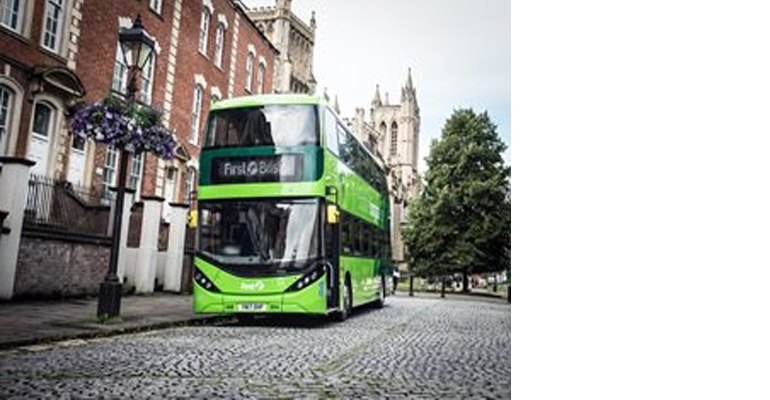
Starting August 21, 2017, First West of England will use the double-decker, which is rated as the best low-emission double-decker bus currently on the market, as a “pathfinder”.
This will assess how well the new bus copes with the demands of city-wide operations in Bristol and how it impacts, for example, refueling and maintenance operations.
According to a statement, Bristolians can easily spot the bus thanks to its “green livery and playful bubbles” as a reference to its environmental credentials and the fermenting process that produces the odourless biomethane gas.
The bus has 70 seats, a wheelchair space, and standing room for 13, glass windows next to its staircase, allowing a lot more daylight to enter the vehicle.
Using biomethane, the bus’s greenhouse gas (GHG) emissions are 84 percent cleaner than a Euro 5 Diesel on a well-to-wheel basis. Perhaps surprisingly considering its size and passenger capacity, its tailpipe emissions are lower than many modern Euro 6 diesel passenger cars.
The bus also uses a different engine, which results in a quieter and improved journey experience for passengers. Further improvements are two desks on the upper deck and no grab rails, giving a more spacious feel.
We are immensely proud to bring this premium double decker to Bristol so soon after the manufacturers offered it to the market. Its low emissions and biogas credentials are just what is needed in a city that is faced with air quality challenges and increased congestion. This biogas bus helps to improve local air quality as it produces fewer emissions than traditional diesel engines, said James Freeman, Managing Director of First West of England.
The biomethane-powered double-decker is the latest addition to First’s increasingly green fleet.
Since the bus operator joined the European Green Capital Partnership in 2015 and made Bristol a more sustainable place to live, it made a firm commitment to only invest in low-carbon certified Euro VI engines, which produce 95 percent fewer oxides of nitrogen (NOx) emissions compared to buses with Euro V engines.
Two years on, more than 110 low-emission-certified double-decker buses are now improving air quality on routes across Bristol and surrounding areas.
The company also operates two virtual hybrid electric buses and uses a number of 100 percent electric passenger cars to transport drivers across Bristol to change-over points.
Facts
About FirstGroup
Through its five divisions, FirstGroup plc operates scheduled bus and rail transport services in the UK, US, and Canada carrying over 2.2 billion passengers in 2016. A private sector operator the company has approximately 110 000 employees that procure, maintain and operate combined fleets of around 69 000 vehicles.