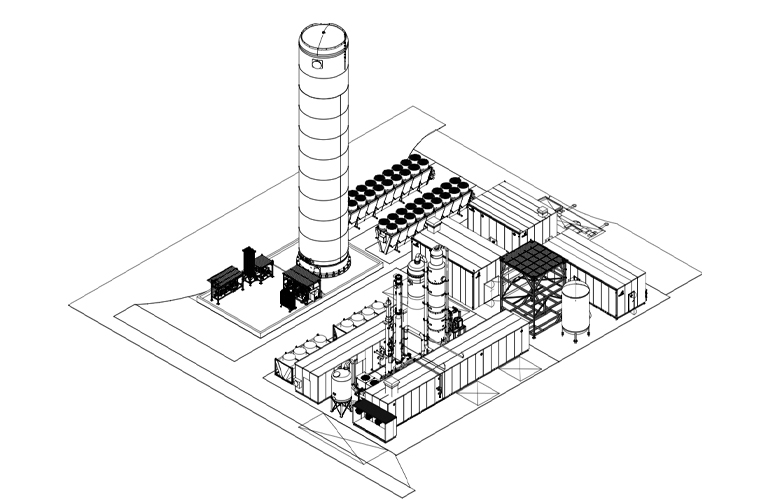
Wärtsilä Biogas Solutions, part of Wärtsilä Gas Solutions within Finland-headed marine, gas, and energy technology major Wärtsilä Oyj has confirmed that it has been selected to supply a biogas upgrading and liquefaction solution for a new bioLNG plant to be built in Mönsterås, Sweden.
The system has been ordered by Scandinavian Biogas Mönsterås AB, a joint venture company between Scandinavian Biogas Fuels AB (SBF), the majority owner, and Mönsterås Biogas AB, a consortium of local farmers supplying manure and agricultural waste to the project.
The plant will produce bioLNG, a substitute for fossil LNG, and will be used as a transport fuel for heavy vehicles, thereby contributing to a fossil-free transport system.
The system will have the capacity to produce 30 tonnes per day of bioLNG. It will be the first project in this capacity using Wärtsilä’s amine scrubber-type Puregas CA technology to pre-treat and upgrade the biogas to biomethane aka renewable natural gas (RNG), which is then liquefied using the company’s mixed refrigerant (MR) process.
The system will produce bioLNG with a negative carbon dioxide (CO2) footprint, and will thus contribute to a net reduction of greenhouse gases (GHG) in the atmosphere.
We are pleased to have once again been selected by Scandinavian Biogas Fuels to supply our industry-leading biogas liquefaction technology for their latest project. This will be a step up in capacity from their plant in Norway, and we look forward to strengthening the cooperation between our companies. Decarbonization is central to all Wärtsilä products and solutions, and this project is completely in line with this ambition, commented Magnus Folkelid, Manager Global Sales, Biogas Solutions at Wärtsilä.
In addition to the biogas liquefaction system, a bioLNG storage facility and export station will be supplied. Additionally, a three-year service agreement has been signed.
Sights set on 50 tonnes per day capacity
While this 30 tonnes per day capacity is an advance on earlier systems, Wärtsilä believes that plants with a capacity of as much as 50 tonnes per day will soon be needed.
This is because the biogas industry is being industrialized, and larger plants will be required to capture positive scale effects and synergies.
The main challenge to up-sizing will be the availability of substrates (feedstock) from which to produce biogas.
Delivery of the Wärtsilä equipment, the value of which has not been disclosed, is scheduled to commence in the first half of 2024, and the plant is expected to be fully operational later that year.