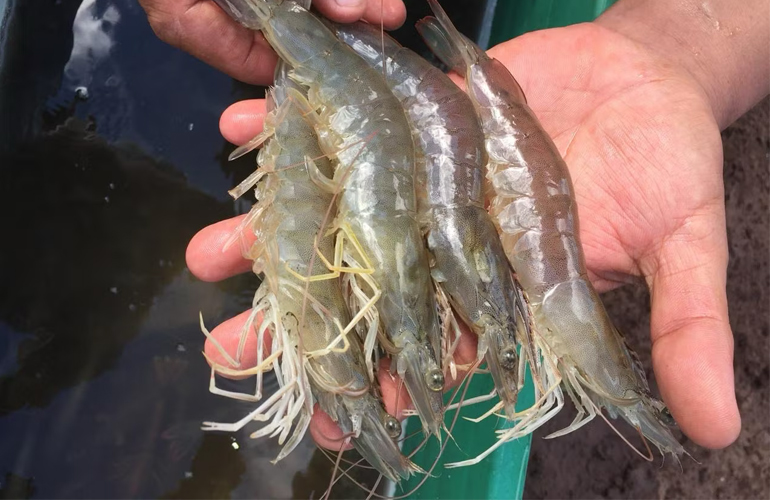
A land‑based fish and shrimp farm in Umeå, northern Sweden, may soon become a reality through a new collaboration between Umeå Municipality, municipal energy company Umeå Energi AB, RISE Research Institutes of Sweden, and the Umeå Plant Science Centre at Umeå University.
The initiative is being funded with a EUR 610,000 grant through the EU’s research and innovation programme Horizon Europe.
The main investment is a land-based fish and shrimp farm where surplus heat from Umeå Energi’s combined heat and power (CHP) plant will be used to create an integrated and climate-smart aquaculture system.
This is an important step in Umeå’s green transition and shows that our work with circular solutions is at a high international level. The initiative strengthens our self-sufficiency, increases resilience, and reduces climate emissions by replacing imported food with local production, said Hans Lindberg, Chair of the Municipal Executive Committee at Umeå Municipality.
Surplus heat to power sustainable food production
The project will start in the spring and aims to develop a pilot facility for integrated fish and shrimp farming in Umeå.
A digital twin will be created to optimise heat and water flows in the system, in close collaboration with Umeå Energi, which supplies surplus heat from its CHP plant.
Demonstrate circular urban systems
The project is a practical example of industrial and urban symbiosis, where previously unused and wasted resources are transformed into new value.
The project is carried out within the EU programme NetZeroCities and in collaboration with five other European cities: Espoo (Finland), Prato (Italy), Lagoa – Açores (Portugal), Maribor (Slovenia), and Fingal County Council (Ireland).
Together, the cities will exchange knowledge on how circular urban systems can contribute to the EU’s climate goals.
We now have the opportunity to practically test how our surplus heat can become the foundation for circular collaboration between several actors and enable local fish and shrimp farming. With digital tools, we can also optimize the heat flows and create a more resource‑efficient system, said Jörgen Carlsson‑Noël, Business Developer at Umeå Energi.
Integrated Multi‑Trophic Aquaculture
The integrated farming system is based on the principles of Integrated Multi‑Trophic Aquaculture (IMTA).
This means that several species are farmed together in a circular system where the by-products of one species become resources for another, resulting in a more resource‑efficient and climate-smart aquaculture.
Installing a facility in Umeå would mean that we can take our aquaculture system from test level to actual production of fish and shrimp. Here, we have the surplus heat, the research environment, and the partnerships needed to scale up the farming in a real, sustainable way, said Olivier Keech, researcher and entrepreneur at Umeå University.