Europe’s continued reliance on imported fossil fuels remains a critical strategic vulnerability, leaving industry exposed to price volatility and supply disruptions. Reducing this dependence by scaling up European sustainable energy sources is essential to strengthen economic resilience, safeguard long-term industrial leadership, and stay on track to meet climate objectives, says the European Biogas Association (EBA).
According to the EBA, this vulnerability is structural. In 2024, the EU imported 90 percent of its gas consumption, underscoring a deep reliance on external suppliers that directly affects both energy security and industrial competitiveness.
Strengthening energy independence through domestic, sustainable solutions, such as biomethane, must therefore become a strategic priority for the European economy.
Against this backdrop, the current geopolitical and economic context has further increased energy prices for Europe’s key industrial manufacturers, putting mounting pressure on the continent’s industrial base.
At a recent meeting in Antwerp, Belgium, leading industry executives warned that persistently high energy costs are eroding competitiveness and accelerating investment leakage.
Yet Europe’s competitiveness cannot be restored by weakening its flagship policies, the EBA says.
On the contrary, it must be built on energy security, climate leadership, regulatory certainty, and the rapid deployment of competitive renewable solutions.
Proposed CBAM exemptions undermine investments
This debate has come into sharp focus with the European Commission’s recent proposal to introduce an exemption to the Carbon Border Adjustment Mechanism (CBAM) through Article 27a.

The proposal has raised serious concerns among European industrial players already investing in ambitious decarbonisation pathways.
CBAM plays a crucial role in preventing carbon leakage and ensuring a level playing field for EU industry as it transitions to low-carbon production.
Introducing exemptions risks weakening incentives for decarbonisation and creating uncertainty for investment decisions at a time when stability and predictability are essential.
In particular, proposals by several Member States to exempt fertilisers from CBAM would undermine the instrument’s purpose.
This is especially concerning given that sustainable production of biogases can already deliver organic fertilisers for European farmers if digestate, as a co-product of this production process, is properly valorised.
Today, the sector already generates around 25 million tonnes of digestate annually.
Call for an accelerated rollout of biogases
In light of this, the EBA calls for an accelerated rollout of biogases as a driver of renewable energy made in Europe.
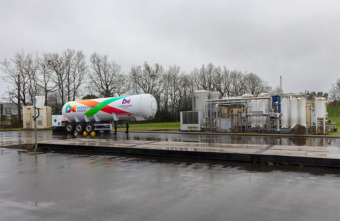
Across the EU-27, biogases already account for around 6 percent of total gas consumption, with biomethane, aka renewable natural gas (RNG), growing rapidly as a direct substitute for fossil natural gas.
By 2040, the sector could produce up to 100 bcm of biogases, meeting an estimated 80 percent of EU gaseous fuel demand while strengthening energy security, defossilisation of industry and transport, and sustainable agriculture.
The biogases value chain stands ready to accelerate Europe’s transition through renewable energy production, sustainable organic fertilisers, and the capture and reuse of biogenic carbon dioxide (bioCO2), reinforcing industrial resilience while reducing fossil dependence with resources made in Europe.
Europe’s energy future must be built on our own renewable solutions. Biogases are scalable and ready today to strengthen our security, support our industries and farmers, and drive the EU’s transition to a competitive, low-carbon economy. Now we need the policy framework to match that potential, said Harmen Dekker, CEO of the European Biogas Association.