Bioenergy Europe has published its latest "Landscape Report: a comprehensive picture of the EU energy system from production to use and market evolution. At a time when security of supply has become a defining priority for Europe, the report is a practical guide for policymakers and market actors navigating the clean energy transition.
Bioenergy is Europe’s largest renewable energy source, providing around half of the EU’s renewable energy supply and supporting the defossilisation of the European economy.
Bioenergy anchors the EU renewable mix and supports system resilience.
System integration matters
In 2023, bioenergy represented 51 percent of the EU renewable energy mix, underlining its role in reducing emissions and reinforcing energy independence through the use of local resources.
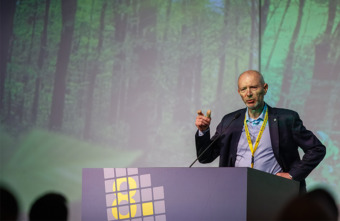
The Landscape Report, the launch of which coincided with the comprehensive 8th Central European Biomass Conference (CEBC) in Graz, Austria, also highlights why system integration matters as fossil fuels are phased out.
Combining renewable solutions is essential to manage seasonal demand, ensure flexibility, and keep energy affordable for citizens and businesses.
Recent political shifts have made this clear: reaching net-zero is not only about the climate; it is the sine qua non of Europe’s energy security and independence. This report shows how bioenergy, together with other renewables, can contribute to a more resilient system. The EU needs to scale up sustainable, local resources to become more independent and secure, said Jean-Marc Jossart, Secretary General of Bioenergy Europe.
Defossilising heat – Europe’s biggest energy use
Heating is one of Europe’s most fossil-dependent sectors. Fossil fuels still account for 73 percent of heating in the EU, generating around 1.5 billion tonnes of carbon dioxide (CO2) emissions per year, a trajectory incompatible with the EU’s long-term climate objectives.
In 2023, renewables covered only about a quarter of heating and cooling demand. However, within renewable heat, around 81 percent came from biomass.
Bioenergy matters for security as much as for defossilisation: biomass combines domestic availability with low import reliance (5 percent dependency, and 1 percent of net imports), making it a practical option to reduce exposure to external shocks while accelerating the shift away from imported fossil heating.
Reliable renewable energy for hard-to-electrify processes
The Landscape Report also underlines the role of bioenergy in supporting industrial energy security, particularly for energy-intensive sectors where full electrification is not always feasible.
A technology-neutral approach that mobilises all scalable renewables, including sustainable bioenergy, could support industrial competitiveness, helping to maintain activities in Europe while cutting emissions and reducing exposure to external supply shocks.
Europe’s energy system will only be secure if it is clean, diversified, and resilient.
In Europe, we depend on fossil fuels, but we have biomass to reach net-zero emissions by 2050. We should not miss this opportunity, concluded Jean-Marc Jossart.