EnviTec Anlagenbau GmbH & Co. KG, the construction arm of Germany-headed biogas plant operator and technology provider EnviTec Biogas AG (EnviTec) has recently announced that it has completed the construction and commissioning of its third EnviThan biogas upgrading unit in Estonia.
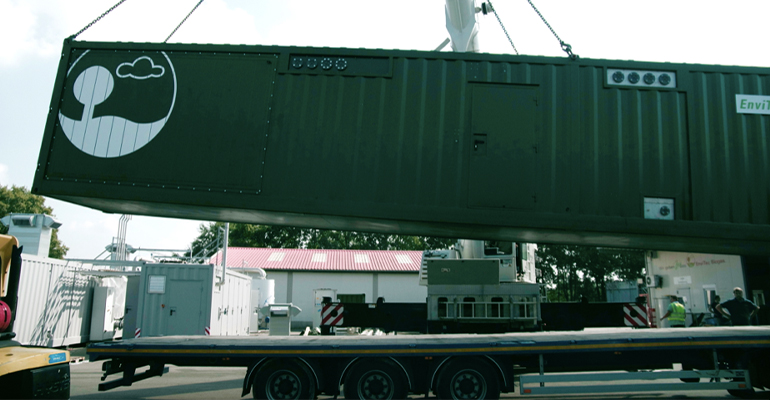
The construction and successful commissioning of two EnviThan gas upgrading plants in Tartu and Vinni has now been followed by the third EnviThan plant in Estonia for EnviTec Biogas. The new plant in Oisu, featuring EnviTec’s tried-and-tested systems, was completed on schedule in just six months from signature to handover.
Our customer here was again AS EG Ehitus, a subsidiary of gas network provider AS Elenger, who had previously commissioned us to build the two plants in Tartu and Vinni, said Lars von Lehmden, Managing Director of EnviTec Anlagenbau.
The combined gas upgrading (capacity 427 Nm3/h) and compressed natural gas (CNG) compressing plant runs on raw gas from wet manure and feed waste. Although the first two plants completed by EnviTec feed the biomethane (aka renewable natural gas – RNG) produced into the existing gas grid, Oisu will be using tank trailers.
With a total of three filling points for these swap-body trailers, the bioCNG will be transported to urban filling stations without the need for a gas grid.
Technical challenges successfully mastered
We had a number of technical difficulties to overcome here,” explains Stefan Laumann, Head of the Gas Upgrading Department at EnviTec.
From connectivity with the CNG unit to the integration of various customers components such as a gas chromatograph or flow rate meters with EnviTec’s containers – effective solutions were needed throughout.
This was where our wealth of experience in plant engineering really helped out, Laumann said.
The fact that all EnviThan containers are planned and ‘built’ as a 3D model first was naturally very useful in fulfilling customer needs. An additional instrumentation and control system was not needed, for example, thanks to existing customer components.
To ensure raw biogas can be compressed to the green natural gas equivalent biomethane and later to bioCNG, it is first purified and conditioned. As with the other plants, the Oisu plant also uses innovative EnviThan biogas upgrading for this step.
For this environmentally friendly and highly cost-effective process, EnviTec Biogas has been equipping its gas upgrading plants with membrane modules from Evonik Fibres for over nine years now.
The hollow fibre membranes purify the raw biogas generated in the biogas plants to yield a final methane content of over 97 percent purity by volume. This also keeps ‘methane slip’ – the portion of methane that goes unused – to well under 1 percent, which makes the plants very efficient.
Biomethane a renewable and sustainable transportation fuel option
As a substitute for diesel in the transport sector, biomethane can make a lasting contribution to climate protection and the existing infrastructure can be reused for filling vehicles without needing to make large additional investments, emphasized Lars von Lehmden.
According to a recent announcement by Tallinn-based public transport company Aktsiaselts Tallinna Linnatransport (TLT), 100 CNG buses are already serving Estonia’s capital, with the acquisition of another 100 buses planned for this year.
The city has also invited bids to supply up to 150 methane-powered buses. By 2025, the city aims to have replaced all of its existing diesel buses with environmentally friendly alternatives such as CNG buses.
The three plants completed by EnviTec Biogas could play a key role in the transition of Estonia’s local public transport network. All in all, the EnviThan plants supply 8.2 million kg of CNG each year, which, according to Stefan Laumann, could power 400 vehicles for about 20 million km depending on journey type and bus size “while also saving some 26 000 tonnes of polluting CO2 in comparison to Euro VI diesel buses.”