Bioenergy Europe says it welcomes the European Commission’s efforts to put sustainability at the heart of its policies. The European Green Deal presented on December 11, 2019, is a well-balanced growth plan which will steer the EU’s energy transition in becoming carbon neutral by 2050.

Responding to the Commission’s presentation of the European Green Deal on December 11, 2019, Bioenergy Europe said in a statement that “welcomes” the European Commission’s efforts to put sustainability at the heart of its policies and that the message is clear:
“The way in which we produce, consume, travel, and how we heat our homes needs to change. It is, therefore, up to policymakers to send a clear signal to both EU citizens and businesses and to listen to the concerns that are brought by this challenge. It is necessary, now more than ever, that existing policy tools come together as pieces of the same puzzle: carbon price; energy taxation; renewables target; state aid policy; sustainability requirements and green financing and industrial policy strategy.”
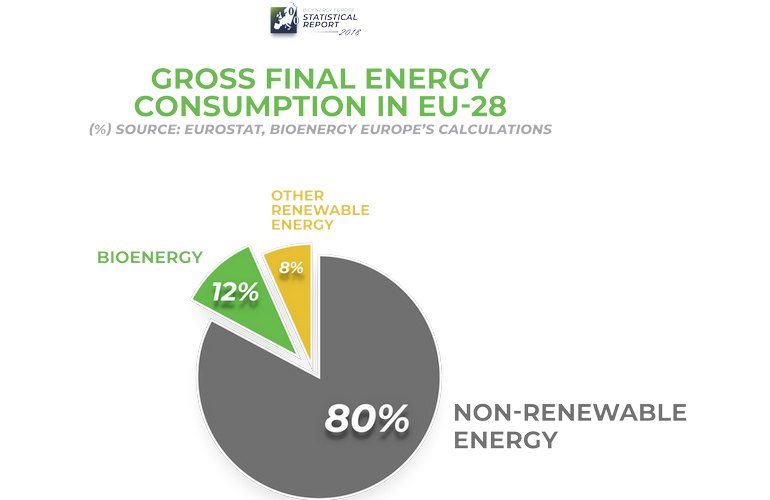
Sustainable bioenergy is ready to deliver what the EU needs in order to achieve climate neutrality – a clean, carbon-neutral, reliable and innovative form of energy. Europe’s bioenergy sector is by far the largest renewable energy source and employs over 700 000 people.
In addition, the sector is made up of at least 45 000 businesses, the majority of which are small or medium-sized enterprises (SMEs) while 75 percent of industrial equipment manufacturers for the bioenergy sectors being European.
2030 GHG reduction an arduous task
Achieving a 55 percent reduction in greenhouse gas (GHG) emissions by 2030 would adjust the trajectory for the EU to become carbon neutral. However, this is “an arduous” task, the association said.
“If Europe is to achieve this target, then the 2030 climate and energy framework must be adjusted to allow for a more rapid upscaling of renewable technologies, a clear plan for industry decarbonisation as well as an accelerated and robust fossil fuel phase-out plan.”
While the European Green Deal embraces all these elements it “worryingly neglects” the heating and cooling sector, which represents half of the EU’s energy consumption. Furthermore, the Communication fails to give clear guidance on how to achieve a price on carbon for sectors that are not covered by the EU ETS.

An increase in GHG emission reduction targets coinciding with a holistic carbon price, to include both the building and transport sectors, would improve the competitiveness of both bioenergy and renewables and help towards reaching the climate goals of the EU.
A “fit-for-purpose” Energy Taxation Directive will deliver on climate objectives and spark a transition to clean fuels and improved energy efficiency,
In 2017, about 7 percent of the overall EU 28 GHG emissions were avoided – approximately the average annual emissions of Spain – thanks to the use of biomass for energy. Additionally, the use of biogenic waste and by-products from the forest-based and agriculture sectors will be “advantageous in avoiding pollution and to foster circularity in industrial processes.”
In this regard, Bioenergy Europe says it welcomes the support to the circular bio-based sectors mentioned in the Communication in the form of partnership between member States and industry.