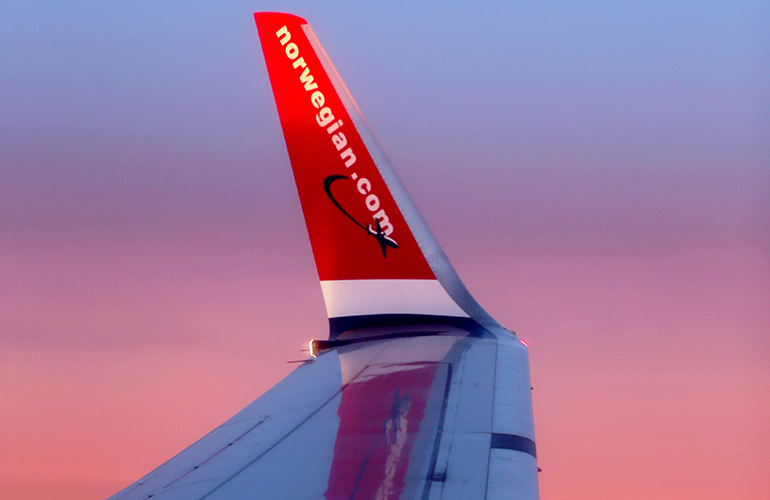
Nordic airline Norwegian Group, Swiss power-to-liquids (PtL) technology developer Metafuels AG, and Danish renewable energy major European Energy A/S have signed a Memorandum of Understanding (MoU) to explore the development of a Danish value chain for electro-sustainable aviation fuel (eSAF).
According to a statement, the collaboration brings together European Energy’s experience in renewable energy and Power-to-X production, including its operational e-methanol facility at Kassø in southern Denmark, Metafuels’ aerobrew methanol-to-jet technology and projects, and Norwegian’s demand for sustainable aviation fuels (SAF).
The partners aim to explore how Danish-produced e-methanol can contribute to the production of eSAF for European aviation, and the partnership builds on heads of terms already in place between Metafuels and Norwegian for the future offtake of eSAF from Turbe, Metafuels’ first commercial facility in the Port of Rotterdam, the Netherlands.
The availability of eSAF will be critical to the energy transition of aviation. That is why we support the development of new supply chains and production opportunities closer to the markets where the fuel will be used, and we’re thrilled to be partnering with Metafuels and European Energy to help secure our future supply, said Knut Olav Høeg, Chief IT and Business Services Officer at Norwegian.
Explore e-methanol as feedstock
The new agreement brings European Energy into the value chain, with the partners exploring the supply of e-methanol from European Energy to Turbe, Metafuels’ first commercial-scale aerobrew facility, located in the Port of Rotterdam.
Hosted at the Evos Rotterdam terminal, with McDermott International Ltd as engineering partner, front-end engineering and design (FEED) is close to completion (end 2026), and the plant is expected to be operational in 2030, subject to a final investment decision (FID).
Turbe will convert renewable methanol into synthetic aviation fuel at commercial scale, in order to supply airlines, including Norwegian, with aerobrew.
Aerobrew is the piece of the puzzle that turns green methanol into fuel an airline can actually fly on, and this partnership puts it to work for Denmark. We are following exactly the playbook that took us from the lab to an operating plant in Switzerland: demonstrate the full process chain, prove it works, then scale. We’re seeing real appetite from airlines for methanol-to-jet, and we’re proud to partner with Norwegian – when airlines like this start signing up, the market is clearly forming, said Saurabh Kapoor, Chief Executive Officer of Metafuels.
Showcase demo project
Under ReFuelEU Aviation, eSAF sub-mandates come into force from 2030, driving rapid growth in demand for synthetic fuels.
Unlike conventional SAF pathways reliant on limited feedstocks such as waste oils, the methanol-to-jet (MtJ) route offers a highly scalable way to meet long-term aviation demand.
The partners intend to first prove the value chain through a showcase project, designed to facilitate scalability.
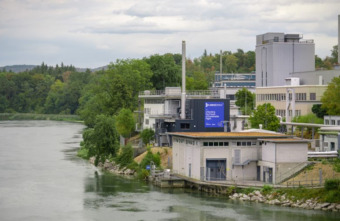
European Energy will supply e-methanol, which Metafuels will convert into synthetic aviation fuel using its aerobrew demonstration plant at the Paul Scherrer Institute (PSI) in Switzerland, and Norwegian will take the eSAF blended with conventional aviation fuel for a flight during 2028.
This will prove the full chain end to end.
The development of eSAF connects renewable energy production with new fuel technologies and long-term demand from the aviation sector. At Kassø, European Energy has already demonstrated that e-methanol can be produced at industrial scale. This partnership allows us to explore how that experience and production capacity can support the next step towards synthetic aviation fuels, said René Alcaraz Frederiksen, EVP and Head of Power-to-X at European Energy.
Opportunity for Denmark to lead
Denmark, home to European Energy’s Kassø facility, the world’s first large-scale e-methanol plant, is one of the most credible places in Europe to supply e-methanol.
In the longer term, the ambition is to establish commercial production in several phases. The first phase centers on Metafuels’ planned production facility, Turbe, in the Port of Rotterdam.
From 2033, the ambition is to establish production capacity of up to 100 tonnes per day in Denmark, thus consolidating the entire value chain within Denmark.
Denmark has the opportunity to develop strong leadership in this emerging industry, and needs to scale production alongside market-creating mandates, long-term commercial agreements and mechanisms that address the price difference between eSAF and conventional jet fuel, René Alcaraz Frederiksen said.
The partners’ joint message to Danish politicians is to channel aviation tax revenues from the EU Emission Trading System (ETS) and the Danish Air Passenger Duty to cover the extra cost of SAF.
Their shared priorities are:
- Significantly increasing the number of SAF allowances in the current EU ETS revision to cover the entire price gap for SAF blending mandates over the next decade.
- Using the entire revenue from the Danish Air Passenger Duty to green Danish aviation, with the aim of making domestic aviation 100 percent green by 2030 and supporting Danish production.
- Launching the next green domestic route tender from 2028 to 2029, switching from biofuels to e-fuels and helping move from demonstration flights to regular commercial operations.
Together, these measures, the partners say, would decarbonise aviation while keeping air travel affordable, and build a new European SAF industry with new jobs, economic growth and better security of supply.
To get projects like this off the ground and scalable, clear financial incentives for early movers are needed. Danish politicians should channel aviation tax revenues back to the industry to cover the extra cost of SAF. That will give us the certainty needed to decarbonise aviation while keeping air travel affordable and build a new European SAF industry, concluded Knut Olav Høeg.