Switzerland-headquartered independent oil refiner, renewable fuel producer and retailer VAROPreem has announced its new VAROPreem Value Growth Strategy for the next five years, following the successful delivery of the ONE VARO Transformation strategy 18 months ahead of schedule. The new strategy focuses on using the scale, capabilities and integrated value chain created through the combination of VARO and Preem to deliver growth and value creation while ensuring resilient, secure and diversified energy supplies for Europe.
Since Varo Energy acquired Preem in January 2026 and Sunpine in July 2026, VAROPreem has emerged as Europe’s third-largest independent refiner and second-largest renewable-fuels producer operating across manufacturing, trading, and logistics with a “balanced portfolio” spanning conventional and renewable fuels.
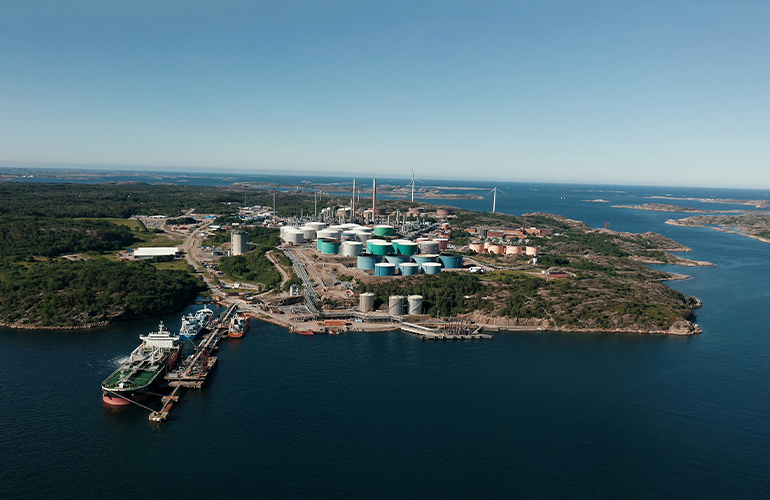
With seven manufacturing hubs, access to more than 120 terminals, and operations across 41 countries, VAROPreem now supplies approximately 10 percent of Europe’s mobility fuel demand.
Unlocking the power of VAROPreem
Europe faces an increasingly complex energy challenge: securing reliable and affordable supplies today while continuing to develop a lower-carbon energy system.
Geopolitical disruption, changing demand and a reduction in European refining capacity have increased the importance of resilient energy infrastructure and flexible supply chains.
VAROPreem believes that meeting these challenges requires a different kind of energy company: one that combines industrial scale and operational excellence with commercial agility, renewable-fuels capabilities and the flexibility to respond as markets evolve.
Through a single integrated system spanning feedstock sourcing, conventional and renewable manufacturing, storage, blending, logistics, trading and customer delivery, VAROPreem optimises energy flows across products, markets and geographies.
This, the company says, allows it to create value at multiple points in the supply chain, respond to changing market conditions and adapt its product mix as customer demand evolves.
Its ‘Integrated Twin Engine Powerhouse’ model combines conventional energies (Engine 1) and sustainable energies (Engine 2), enabling it to provide the energy Europe needs today while expanding lower-carbon solutions.
Having delivered our ONE VARO Transformation strategy 18 months ahead of plan, and following the acquisition of Preem, we have created a leading European energy company with a combination of critical infrastructure, industrial scale and commercial excellence across conventional and sustainable energies. We intend to use these strengths to accelerate growth, double earnings potential by 2030 and strengthen our leadership across European energy markets. Our distinctive ‘Integrated Twin Engine Powerhouse’ model gives us the resilience and flexibility to securely and reliably supply the energy Europe needs today, while continuing to build the energy solutions it will need tomorrow, said Dev Sanyal, Group CEO of VAROPreem.
Four growth accelerators to 2030
The new strategy focuses on using the scale, capabilities and integrated value chain created through the combination of VARO and Preem to deliver growth and value creation while ensuring resilient, secure and diversified energy supplies for Europe.
- Most advantaged energy platform: Investing to maintain consistently top-quartile asset performance by sustaining high standards of safety, reliability and efficiency across VAROPreem’s refineries and infrastructure, and making better use of existing assets before investing in new capacity.
- Supply, trading and optimisation: Maximising value from the combined VARO and Preem supply and trading network by leveraging VARO and Preem’s combined buying power, refineries and logistics network to source raw materials more competitively and supply fuels where customers need them.
- Integrated bio value chain: Expanding renewable fuels and building an integrated bio value chain by increasing the production of renewable diesel and aviation fuel, strengthening access to bio raw materials and growing the biomethane business, targeting a 20 percent increase in biofuel production capacity by 2030, including the recent announcement on the co-processing investment in Cressier refinery, the only refinery currently operating in Switzerland and is capable of producing ~70,000 barrels per day of refined products.
- Critical energy partner in growing segments and markets: Growing market share and customer relationships in existing and new markets by building on VAROPreem’s existing infrastructure and customer relationships to grow market share, particularly in aviation and marine, targeting an increase from 10 percent to 15 percent across selected markets by 2030.
Disciplined growth and long-term value creation
According to the company, together, these Four Growth Accelerators underpin VAROPreem’s target to double EBITDA by 2030 under mid-cycle assumptions, with more than 50 percent generated from Engine 2, its sustainable energies business.

Building on close to US$300 million of synergies, targeted over the period to 2030, with more than one third already realised, the Four Growth Accelerators will drive the next phase of value creation.
The strategy is supported by a strong balance sheet and disciplined approach to capital allocation.
VAROPreem expects total capital expenditure to be prioritised in investments that contribute to energy security and strengthen operational reliability and efficiency, while delivering value, flexibility and shorter payback periods.
The company is targeting return on average capital employed of more than 15 percent through the cycle, while maintaining a conservative leverage ratio.
VAROPreem’s financial discipline and balanced ‘Integrated Twin Engine Powerhouse’ model are designed to support resilient performance through the cycle while maintaining the flexibility to invest for future growth.
Sustainable energies remain central to VAROPreem’s business and growth strategy. Alongside expanding renewable-fuels production, the company is targeting a 50 percent reduction in Scope 1 and 2 manufacturing carbon intensity and a 30 percent reduction in Scope 3 product carbon intensity by 2040, both against a 2018 baseline, while using its existing infrastructure to support customers’ evolving energy needs.