
A new report published by the European Renewable Ethanol Association (ePURE) provides a detailed overview of national biofuel policies across the EU 28 Member States. The publication focuses on the national policy frameworks regulating biofuels, in particular, the implementation of the Renewable Energy Directive (RED) and Fuel Quality Directive (FQD) as amended by the Indirect Land Use Change (ILUC) Directive, and relevant national fuels, including biofuels, and vehicles market information.
The comprehensive report “Overview of biofuel policies and markets across the EU-28” updates a previous ePURE report published in June 2016 on Member States’ biofuel policies and markets, detailing the national transposition and implementation status of the Renewable Energy Directive (RED) and the Fuel Quality Directive (FQD).
This report updates that status for each country now that the deadline for transposing the so-called ILUC Directive amending both the RED and FQD has passed. The report seeks to provide a detailed overview of the current national biofuel policies across the EU 28 Member States, with a focus on:
- The national policy frameworks regulating biofuels, in particular, the implementation of the RED and FQD as amended by the ILUC Directive;
- Relevant national fuels (including biofuels) and vehicles market data. encompasses the legal basis for the RED, the FQD, and the ILUC Directive for both crop-based and advanced biofuels and provides general information on the double counting mechanism implemented by the EU Member States.
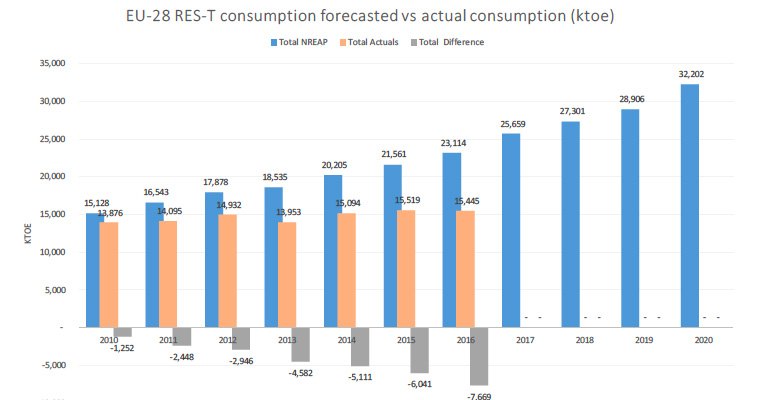
ePURE’s analysis also describes the mandatory incorporation and obligation of biofuels by each Member State as a means of decarbonising transport. Collected data show Member States’ progress in reaching 2020 objectives through the use of renewables in transport. The report also highlights the fluctuations in the EU passenger car fleet market and takes into account the Renewable Energy Share in Transport (RES-T) for biofuels.
In short, the report clearly illustrates how the gap between renewable energy in transport forecasted in the 28 EU National Renewable Energy Action Plans (NREAPs) and the actual consumption has widened over the last years.