The Swedish government has decided on a regulation that it hopes will enable consumers to make "informed decisions" when buying transportation fuel. As of January 1, 2020, filling stations will be obliged to provide information about the climate impact and origin of the fuels at the pump.
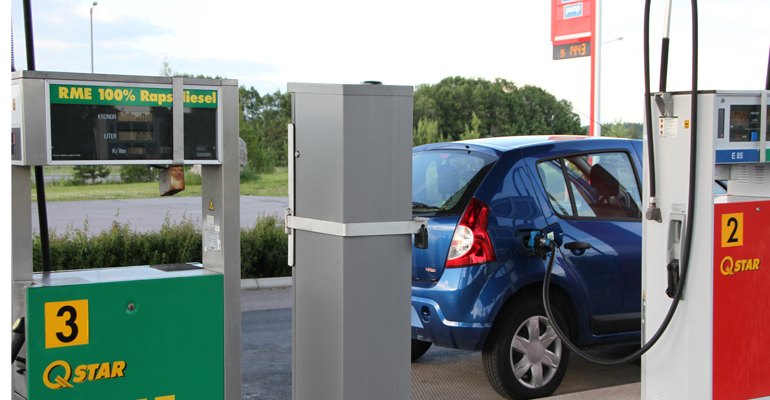
As part of the efforts to break fossil dependency and to achieve Sweden’s goal of reducing the transport sector’s emissions by 70 percent by 2030, the Swedish government decided on August 9 on an environmental and origin information provision regulation at the fuel pump. By providing environmental information about fuels, it will also be clear which companies are at the forefront of reducing emissions.
A basic principle in environmental policy is that it should be easy to do the right thing. When environmental information on fuels becomes available, this principle will also apply when choosing fuel, said Minister for the Environment, Karolina Skog.
According to a statement, environmental information shall be provided at the pump and shall provide comprehensive information about the fuel’s greenhouse gas (GHG) emissions over the life cycle, including feedstock used and the country of origin of the feedstock. More detailed information should be found on the suppliers’ website.
Small volume fuel suppliers will be excluded from the information obligation requirement on account of the administrative costs associated. Instead, it will be voluntary for suppliers delivering less than 1 500 m3 of liquid or 1 million Nm3 of gaseous fuel annually.
The Swedish Energy Agency has been authorized to issue regulations on the detailed design of environmental information. The obligation to provide environmental information is to enter into effect on January 1, 2020.