New green technology to generate electricity from discarded cocoa pod husks is set to benefit African farming communities currently with little or no access to grid power. The project, led by the University of Nottingham, UK, aims to stimulate an entirely new biomass-fuel industry that would also improve socio-economic stability for cocoa producers in rural Ghana.
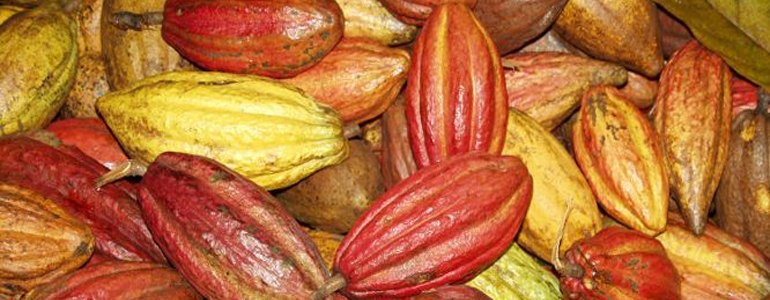
The Implementation of Bio-Rural Energy Scheme (IBRES) project, backed by the UK Government’s Global Challenges Research Fund, aims to make practical and economic use of the discarded cocoa pod husks.
Ghana is the second highest producer of cocoa in the world and every tonne of cocoa beans harvested generates 10 tonnes of cocoa pod husks. In the past, this waste material was underutilized. However, feasibility studies indicate that cocoa pod husks could be converted into valuable bio-fuels; an important energy supply for rural areas that have only 15 per cent electricity coverage at present. If successful, this new bioenergy infrastructure would support the Ghanaian government’s aim for universal access to electricity by 2030, explained principal investigator, Jo Darkwa, Professor of Energy Storage Technologies in the Faculty of Engineering at the University of Nottingham.
In addition to energy production and distribution, local jobs would emerge for the collection and transportation, treatment, storage and processing of this potentially lucrative byproduct. A community energy cooperative model will also help the farmers to make money from their new bio-energy source and hence reduce poverty.
The main tasks of the project are to:
- Characterise the four different types of cocoa pods commonly farmed in six regions of Ghana for their use as biomass-fuels;
- Design, build and evaluate a small-scale bio-power electricity generation unit that burns cocoa pod husks – a waste product in production – in a gasification system, which includes a gasifier, a 5kWe diesel generator set, a solar drier, and a pelletiser;
- Develop guidelines for setting up full-scale bio-energy schemes and their integration into rural communities;
- Investigate stakeholders’ perceptions of the bio-energy scheme;
- Develop community co-operatives and governance structures for cocoa-producing regions
In addition to Professor Darkwa, the Nottingham-led project team involves Dr John Calautit, Dr Mark Worall, Dr Yuehong Suand Nii Nelson, of the Buildings, Energy and Environment (BEE) Research Group; Dr Alison Mohr, from the Institute of Science and Society; Dr Karen Robertson from the Advanced Materials Research Group and the School of Chemistry’s Professor Robert Mokaya.
Nottingham academics are also collaborating with the Centre for Energy, Environment and Sustainable Development (CEESD) Ghana, Ghana Cocoa Board (COCOBOD) and Kwame Nkrumah University of Science and Technology (KNUST) in Ghana where the bio-power unit will be installed and monitored by researchers.