China's Heilongjiang Province massively steps up its research and development efforts to make fine, environmentally friendly hemp fibres a large-scale alternative to cotton. Additionally, experts work on hemp foods and pharmaceuticals. Western companies are invited to participate in the hemp boom reports Michael Carus Managing Director of the European Industrial Hemp Association (EIHA) on his return from China.
Although the cultural history of using hemp on an industrial scale can be traced back to China and the first ropes (2800 BC), papers and textiles (500 – 100 BC) ever made, hemp became sidelined a little over a century ago. But that is a matter of the past now.
Alternative to cotton
In their search for alternatives to cotton, hemp has attracted attention among China’s scientific, political and industrial communities. Cotton is increasingly causing environmental problems due to its enormous need for water, soil salinization and the use of pesticides. Neither the quality nor the price of Chinese cotton is competitive.
Given these developments, the Chinese province of Heilongjiang has decided to review the entire hemp production value chain and to produce hemp on a large industrial scale. Within only a few years, the area on which hemp is cultivated has grown from less than 2 500 acres (≈ 1 012 ha) to more than 74 000 acres (≈ 29 947 ha) in Heilongjiang Province alone this year.
This is a level of magnitude on par with the overall hemp cultivation area in Canada or Europe. If everything goes well, the area will total roughly 150 000 acres (≈ 60 702 ha) as early as next year. This is a level of magnitude on par with the overall hemp cultivation area in Canada or Europe. If everything goes well, the area will total roughly 150 000 acres (≈ 60 702 ha) as early as next year.
Well-attended conference
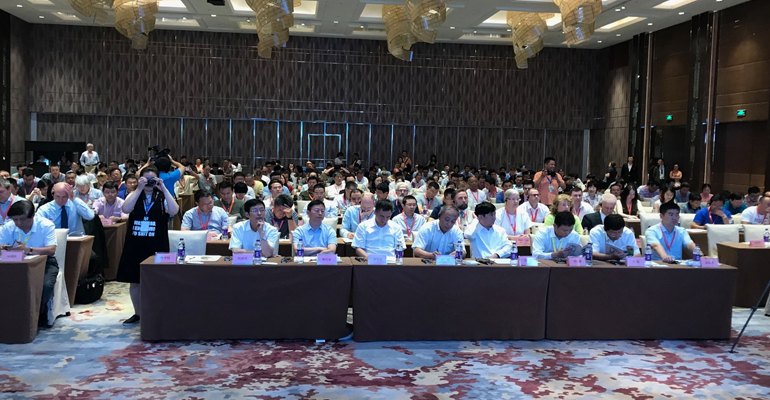
In Harbin, the capital of Heilongjiang Province, located in Manchuria in the north-east of the People’s Republic of China, the 2017 International Conference On Hemp Industry was held at the beginning of August 2017. With 300 delegates hailing from China itself as well as Australia, Europe and Canada, this was one of the largest conferences ever dedicated to hemp.
Representatives of the Chinese hemp industry had invited hemp associations from Europe, Canada and Australia to the conference with the aim of establishing global networks to exploit hitherto untapped intercontinental synergies. Their main focus was on the exchange of technologies, products and marketing strategies.
Textile industry
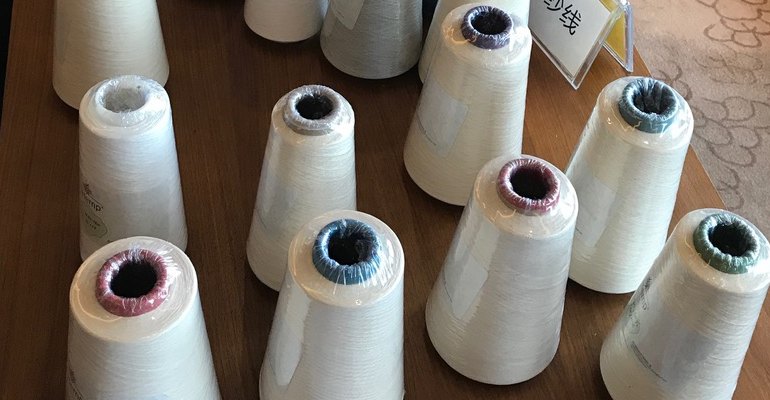
A comprehensive research programme involving universities from Heilongjiang Province and partners from the Ukraine and Canada served to develop new, high-yield hemp varieties, to optimise combine harvesters for stalks and seeds and to introduce biotechnological procedures allowing for the production of fine hemp fibres in an environmentally friendly way using enzymes.
Experts refer to this procedure as the “enzymatic cottonization” of hemp fibres, which may then be processed alone or together with other fibres by cotton machines.
The cultivation of hemp is considerably more environmentally friendly than growing cotton as it thrives in moderate climates, such as in northeast China, where no artificial irrigation is needed. Hemp does not require a lot of attention, no or only very small amounts of pesticides, is ideally suited for crop rotation schemes and delivers twice the fibre yield that cotton does.
Dr Liu, secretary general of the “China Industry Technology Innovation Strategic Alliance of High-value Special Biological Resources” organization believes hemp may help make the overall textile chain more environmentally friendly.
Hemp absorbs twice the amount of carbon dioxide (CO2) per acre compared to cotton, boasts a very small CO2 footprint, and, apart from fibres, also delivers high-quality fatty acids and proteins for foods and pharmaceuticals.
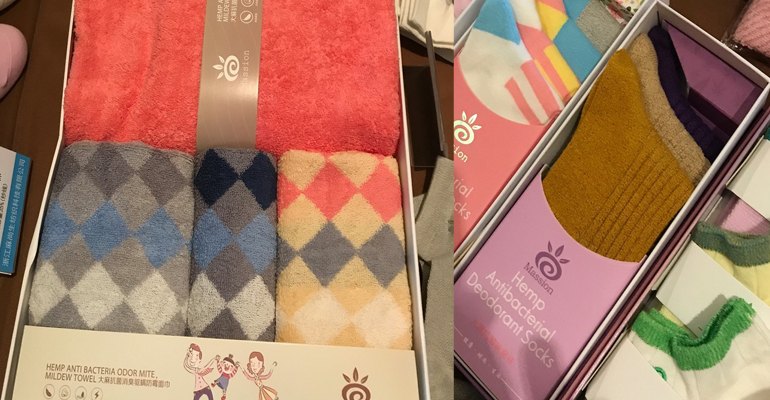
According to Dr Liu, hemp may become a “strategic resource” for China.Hemp textiles are by no means mass-produced goods but rather quality textiles with special properties. And this is exactly what makes hemp so attractive for the Chinese textile industry, which is under strong pressure from low-wage countries. However, as regards hemp, there is only a little competition.
Scientists shed light on the benefits of hemp fibres – they have a complex three-dimensional structure, very good moisture absorption characteristics, an anti-bacterial effect, they provide good UV protection and allow textiles to dry fast. Hemp viscose fibres were also presented. Mixed with cotton they are used in wet and cosmetic wipes.
Food and pharma
In addition to fibres, the production of hemp also yields valuable hemp seeds containing polyunsaturated fatty acids (omega-3, GLA and SDA) and high-quality proteins. Tetrahydrocannabinol (THC) and cannabidiol (CBD) are extracted from blossoms and leaves for pharmaceutical purposes. A total of four Chinese companies are already producing pure CBD, while more are getting ready to enter the market.
China is currently trying to attract cooperation partners from Europe and North America, in particular for the production and marketing of organic hemp foods, by offering excellent infrastructure and investment subsidies.
Science, politics, agriculture and industry in the Heilongjiang region are serious about hemp. And they have the resources to conjure up a large-scale modern hemp industry out of almost nothing. It remains to be seen whether hemp really is as promising as is often believed and whether a 50-year research and technology gap can be quickly closed by harnessing state-of-the-art methods.