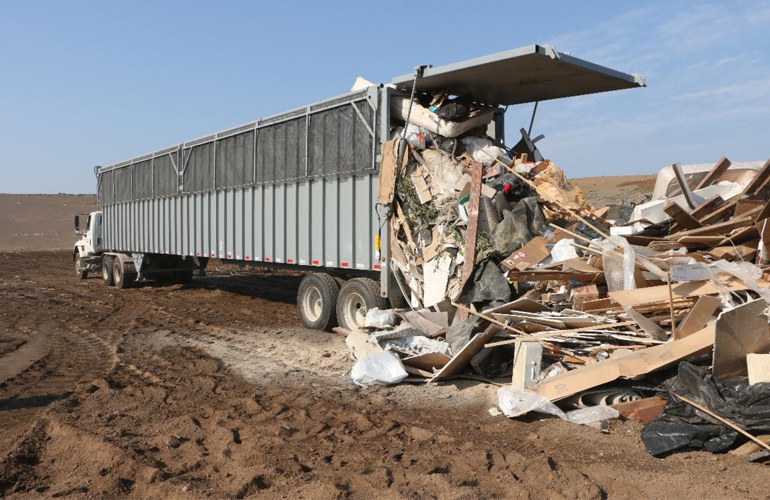
US-headed KEITH Manufacturing Co., a global leader in innovative material handling solutions, has announced the launch of "RX3 Technology", its new flagship heavy‑duty "WALKING FLOOR" drive engineered for the rigorous demands of waste and recycling applications.
Designed as the long‑term replacement for its “RUNNING FLOOR II DX”, RX3 builds on KEITH’s proven reliability while delivering a new level of performance, protection, and control for high‑cycle, severe‑duty operations.
According to the company, its RX3 Technology is “purpose-built” for waste handling and other abrasive, heavy-bulk materials, and it is optimized for demanding transfer station and fleet environments.
Operators gain a drive designed around real‑world conditions: heavy loads, contaminants, and high duty cycles.
With a patent‑pending design, RX3 is a new generation of drive technology for waste and severe‑duty bulk materials, and a new “benchmark for heavy‑duty moving floor drives, with every aspect of the system proven through extensive in‑house testing and real‑world field validation to meet the toughest performance and reliability standards.”
Overheating protection
RX3 incorporates comprehensive thermal protection, integrating an over‑temperature switch and electric heat sensor designed to safeguard the drive during the toughest unloading cycles.
By monitoring system temperature and reacting before damage can occur, RX3 helps prevent heat‑related failures and protects critical hydraulic and mechanical components, reducing the risk of unplanned downtime.
The RX3 hydraulic circuit is designed to run cleaner, featuring an oil pressure filter that promotes cleaner oil and monitored inlet conditions.
This, the company says, contributes to “smoother performance, longer component life and a reduced maintenance burden over the life of the trailer.”
RX3 also reduces complexity with internal check valves and fewer parts, eliminating adjustments at the switching valve and minimizing potential leak points.
The simplified layout makes field troubleshooting easier, speeds service, and helps lower total maintenance costs for waste and recycling fleets.
Smarter controls
By pairing an automatic switching valve with intuitive electronic controls and optional manual control options, this control architecture enables more automated, hands‑off operation, reduces operator error, and simplifies training for new drivers and technicians.
The hydraulic design also gives operators flexibility to unload at extremely slow or extremely fast speeds, depending on job requirements, providing precise control in tight facilities and rapid discharge when throughput is the priority.