A new study by Prognos Consulting and the ifeu Institute GmbH shows that methane from landfilled municipal waste in Europe is a major, long-term climate risk that is systematically underestimated in policy debates.
Methane (CH4) is one of the most powerful short-lived climate pollutants; it plays a critical role in near- and long-term warming while also contributing to climate destabilisation.
The study “Methane emissions from Europe’s landfills – Scenarios and Data Challenges”, commissioned by waste-to-energy technology major Kanadevia Inova AG and carried out by Prognos Consulting and the ifeu Institute (January 2026), analyses methane emissions – aka landfill gas (LFG) – from municipal solid waste (MSW) deposited in landfills in the EU-27 and the UK between 2022 and 2050.
It further tracks the long-term climate impact of these emissions well beyond mid-century, highlighting how today’s waste management choices lock in warming effects for decades.
The findings raise serious questions about Europe’s ability to meet its climate and circular-economy objectives if landfill diversion policies are weakened or undermined.
Landfill gas remains a growing climate risk
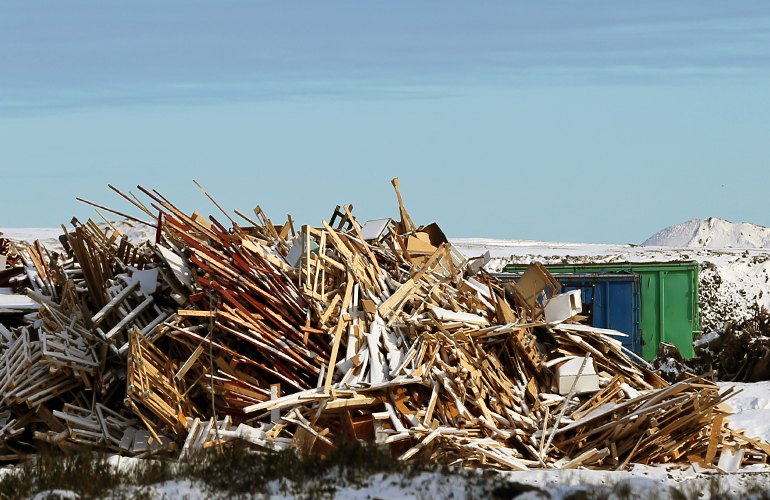
Even if landfilling rates fall, methane emissions do not stop: waste buried underneath continues to emit methane for decades, long after a site’s closure.

Under a “status quo” scenario, the study finds that around 1.9 billion tonnes of municipal waste landfilled between 2022 and 2050 would generate approximately 1.5 billion tonnes of carbon dioxide equivalent (CO2eq) methane with a 100-year global warming potential (GWP 100) by 2130.
Crucially, 37 percent of these emissions would occur after 2050, long after disposal has ended.
Full implementation of the EU waste legislation, the Landfill Directive, which limits landfilling of municipal waste to 10 percent by 2035 and, in some cases, by 2040, would roughly halve methane emissions but still leave around 700 million tonnes of CO2eq locked in over time.
This confirms that landfilling biodegradable waste creates a long-lasting methane legacy that directly conflicts with the EU’s 2050 climate-neutrality objective.
Underestimated short-term impact
When methane’s short-term warming impact is considered – methane being around 80 times more potent than CO2 over 20 years – the scale of the problem becomes even clearer.
In a 20-year horizon (GWP 20), landfill gas emissions are almost three times as high as those calculated under the standard 100-year metric: 4.5 billion tonnes in the “status quo” scenario and 2.1 billion tonnes in the scenario considering the full implementation of the EU waste legislation, underlining methane’s critical role in near-term climate warming.
To put this in perspective, 2.1 billion tonnes of CO2eq corresponds to the annual emissions of more than 700 coal-fired power plants calculated with an installed capacity of 500 MW, a capacity factor of 0.65, and an emission factor of 1 kg CO2-eq/kWh.
Data limitations complicate effective methane mitigation
The study also highlights persistent data gaps and methodological inconsistencies in national inventories, with several countries relying on default assumptions for waste composition and methane capture.
Satellite-based research suggests that actual emissions may be higher than officially reported.
These uncertainties reinforce a simple conclusion: the most reliable way to cut landfill methane is to prevent biodegradable waste from entering landfills in the first place, in line with the waste hierarchy and circular-economy principles, and described under the fourth scenario of the study.
Incoherent policies could worsen Europe’s methane emissions
ESWET – the European Suppliers of Waste-to-Energy Technology warns that incoherent policy choices could worsen Europe’s methane emissions
In particular, ongoing discussions on the inclusion of Waste-to-Energy (WtE) in the EU Emissions Trading System (ETS) must be approached with great care.
If climate policy does not fully reflect the far higher methane impacts of landfilling, there is a risk that residual waste could be diverted away from controlled treatment and back to landfill.
This risk is heightened if residual waste incineration is penalised despite its established role in avoiding emissions.
The findings are also relevant for the United Kingdom (UK). As discussions continue on a possible linking of the UK and EU ETSs, it is essential to avoid policy signals that could increase reliance on landfilling and the associated methane emissions.
If domestic residual waste treatment becomes uncompetitive, the UK risks “waste leakage”, with waste exported to cheaper overseas landfills, undermining both the waste hierarchy and national net-zero targets.
We could be sleepwalking into a landfill disaster in Europe. Any climate policy that makes landfilling seem more attractive goes against both climate logic and the EU’s own waste hierarchy. In this context, approaches like including Waste-to-Energy in the EU ETS must be carefully evaluated: if residual waste is diverted from controlled treatment without fully considering the much higher methane impacts of landfilling, Europe risks locking itself into a higher emission trajectory and making its methane reduction goals unattainable, said Dr Siegfried Scholz, President of ESWET.
A clear message to EU decision-makers
According to ESWET, the report findings underline the need for:
- Strict enforcement of landfill-reduction targets and further tightening of landfill regulations.
- A rapid reduction of biodegradable waste sent to landfill.
- Climate policies that reflect the full lifecycle emissions of waste treatment, including methane’s short- and long-term impacts.
- Above all, regulatory signals must avoid unintentionally shifting waste back to landfill, particularly in the context of EU ETS discussions.
- Cutting methane rapidly is essential to slow near- and long-term global warming, and to keep Europe’s climate targets within reach.