
The European Commission has announced the adoption of a new Strategic Framework for a Competitive and Sustainable EU Bioeconomy, charting a way forward to build a clean, competitive and resilient European economy. By using renewable biological resources from land and sea and providing alternatives to critical raw materials, the EU will move forward towards a more circular and decarbonised economy and can decrease dependence on fossil imports.
According to the Commission, the bioeconomy offers Europe a chance to strengthen its resilience, replace fossil-based materials and products, create jobs and lead the global shift to clean industries.
The new Strategic Framework for a Competitive and Sustainable EU Bioeconomy builds on the 2012 Bioeconomy Strategy and the reviews in 2018 and 2022, shifting the focus towards industrial deployment, market scale-up, competitiveness and resilience.
With this new Strategy, the EU will support activities that provide sustainable, practical solutions using domestic biological resources in sectors such as agriculture, forestry, fisheries, aquaculture, biomass processing, biomanufacturing and biotechnologies.
It will harness the vast potential of these resources, scientific excellence and industrial base, and encourage innovations that benefit the climate, nature and society.
The bioeconomy holds the answer to combining prosperity with environmental protection. It restores ecosystems while leading on biotechnologies. It is our responsibility to citizens to build a competitive and thriving economy. The future is not fossil. The future is living, circular, and regenerative. The future is bioeconomy, remarked Teresa Ribera, EVP for Clean, Just and Competitive Transition.
Significant value and employment generator
With a value of up to EUR 2.7 trillion in 2023 and employing 17.1 million people – around 8 percent of EU jobs – the EU bioeconomy already contributes significantly to job creation and economic growth in Europe.
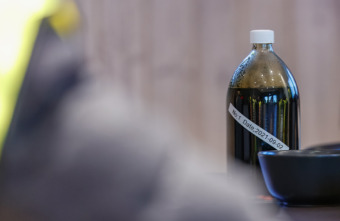
Every job in the bioeconomy creates three indirect jobs in the EU. Examples of products are biobased chemicals made from algae used to produce pharmaceuticals, personal care products and industrial applications.
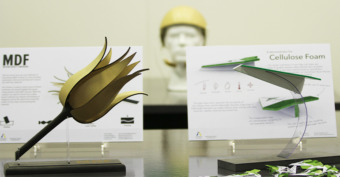
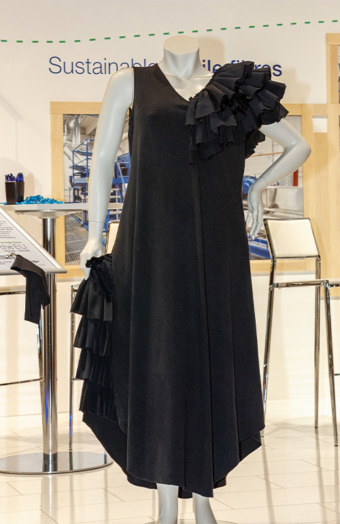
Biobased plastics are increasingly used in packaging and automotive parts, while biobased construction products, textile fibres and fertilisers are increasingly in demand.
However, it still has a huge untapped potential, and the EU Bioeconomy Strategy aims to unlock this potential by scaling up innovation and investments, developing lead markets for biobased materials and technologies, ensuring a sustainable supply of biomass, and harnessing global opportunities.
Making biobased innovations a reality
To lead the biotech revolution, innovation and investment need to be scaled up so that research does not remain in the labs.
Scaling up biobased innovations requires a combination of public and private investments, as well as a streamlined regulatory environment.
The Commission will work to create a coherent and simplified regulatory framework that rewards circular and sustainable business models, while safeguarding EU safety standards.
Faster, clearer and simpler approvals for innovative solutions will support companies to develop and grow in Europe, especially for SMEs.
Developing lead markets for biobased materials and technologies
The Commission says that it will also ensure that existing and future EU funding goes into biobased technologies.
To stimulate private investment, the Commission proposes to convene a Bioeconomy Investment Deployment Group to create a pipeline of bankable projects, share risk more effectively, and crowd in private capital.
To unlock investment and enable scale-up, the Commission identified innovative markets for biobased materials and technologies.
These include biobased sectors, such as plastics, fibres, textiles, chemicals, fertilisers, plant protection products, construction materials, biorefineries, advanced fermentation and permanent storage of biogenic carbon (bioCO2), which have high potential for both economic growth and environmental benefits.
The Commission will boost demand for biobased content in products, for example, by setting targets in relevant legislation.
The Strategy also proposes establishing a Biobased Europe Alliance, gathering EU companies to collectively harness the power of purchasing biobased solutions worth EUR 10 billion by 2030.
Securing a sustainable use of biomass
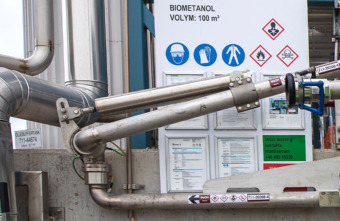
Europe is largely self-sufficient in biomass, but it must make sure that it stays that way.
The EU Bioeconomy Strategy therefore stresses the need for sourcing biomass responsibly, ensuring that forests, soils, water, and ecosystems are managed within their ecological limits.
Promoting circularity and enhancing the value of secondary biomass – such as agricultural residues, by-products, and organic waste – is key.
The Commission aims to set up initiatives rewarding farmers and foresters who protect soils, enhance carbon sinks and support sustainable biomass use.
Harnessing global opportunities
With its strong research base and innovative industries, Europe is well positioned to become a global leader in sustainable biobased technologies, materials, products and expertise.
With this Strategy, the EU will support European industry in accessing global markets by securing partnerships that reduce vulnerability and ensuring that Europe is not dependent on a single region or a single resource.
In the current fragile geopolitical climate, resource security enhances the EU’s competitiveness and resilience.
The bioeconomy offers huge potential to scale up – from the products we use every day, to the homes we live in, to large industrial applications. This is a growth strategy that will increase our resilience and competitiveness, and at the same time ensure that nature and healthy ecosystems remain the backbone of our economy. It will create local jobs, replace fossil resources, and protect the nature we all rely on. Our vision is clear: a future where Europe runs on nature, innovation and circular solutions rooted in a competitive and sustainable bioeconomy, commented Jessika Roswall, Commissioner for Environment, Water Resilience and a Competitive Circular Economy.