Countries around the world are contending with pressing energy security threats and growing longer-term risks across an unprecedented range of fuels and technologies, thrusting energy into the heart of geopolitical tensions and elevating it as a core issue of economic and national security. In this context, the latest edition of the International Energy Agency's (IEA) World Energy Outlook underscores the need for governments to pursue greater diversification of supplies and increased cooperation with one another to help navigate the uncertainties and turbulence ahead.
The 2025 edition of the World Energy Outlook (WEO-2025), the most authoritative global source of energy analysis and projections, covers a broad range of trajectories, highlighting different opportunities and vulnerabilities – but also commonalities.
It does this through three main scenarios, none of which are forecasts. Each maps out a distinct energy future, enabling an analysis of the implications of different policy, investment, and technology choices for energy security, affordability, and emissions.
Growing demand for energy services
Among the many trends common to all the scenarios in this year’s WEO is the world’s growing need for energy services over the coming decades – with demand rising for mobility; for heating, cooling, lighting, and other household and industrial uses; and increasingly for data and AI-related services.
In particular, a group of emerging economies – led by India and Southeast Asia and joined by countries in the Middle East, Africa, and Latin America – will come to increasingly shape energy market dynamics in the years ahead.
Collectively, they take up the baton from China, which accounted for half of global oil and gas demand growth and 60 percent of electricity demand growth since 2010, although no country or group of countries comes close to replicating China’s energy-intensive rise.
Additional vulnerabilities
Amid these shifts, traditional energy risks affecting the security of oil and gas supply are now accompanied by vulnerabilities in other areas, most visibly in supply chains for critical minerals due to high levels of market concentration.
A single country is the dominant refiner for 19 out of 20 energy-related strategic minerals, with an average market share of around 70 percent.
The minerals in question are vital for power grids, batteries, and EVs, but they also play a crucial role in AI chips, jet engines, defence systems, and other strategic industries.
When we look at the history of the energy world in recent decades, there is no other time when energy security tensions have applied to so many fuels and technologies at once – a situation that calls for the same spirit and focus that governments showed when they created the IEA after the 1973 oil shock, said IEA Executive Director Fatih Birol.
Geographic concentration in refining has increased for nearly all key energy minerals since 2020, and particularly for nickel and cobalt.
Analysis in WEO-2025 of the pipeline of announced projects suggests that reversing this process is set to be slow, calling for stronger action by governments.
With energy security front and centre for many governments, their responses need to consider the synergies and trade-offs that can arise with other policy goals – on affordability, access, competitiveness, and climate change. The World Energy Outlook’s scenarios illustrate the key decision points that lie ahead and, together, provide a framework for evidence-based, data-driven discussion over the way forward, Dr Faith Birol said.
The Age of Electricity has arrived
Electricity is at the heart of modern economies, and electricity demand grows much faster than overall energy use in all scenarios in WEO-2025.
Investors are reacting to this trend: spending on electricity supply and end-use electrification already accounts for half of today’s global energy investment.
Analysis in the World Energy Outlook has been highlighting for many years the growing role of electricity in economies around the world. Last year, we said the world was moving quickly into the Age of Electricity – and it’s clear today that it has already arrived, Dr Fatih Birol said.
For the moment, electricity accounts for only about 20 percent of final energy consumption globally, but it is the key source of energy for sectors accounting for over 40 percent of the global economy and the main source of energy for most households.
In a break from the trend of the past decade, the increase in electricity consumption is no longer limited to emerging and developing economies. Breakneck demand growth from data centres and AI is helping drive up electricity use in advanced economies, too. Global investment in data centres is expected to reach US$580 billion in 2025. Those who say that ‘data is the new oil’ will note that this surpasses the US$540 billion being spent on global oil supply – a striking example of the changing nature of modern economies, said Dr Fatih Birol.
A pivotal issue for energy security in the Age of Electricity is the speed at which new grids, storage, and other sources of power system flexibility are deployed.
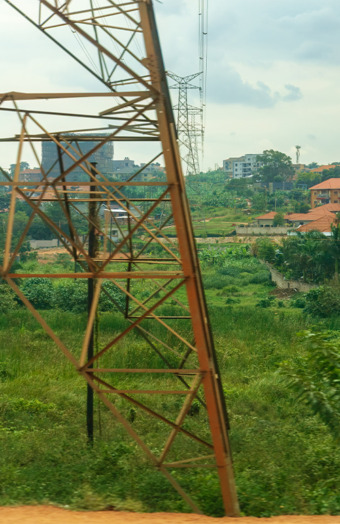
For the moment, some of these elements are lagging. Investments in electricity generation have charged ahead by almost 70 percent since 2015, but annual grid spending has risen at less than half that pace.
Although the pace varies across the different WEO scenarios, renewables grow faster than any other major energy source in all the scenarios, led by solar PV.
Notably, fresh analysis for the WEO-2025 maps the new geography of demand onto the distribution of global energy resources, showing that, by 2035, 80 percent of global energy consumption growth occur in regions with high-quality solar irradiance.
Another common element across scenarios is the revival of fortunes for nuclear energy, with investment rising in both traditional large-scale plants and new designs, including small modular reactors.
After more than two decades of stagnation, global nuclear power capacity is set to increase by at least a third by 2035.
Ample near-term supplies of oil and gas
In WEO-2025, all the scenarios indicate ample global supplies of oil and gas in the near term. Oil markets already reflect this, with today’s geopolitical fragility coexisting with oil prices in the US$60-US$65 per barrel range.
A similar easing of market balances for natural gas appears imminent, as new projects for liquefied natural gas (LNG) exports come online.
Final investment decisions for new LNG projects have surged in 2025, adding to the expected wave in natural gas supply in the coming years.
Around 300 billion cubic metres (bcm) of new annual LNG export capacity is scheduled to start operations by 2030, leading to a 50 percent increase in available global LNG supply.
Around half the new capacity is being built in the United States, and a further 20 percent in Qatar. Natural gas demand has been revised up in this year’s WEO, but questions still linger about where all the new LNG will go.
Easing near-term market balances for oil and gas are no cause for complacency, the report notes.
Both markets remain exposed to geopolitical risks, and faster demand growth – in response to weaker energy transition policies or lower prices – could quickly erode what buffers they have.
Short on universal energy access and climate change goals
In two critical areas of longstanding WEO analysis, the world is falling short on the goals it set for itself: universal energy access and climate change.
Around 730 million people still live without electricity, and nearly 2 billion rely on cooking methods that are detrimental to human health.
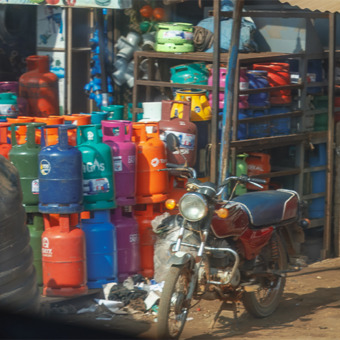
A new scenario in WEO-2025 outlines a country-by-country pathway to reaching universal access to electricity in 2035 – and to clean cooking in 2040, with liquid petroleum gas (LPG) playing the biggest role.
With climate risks rising, WEO-2025 shows the world surpassing 1.5°C of warming in any scenario, including those with very rapid emissions reductions.
The energy sector will need to prepare for the security risks brought by higher temperatures, but there is still scope to avoid the worst climate outcomes.
The updated scenario in which the world reaches net zero emissions by mid-century brings temperatures back below 1.5°C in the long term.
At the same time, energy systems around the world are contending with the impacts of climate change today, underscoring the urgent need to build greater resilience to rising weather-related risks, as well as to cyberattacks and other malicious activity.
New data analyzed in this year’s WEO shows that disruptions to critical energy infrastructure in 2023 affected more than 200 million households around the world.
Power lines proved particularly vulnerable, with transmission and distribution grid damages accounting for about 85 percent of incidents.