Finland-headed oil refiner and renewable products major Neste Oyj have announced that it has successfully concluded its second series of industrial-scale processing runs with liquefied waste plastic at its refinery in Porvoo, Finland.
According to Neste, the goal of the processing runs is to further increase the company’s understanding of how different types of waste plastics behave during chemical recycling in the refinery processes.
The end product gained in the runs – “Neste RE”, a drop-in feedstock for petrochemicals – is turned into new plastics by Neste’s partners.
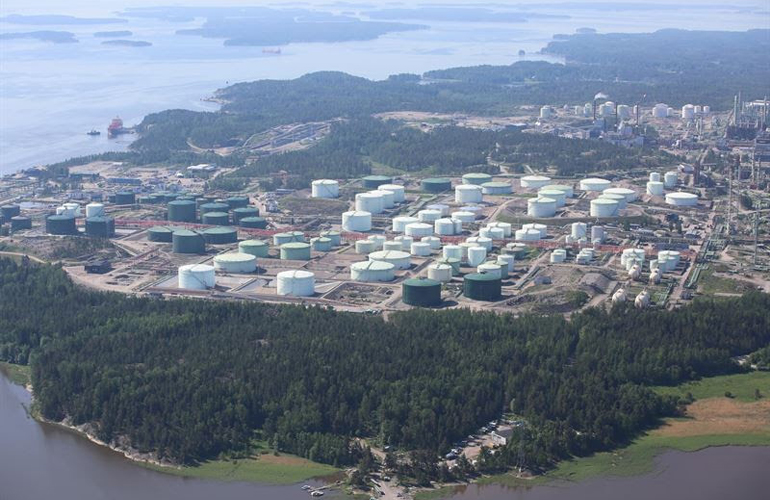
While Neste is establishing large-scale capacities to process liquefied waste plastic at its Porvoo site, the current processing runs utilize existing refinery equipment built for crude oil refining.
Successful conclusion of second processing series
Since Neste’s first processing run in 2020, the company has concluded a total of six successful runs, processing close to 3 000 tonnes of liquefied waste plastic in total.
After processing 800 tonnes in the first series completed in 2022, the company has been able to more than triple that amount to date.
The processing runs are a part of Neste’s strategy to advance chemical recycling and contribute to a circular polymer economy.
We are walking the talk on chemical recycling. Our processing runs provide us not only with valuable knowledge of the technologies but also serve as a proof of concept: chemical recycling can be done on an industrial scale. Our focus continues to be getting from individual processing runs to continuous operation, said Heikki Färkkilä, VP of Chemical Recycling at Neste.
Hard-to-recycle plastics
Neste processed so-called “hard-to-recycle” waste plastic which would have ended up in incineration or landfill had it not been directed to chemical recycling.
This highlights how chemical recycling complements existing mechanical recycling technologies.
The liquefied waste plastic for the runs has been sourced from multiple suppliers that are part of a supply network Neste has continuously expanded.
Among others, the suppliers include US-based Alterra Energy, in which Neste holds a minority stake, as well as Finland-based Wastewise, with which Neste recently cooperated to chemically recycle cross-linked polyethylene (PEX) waste from pipe production into new PEX pipes.
Moving to continuous production
Neste is looking to build capacities at its Porvoo site to process 400 000 tonnes of liquefied waste plastic per year in the course of project PULSE, which is funded by the EU Innovation Fund.
From 2030 onwards, Neste wants to process more than 1 million tonnes of waste plastic per year.
This ambitious aim is an important part of the company’s strategic study to transition its Porvoo refinery into a renewable and circular solutions site and possibly end crude oil refining by the mid-2030s.
Liquefied waste plastic would play an important role in replacing fossil crude oil in the company’s Porvoo refinery.