European ethanol biorefineries produced more food and animal feed than fuel in 2024, according to audited data released on September 9, 2025, by ePURE, the European Renewable Ethanol Association.
ePURE represents 41 member companies and associations with around 50 ethanol biorefineries across the EU and UK.
The statistics were compiled from ePURE members and other European renewable ethanol producers and certified by auditing firm Copartner.
Representing 85 percent of EU installed ethanol production capacity, ePURE members and other European producers of renewable ethanol produced 6.9 million tonnes of food and feed co-products, including high-protein animal feed, and 5.4 million tonnes of renewable ethanol last year, according to the audit.
Additional co-products included 1.54 million tonnes of captured biogenic carbon dioxide (bioCO2), another strategic domestic product that replaces fossil CO2 in various industrial applications, including beverages and greenhouses.
At a time of ever-shifting global trade policies, the strategic importance of domestic renewable ethanol biorefineries has never been more vital for Europe. As these latest figures show, European biorefineries help to reduce carbon emissions, secure food systems, ensure energy independence, and build agricultural and industrial autonomy, said ePURE Director General David Carpintero.
All of the crops used by the audited biorefineries were grown by European farmers.
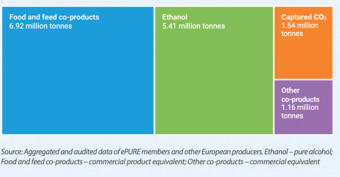
more food and feed co-products than ethanol: of the 9.62 million tonnes of co-products produced by biorefineries, 6.92 million tonnes were food and feed co-products (graphic courtesy ePURE).
Of the total renewable ethanol produced, 86.5 percent was for use in transportation fuel.
Of the remaining ethanol production, 6.9 percent was for industrial use, including hand sanitiser, and 6.6 percent was for food and beverage use.
The audit also showed record-high greenhouse gas (GHG) savings performance of European producers’ ethanol – 79 percent on average compared to fossil petrol (gasoline) – making its use essential to the decarbonization of transportation by reducing emissions from petrol and hybrid cars, which will predominate on Europe’s roads for many years to come.