As Canada’s North continues to experience the impacts of climate change, many Indigenous communities have identified clean, reliable energy as key to a resilient future. The Canadian government has committed to transitioning Indigenous communities away from fossil diesel by 2030, investing in clean energy projects across the territories while prioritizing reconciliation, self-determination, and community-led clean energy projects.
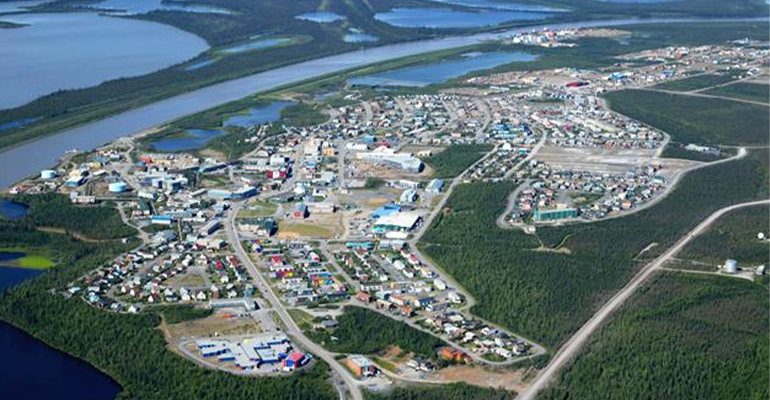
On September 22, 2020, Michael McLeod, Member of Parliament for the Northwest Territories, on behalf of Canada’s Minister of Natural Resources Seamus O’Regan, announced over CA$8 million for eight community-led clean energy projects in the Northwest Territories that will support communities to build a cleaner future by reducing their reliance on diesel fuel for heat and power while creating jobs.
These projects demonstrate how Indigenous communities and businesses, the Northwest Territories Power Corporation, and federal and territorial governments can work collaboratively and creatively as partners and lead the way toward a more sustainable energy future, said Michael McLeod.
These projects in the Northwest Territories are:
- CA$184 000 to Inuvialuit Regional Corporation to promote energy literacy in the community, renew Inuvialuit dialect and culture, and promote cross-generational learning between Elders and youth on traditional practices, language, and sustainability;
- CA$797 000 to the Arctic Energy Alliance to build community capacity and energy literacy to support and direct their local Community Energy Planning process;
- CA$1.7 million to the Town of Inuvik to install a biomass heating system to replace the diesel boilers that are currently used for heat and provide freeze protection for the municipal water reservoir;
- CA$2.6 million to the Tulita Land Corporation to install biomass boilers to heat seven municipal buildings and to establish a forest-based value chain to produce woodchips to fuel the boilers;
- CA$500 000 to the Deline Got’ine Government to create a community energy plan that will increase energy efficiency and reduce diesel use, generate local green jobs, introduce a 30kWh solar system for the community’s Grey Goose Lodge hotel and respond to increasingly limited access to the winter road;
- CA$2.25 million to Nihtat Energy Ltd for three projects aimed at replacing diesel-fueled boilers with biomass-heating systems in six public buildings and engaging with Aklavik and other Gwich’in communities in the Northwest Territories to test methods of integrating renewables into isolated grids while maintaining Indigenous participation and building community knowledge on energy planning processes.
The first four projects are funded through Natural Resources Canada’s (NRCan) Clean Energy for Rural and Remote Communities program. The fifth project is funded through Impact Canada’s Indigenous Off-diesel Initiative, a CA$20-million initiative aimed at generating new opportunities by reducing diesel reliance in remote Indigenous communities.
Developed in collaboration with Indigenous Clean Energy Social Enterprise and the Pembina Institute, the initiative will support communities to develop ambitious clean energy plans and to break ground on their first clean energy projects.
Nihtat Energy Ltd.’s projects are funded through the Clean Energy for Rural and Remote Communities program and the Indigenous Off-diesel Initiative.
Tulita Land Corporation welcomes Natural Resources Canada’s support of our community. The Bioheat project will help our community reduce its reliance on diesel, and create long-term employment opportunities for our members, said Chief Robert Charlie-Tetlichi, Nihtat Energy.
CA$5.4 million to five projects in Yukon
Meanwhile, Larry Bagnell, Member of Parliament for Yukon, also announced on behalf of Canada’s Minister of Natural Resources Seamus O’Regan, a CA$5.4 million investment in five community-led clean energy projects in Yukon to support communities in their efforts to reduce reliance on diesel fuel for heat and power while creating jobs.
With the Government of Canada’s Clean Energy for Rural and Remote Communities funding, the Government of Yukon has launched a three-year initiative to better support Yukon First Nations with local energy projects. We are excited to be working in partnership with Yukon First Nations as we move toward a low-carbon energy supply that meets our territory’s growing demands and facilitates ongoing economic growth and prosperity in Yukon, said Larry Bagnell.
These investments in Yukon are:
- CA$2.1 million to Carcross/Tagish First Nation to install a biomass district heating system to displace existing electric and fossil fuel heating systems in five community buildings;
- CA$1.6 million to the Yukon Conservation Society to evaluate the technical feasibility and customer acceptance of utility-controlled electric thermal storage heaters that can provide reliable electricity capacity;
- CA$800 000 to Teslin Tlingit Council to construct a biomass district heating system for eight new duplexes, including 16 housing units, to reduce GHG emissions and energy costs for the community;
- CA$574 000 to the Government of Yukon to work collaboratively with Yukon First Nations to evaluate and address gaps that delay the deployment of energy projects in communities;
- CA$345 900 to Kluane First Nation to develop a forest resources management plan for the First Nation settlement lands to meet current and future local biomass heating needs.
Funding for all the Yukon projects is from the Clean Energy for Rural and Remote Communities program.
Biomass technology presents economic opportunities for the TTC and its citizens while reducing forest fire risks around Teslin and its Traditional Territory. The ultimate goal of the Teslin Community Energy Strategy is to provide the community with the complete means to be energy self-sufficient, said Chief Richard Sidney, Teslin Tlingit Council.
Six-year program to reduce reliance on diesel
Natural Resources Canada’s Clean Energy for Rural and Remote Communities program is a six-year, CA$220 million program that aims to reduce reliance on diesel in rural and remote communities by deploying and demonstrating renewable energy, encouraging energy efficiency, and building local skills and capacity.
It is part of the Government of Canada’s Investing in Canada infrastructure plan, a more than CA$180 billion investment over 12 years in public transit projects, green infrastructure, social infrastructure, trade, and transportation routes, and Canada’s rural and northern communities.
Our environment is key to our way of life, and we are committed to continue finding ways to produce clean energy. This biomass heating system will mark a significant upgrade to our community’s infrastructure. Carcross/Tagish First Nation is proud to work with the Government of Canada in our joint pursuit of a sustainable future, said Chief Lynda Dickson, Carcross/Tagish First Nation.