Researchers at Loughborough University in the UK have been collaborating with academics from the Asian Institute of Technology (AIT) in Thailand on a project to develop a small-scale biogas system that converts food waste to biogas and can be monitored via the internet.
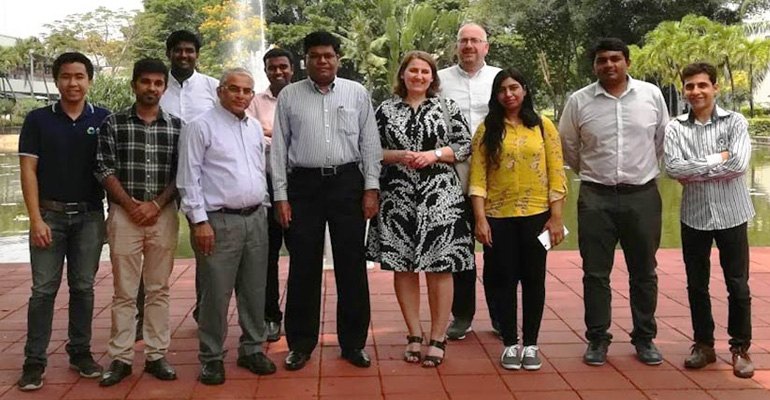
Dr Tanja Radu, from Loughborough University’s School of Architecture, Building and Civil Engineering, and Dr Richard Blanchard, from Loughborough’s Centre for Renewable Energy Systems Technology, have been working with academics from the Asian Institute of Technology (AIT) in Bangkok, Thailand on a project titled ‘Decentralized Community Scale Anaerobic Digestion: Resource Recovery and Waste Treatment’.
The project – which is supported by the Department of Business Innovation and Skills UK, National Science and Technology Policy Office Thailand and the British Council Newton Fund – has the objective to develop better waste management practices, promote waste-to-energy and establish exchange links between UK and Thailand.
Converting food waste into biogas using anaerobic digestion (AD) has societal and environmental benefits. It increases accessibility to regulated, rigorous and safer waste treatment and decreases the use of fossil fuels as well as reducing the reliance on wood in developing countries. This lowers harmful air pollution and smoke emissions which in turn improves the quality of life and wellbeing of people.
Remote monitoring
The project supports the Thai government’s aim for decreased dependence on imported sources of energy and decentralized generation of energy at community scale. This has challenges and what is unique about the biogas system the academics have developed is the ability to remotely monitor its performance via the internet.
The collaboration has led to the installation of two biogas plants – one at Loughborough University and one on the AIT campus in Bangkok – that use cafeteria waste as the feedstock contributing to the greater sustainability of both campuses.
The pilot plants will serve as a classic model of how the biogas industry could be revolutionized, installed and operated in the future. The biogas plants – or Biogas Plants 4.0 as they are known – will be associated with higher efficiency and energy yield.
By embedding sensors with the digester, the pulse of the plant is heard from miles away. The quality of the biogas generated is monitored by employing a sophisticated online biogas analyzer. With real-time data generated, analytical work becomes much simpler. Whenever there is a deviation of the data trend from the optimal range, appropriate precautionary measures are taken to prevent any irreversible damage to the biogas plants. A low-cost monitoring platform eliminates the need for complex experimental procedures that were not previously viable at decentralized level, expalined Professor Chettiyappan Visu, who is leading the AIT team with Dr Abdul Salam.
The performance parameters of both pilot plants are checked in regular time intervals and the information is sent to a joint web portal. In this way, a concept of centralized monitoring of decentralised biogas generation has been achieved, where monitoring is enabled in real time.
Researchers from both Loughborough University and AIT have access to the joint web portal and real-time data, enabling them to observe performance parameters of both digesters, regardless of them being at a great distance apart geographically.
The project enabled us to create a small network of decentralised biogas pilot plants, but also to address the issue of remote monitoring on a community scale. We have shown that this is possible to achieve with only a fraction of the cost usually associated with process monitoring on an industrial scale. This now opens a range of possibilities for successful decentralised energy generation in remote locations, with an additional benefit of waste reduction and nutrient recovery, concluded Dr Tanja Radu.
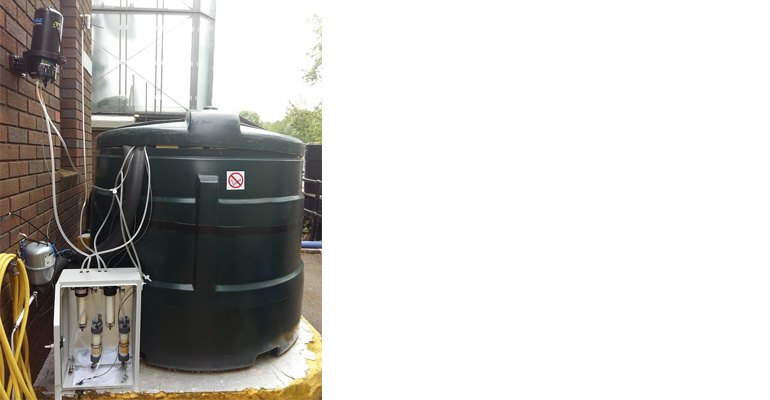
courtesy Loughborough University).