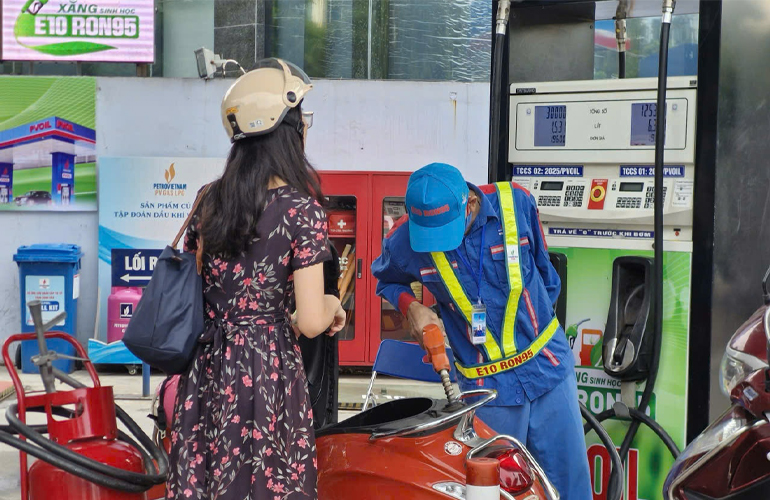
In Vietnam, the Ministry of Industry and Trade has proposed a new roadmap requiring all gasoline sold nationwide to be E10 starting in June 1, 2026, and E15 beginning January 1, 2031. The Vietnam Biofuel Association asserts that the country can ensure a stable ethanol supply, supported by both domestic production and imports if necessary.
The plan, Circular 50/2025/TT-BCT, which was announced earlier this year and adopted on November 7, 2025, aims to reduce environmental pollution, support sustainable agriculture, and boost the domestic ethanol industry.
Ethanol has long been 20–30 percent cheaper than traditional gasoline, so E10 is expected to lower pump prices for motorists.
Cassava—Vietnam’s key ethanol feedstock—is expected to gain a more stable market as the domestic biofuel demand grows, helping farmers secure steady incomes.
The shift is also seen as beneficial for the trade balance, particularly with the United States, a major ethanol exporter.
Supply and infrastructure are in place
The Vietnam Biofuel Association asserts that the country can ensure a stable ethanol supply, supported by both domestic production and, if necessary, imports.
According to the Ministry of Industry and Trade, the country consumes over 10 million tonnes of gasoline annually, requiring about 1 million tonnes of ethanol for E10 blending and 1.5 million tonnes for E15.
Currently, Vietnam has six domestic fuel ethanol plants with a combined annual production capacity of around 600,000 m3 of ethanol or 40 percent of the anticipated E10 demand.
The new blending policy would allow these plants to ramp up ethanol production capacity, along with other valuable co-products such as fusel oil, biogenic carbon dioxide (bioCO2), and dried distillers’ grains with solubles (DDGS) for animal feed.
Fuel and fuel distributor majors operating in Vietnam, including Vietnam National Petroleum Group (Petrolimex) and PetroVietnam Oil Corp. (PVOIL), have blending infrastructure well above current demand in place.