
The American Biogas Council (ABC) welcomes the introduction of Congresswoman Elise Stefanik's bill, the Renewable Electricity Tax Credit Equalization Act (H.R. 4137) which will extend the renewable electricity tax credit (Sect. 45) for open-loop biomass, closed-loop biomass, hydropower, geothermal and waste to energy technologies.
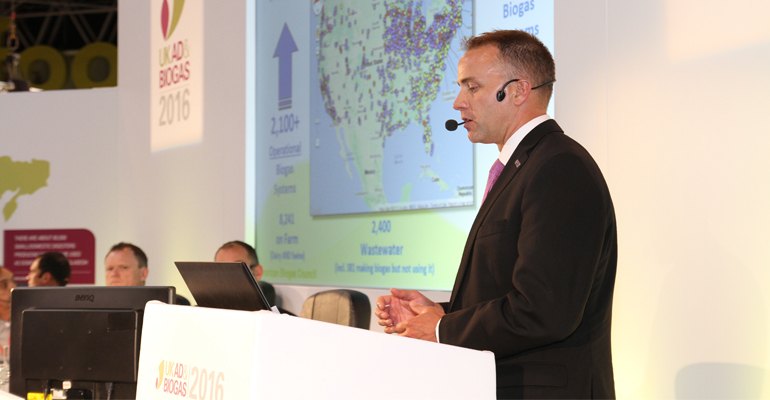
The biogas industry applauds the introduction of the Renewable Electricity Tax Credit Equalization Act which will fix inequities in our tax code and allow biogas systems and baseload renewable energy project development to grow. The US biogas industry has the potential to build at least 13 000 new systems which would catalyze about US$40 billion in new capital investments, create 335 000 construction jobs and 23 000 permanent jobs and build the infrastructure we need for recycling organic material while protecting our air, water and soil, said Patrick Serfass, Executive Director of the American Biogas Council (ABC).
Tax incentives for biogas and anaerobic digestion (AD) technologies expired at the end of 2016, while tax credits for wind and solar renewable electricity resources – industries with which biogas directly competes – were provided long-term extensions at the end of 2015.
According to ABC, this disparity in treatment puts biogas and anaerobic digester development at a significant competitive economic disadvantage in the US market for new renewable electricity generation, particularly in the eyes of investors who are seeking certainty with respect to tax incentives.
H.R. 4137 was introduced to address this disparity and ensure that the federal government doesn’t pick winners and losers. Biogas power is an important source of renewable electricity and plays an indispensable role in maintaining a reliable and functioning grid system, while also supporting the integration of variable renewables like wind and solar. However, without H.R. 4137 further deployment of clean, reliable baseload energy resources are in jeopardy.