Australia-headed air carrier Qantas Group is set to complete the world’s first dedicated biofuel flight between the United States (US) and Australia, QF96 from Los Angeles (LAX) to Melbourne (MEL). The historic trans-Pacific 15-hour flight will operate with approximately 24 tonnes of blended biofuel, saving 18 tonnes of fossil carbon emissions. Qantas will use biojet derived from Brassica carinata, a non-food, industrial mustard seed, developed by Canada-headed Agrisoma Biosciences Inc.
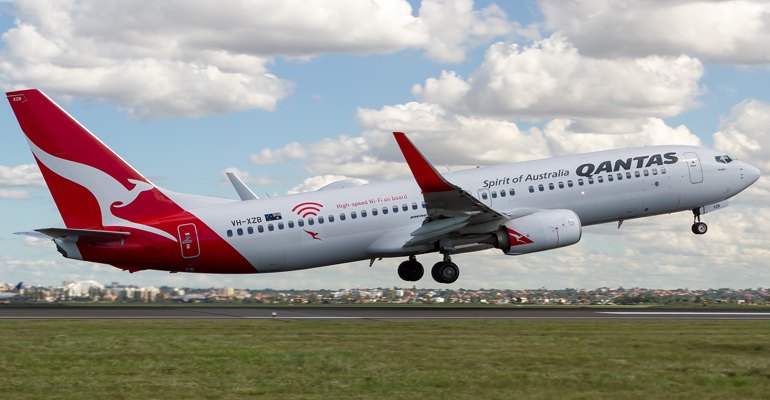
Flight QF96, which departed LAX on January 28 and arrives in MEL on January 30 local time, is part of the partnership announced in 2017 which will also see the companies work with Australian farmers to grow the country’s first commercial aviation biofuel seed crop by 2020.
Qantas International CEO Alison Webster said it was “fitting” that the airline’s game-changing Boeing Dreamliner 787-9 will showcase the future of sustainable aviation.
The Qantas Dreamliner marks an exciting new era of innovation and travel. The aircraft is more fuel efficient and generates fewer greenhouse emissions than similarly sized-aircraft and today’s flight will see a further reduction on this route. Our partnership with Agrisoma marks a big step in the development of a renewable jetfuel industry in Australia – it is a project we are really proud to be part of as we look at ways to reduce carbon emissions across our operations, said Webster.
Qantas’ first trans-Pacific biofuel flight was made possible with the support of AltAir Fuels and World Fuel Services. In 2012 Qantas and Jetstar operated Australia’s first biofuel trial flights. Qantas’ A330 Sydney-Adelaide return service and Jetstar’s A320 Melbourne-Hobart return service were both powered with biofuel derived from used cooking oil (UCO) split with 50:50 conventional jet fuel certified for use in commercial aviation.
Wide-ranging benefits
According to Qantas, across its lifecycle, using carinata-derived biofuel can reduce carbon emissions by eighty percent compared to traditional jet fuel. The ten percent biofuel blend used on flight QF96 will, therefore, see a seven percent reduction in emissions on this route compared to normal operations.
The oilseed requires no specialised production or processing techniques. It is water efficient and The University of Queensland field trials in Gatton, Queensland, and in Bordertown, South Australia, have demonstrated it should do very well in the Australian climate.
It is sown in either fallow areas where food crops fail or in between regular crop cycles, known as “cover cropping”. Rotational or break-crops can improve soil quality, reduce erosion for food crops and provide farmers with additional income.
Biojet fuel made from carinata delivers both oil for biofuel and protein for animal nutrition while also enhancing the soil its grown in. We are excited about the potential of the crop in Australia and look forward to working with local farmers and Qantas to develop a clean energy source for the local aviation industry, said Steve Fabijanski, CEO of Agrisoma Biosciences.

Facts
About Brassica Carinata
Brassica carinata produces high-quality oil, ideal for aviation biofuel and biodiesel for airport vehicles. It is a ‘drop-in’ crop and requires no specialised production or processing techniques. It is sown in either fallow areas where food crops fail or in between regular crop cycles, known as “cover cropping”. Rotational or break-crops improves soil quality, reduces erosion for food crops and provides farmers with additional annual income. Carinata-based fuel offers a more than 80 percent reduction in carbon emissions in comparison to standard petroleum-based fuel based on current Agrisoma commercial operations in the USA, South America and Europe. The crushed Carinata seed produces a high-quality, high-protein, non-GMO meal for the Australian livestock, dairy and poultry market. One hectare (ha) of carinata seed yields 2,000 litres of oil, which produces 400 litres of biofuel, 1,400 litres of renewable diesel and 10 percent renewable by-products.