The World Bioenergy Association (WBA) and Croatian Biomass Association (CROBIOM) have signed and published a Bioenergy Agreement as a guideline for the development of bioenergy in Croatia towards 2030.
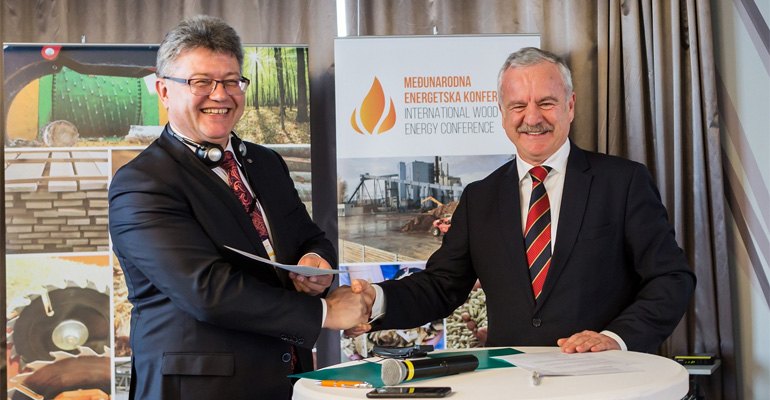
More than 230 leading bioenergy experts of forestry, agriculture, the heating, transport and power sector, as well as science and technology providers from Croatia, the southeast Europe and 9 other EU-member states, met in Zagreb for the 8th International Wood Energy Conference to discuss the future of bioenergy.
Thematic emphasis was put on the implementation of the post-2020 Renewable Energy Directive (REDII) and the market position of biomass and wood fuels, as well as the new technologies, combined heat and power (CHP) plants’ quotas, trends in wood pellet and biomass exports and the greater use of EU funds.
The Agreement has the following guidelines for developing bioenergy in Croatia:
- Phase out of fossil fuels by 2040 in Europe – the Paris declaration sets out a new framework for climate policy and Europe should lead the way in the transition to a 100 percent renewable energy society
- Increased mobilization of sustainable biomass – the increased use of biomass requires a proactive policy from Croatia which should include incentives for energy crops, use of abandoned land and better use of waste and byproducts
- Increased pellet consumption – the annual production of pellets in Croatia exceeds 280 000 tonnes. But the market still faces challenges and there is a need for education and strengthening cooperation
- Transformation of the heat sector – heat supply for district heating should be converted step by step to fossil free sources such as waste heat from industry, biomass combustion and solar thermal installations
- Introduction of carbon pricing – the possibility of introducing carbon prices should be considered to encourage increased use of biomass and renewables in the overall energy system