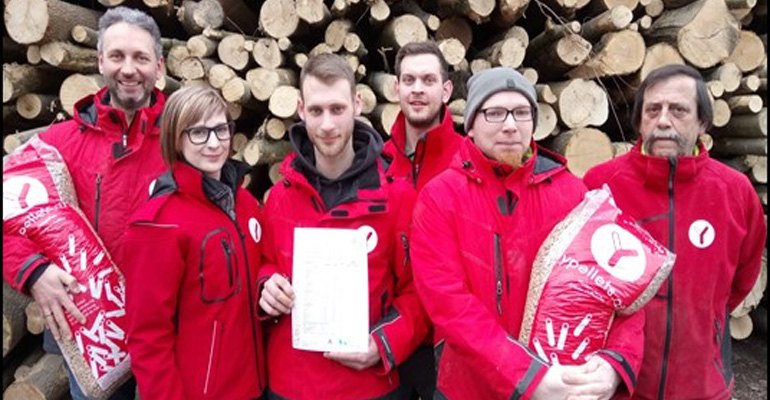
Having become operational in late December 2017, Austrian pellet producer Y Pellets has already managed to achieve ENplus certification for its brand new 40 000 tonne-per-annum pellet plant in Gars am Kamp.
Like any energy source, wood pellets must have well-defined properties to help consumers be sure that pellet boilers or pellet stoves operate flawlessly, safely and efficiently. This is ensured by the so-called ENplus quality seal, which is awarded after elaborate and rigorous testing and test procedures – to companies that produce and deliver quality pellets according to specific criteria.
This week we received our certificate after our factory was put through its paces for a number of weeks. The ENplus quality certificate offers the highest standard in the field of wood pellet fuel worldwide and is the only standard that guarantees that pellet quality is carried through the entire logistics chain, said Stephan Schneider, Sales Manager, Y Pellets.
The quality guidelines of ENplus are issued by the European Pellet Council (EPC). EN plus certified companies are reviewed by independent inspectors every three years. The requirements are extensive and strict. They include – a permanent control of the production – the ongoing check of the pellet properties in the in-house laboratory and – an annual check by an inspector approved by the EPC.
Schneider pointed out that ENplus controls the entire supply chain. In order to ensure the consistently high quality of the delivered pellets, this system certifies both the pellets themselves and the processes necessary for their production and logistics.
This means that all companies in the supply chain who have physical contact with the pellets must be certified, Scheider stressed.