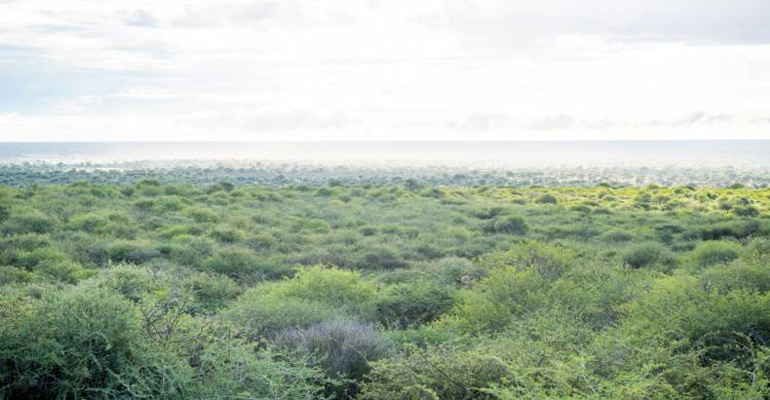
Namibia has achieved 1.6 million hectares (ha) of Forest Stewardship Council (FSC) Forest Management certified area with approximately 320 landowners and managers. The country has experienced a staggering 572 percent growth over the last three years. FSC group scheme certificate holders have additionally included Non-Timber Forest Products, such as venison, into their scope of forest management certification bringing additional value to their group scheme members.
According to FSC Southern Africa Coordinator, Manushka Moodley, the significant growth in the certified area is attributed to the increased market demand for FSC certified charcoal in Europe, availability of forest resources in Namibia, land restoration objectives of landowners/managers and the Namibian Government, and the positive attitude of farmers, skilled consultants, and organizations in the supply chain.
FSC Southern Africa carried out training earlier this year, in February in Windhoek and early March in Grootfontein, on the now effective National Forest Stewardship Standard for Namibia. FSC Southern Africa plans to host two more courses during 2020.
The training was funded by the GIZ BCBU program in Namibia and led by an Assurance Services International (ASI) approved training facilitator. The training aimed to calibrate certification body auditors, farm managers, and consultants on the requirements of the new Standard.
Carbo Namibia Group Scheme Manager, Frank Detering, expressed that the course was “of great assistance to the FSC producers for future purposes and gave them more insight into the past activities relating to FSC requirements”.
European charcoal demand driving certification
Germany-based retailers, Aldi Süd and Aldi Nord and its Austria-based subsidiary, Hofer, contributed to the growth of FSC certification via a partnership with FSC Global Development. The project directly contributed to the certification of 190 000 hectares involving 28 farmers in their supply chain.
The past five years have seen an exponential growth of FSC certified rangeland. FSC’s presence in the country and assistance in drafting a National standard for the country are key contributors to the growth. Practical implementation, responsible farming, and transparency will ensure a sustainable future for Namibia’s rangeland and associated activities, said Stephan Bezuidenhout, Director, Environmental Compliance Consultancy (ECC).
Namibia is also the first country in Africa to obtain an FSC Group Chain of Custody (CoC) certificate, with 11 different Organisations certified under the FSC CoC certificate issued to CMO Namibia (Pty) Ltd.
The growth of the certified area in Namibia has provided landowners and workers in the industry with an income during a difficult drought whilst meeting the restoration objectives needed in our landscape. The provision of FSC certified charcoal to international markets will continue to contribute to the growth of our local economy and assist with employment opportunities, said Gunter Schwalm, Chairperson, Namibian Charcoal Association (NCA).
According to Dr Michal Brink, Director of South Africa headed CMO (Centre for the Modernisation of Operations) Group, an international forest value-chain management and training consultancy, Namibia becoming Africa’s largest forest management certificate holder with approximately 1.2 million hectares is because of several factors integrated into a sustainable solution for farmers wanting to responsibly produce charcoal.
This includes the development of a software solution that makes the implementation of FSC requirements simple and value-adding. CMO is honoured to make a difference in the charcoal industry in Namibia, while simultaneously restoring degraded forest ecosystems and uplifting livelihoods. Establishing an FSC CoC Group scheme provides local processors in the Namibian Charcoal industry with an opportunity to join the FSC value chain at an affordable cost, thereby unlocking the bottleneck in the FSC charcoal supply chain destined for the European markets, said Dr Brink.