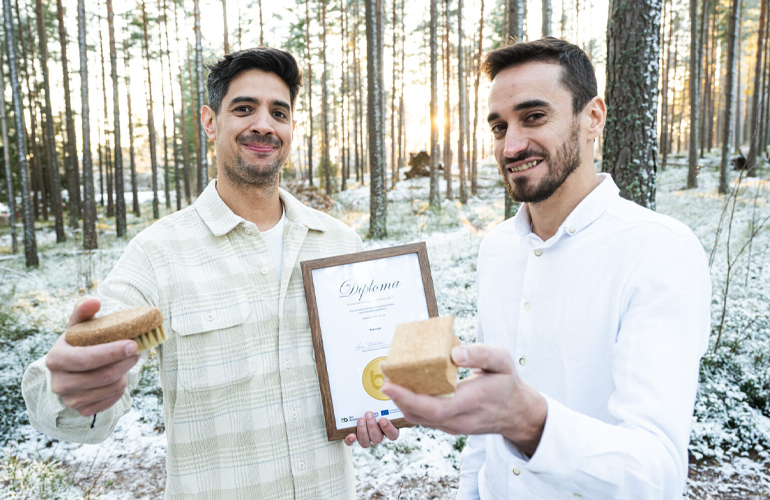
In Sweden, municipal energy utility Karlstads Energi AB and Polish cork recycling initiative Fundacja ReKorek (ReKorek) are exploring the possibility of recycling wine corks. The international collaboration, the result of an innovation challenge organized by regional bioeconomy cluster Paper Province, has the potential to lead to used wine corks in Karlstad being repurposed for the production of new products rather than energy recovery.
In addition to providing electricity, district heating, and broadband to the city of Karlstad, Karlstads Energi is also responsible for the city’s recycling and waste management services, with the aim of recycling as much as possible.
Currently, there’s no recycling system for wine corks in Sweden. They are incinerated and converted into district heating. While this process has benefits, Karlstads Energi sees untapped potential in reusing cork because it is a natural and sustainable material, said Malin Pettersson, Recycling Manager at Karlstads Energi.
International collaboration
To investigate the potential of giving the corks a new life, the company has just participated in an international innovation challenge.
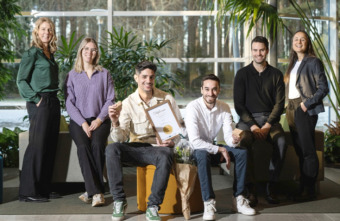
It was co-organized with Paper Province using a method called BioBoosters Hackathon and supported by organizations in Sweden, Finland, Estonia, Latvia, Lithuania, Poland, and Germany.
The open call for the Karlstad Energi Hackathon gathered innovative businesses from across Europe to address the wine cork challenge.
Among these, Nordic Surface, Reselo, and ReKorek were selected to refine their solutions over two days, supported by mentors specializing in business and product development, value propositions, and communication.
Then the companies pitched their final proposals to Karlstads Energi. ReKorek was selected as the winner. The company has an established cork collection system in Poland which they aim to introduce in new markets.
ReKorek presented a sharp and concrete solution that clearly demonstrates it is possible to create an efficient collection process for the reuse of natural corks. We see great potential in the concept and look forward to exploring the opportunities for future collaboration, said Malin Pettersson.
Developing a concept
This was the second innovation challenge, organized as a Bioboosters hackathon by Paper Province.
The method is being developed and tested as part of an international initiative involving nine organizations from seven countries around the Baltic Sea.
Together the partners have held around thirty hackathons. In the spring, five new challenges will be launched, focusing on different issues that aim to contribute to more circular and bio-based societies.
The approach has been designed to find innovative solutions to business challenges. By openly announcing challenges and actively seeking solutions from companies and researchers new collaborations can begin. We are excited to follow Rekorek and Karlstads Energi’s journey, said Magnus Persson, Project Manager at Paper Province.