The Renewable Energy Policy Network for the 21st Century (REN21) has announced that it regrets the decision by the Trump Administration to withdraw the United States from several international organisations and multilateral frameworks, including REN21, the International Renewable Energy Agency (IRENA), and the United Nations Framework Convention on Climate Change (UNFCCC).
Founded in 2004 as an outcome of the Bonn 2004 International Conference on Renewable Energy, REN21 is a global multi-stakeholder network of governments, industry, NGOs, science, and academia that enables the necessary changes to build a renewable-based economy for prosperous lives and societies.
According to REN21, the Trump Administration’s decision is “an unfortunate decision” that comes at a time when countries face interconnected economic, environmental, and climate crises; effective responses depend on multilateralism and international cooperation.
REN21 notes that “stepping away from shared platforms for dialogue, data, knowledge exchange, and policy coordination risks isolating the United States from global efforts that are building resilient economies and societies, stable energy systems, and long-term prosperity.”
Economics driving renewables transition
From the outset, REN21’s mandate has been to collect, consolidate, and synthesise a vast body of renewable energy data to provide clear and reliable information on what is happening in real-time.
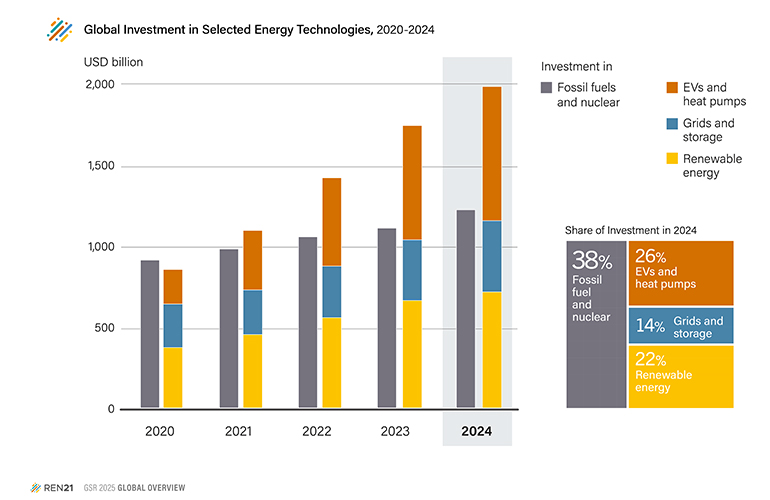
The US move does not alter the global trajectory towards renewables. The energy transition is already underway and continues to accelerate, driven not by ideology but by economics.
Renewable energy delivers greater energy security, shields economies from volatile fuel prices, creates jobs, reduces environmental damage, and supports more peaceful and equitable development pathways.
Renewable energy is the strongest economic choice countries, subnational governments, cities, and citizens can make today. It is the best option for energy security, the smartest investment for long-term prosperity, and a critical foundation for protecting nature. The shift to renewables is happening globally; it is no longer optional or reversible. It is happening because it makes economic sense and because societies need reliable, affordable energy in a changing world, said Rana Adib, Executive Director of REN21.
International cooperation remains the greatest accelerator
REN21 will continue to work with its global membership to advance a renewables-based economy that delivers prosperity and resilience.
The transition to renewable energy is unstoppable, and international cooperation remains its greatest accelerator.
Since 2005, REN21’s Renewables Global Status Report has been co-created with hundreds of experts and contributors, highlighting key developments and trends in renewables.
The United States has historically played an instrumental role in shaping global energy and climate cooperation, and collective progress toward a renewable-based economy is strongest when all major economies are engaged.
REN21 says that it remains committed to convening governments, industry, civil society, and experts to advance solutions that deliver energy security, economic resilience, and long-term prosperity.
REN21 also remains open to re-engaging in dialogue with the United States and will continue engaging with its many US-based members and partners.