In Sweden, Falk Biogas AB, a biogas project development company owned by 50 dairy farmers on the island of Öland, has secured a SEK 221 million (≈ EUR 20.6 million) investment grant from the Swedish Environmental Protection Agency toward a facility that will convert cattle slurry and manure into liquefied biomethane (bioLNG) and biofertilizer.
Falk Biogas has grown out of a multi-year collaboration between local farmers who want to manage cattle manure in a sustainable manner while producing renewable energy.
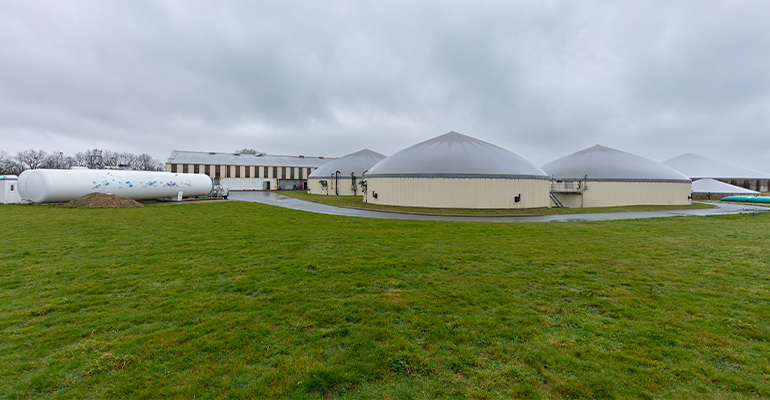
To be built in Borgholm, it is expected to be completed by 2028. It is designed as a complete value chain whereby the anaerobic digestion (AD) of livestock manure produces biogas, which is then upgraded to biomethane (aka renewable natural gas – RNG), and liquefied into liquid biomethane (bioLNG).
The circle is closed by returning the digested manure to the farms it came from.
The planned manure-to-bioLNG project will receive SEK 221 million (≈ EUR 20.6 million) in support through the Climate Step program, and the total investment is estimated at around SEK 340 million (≈ EUR 31.8 million).
This is a historic decision for Falk Biogas and for Öland. We have worked purposefully for many years to realize a plant that produces renewable fuel and biofertilizer in a circular system. With this support from the Swedish Environmental Protection Agency, we can now take the decisive steps towards a greener future, said Benny Wennberg, CEO, Falk Biogas.
Strengthens harvests, the climate, and competitiveness
The climate benefit is extensive as the investment is expected to reduce emissions significantly, and at the same time, strengthen Sweden’s preparedness by producing more domestic biofuel.
When fully operational, the plant is estimated to produce 43 GWh of bioLNG per annum for use in heavy-duty vehicles (HDVs) and shipping.
The farmers, who will deliver manure to the plant, are also co-owners of Falk Biogas, which, apart from dividends once profitable, will receive the biofertilizer in return, good for harvests and the competitiveness of local farms.
This investment is beneficial on several levels. The emission reduction is important in itself for society, but the project also contributes to strengthening Sweden’s preparedness and opportunities to operate heavy transport during crises, commented Anna Bredberg, Head of the ClimateStep Unit for Agriculture, Swedish Environmental Protection Agency.