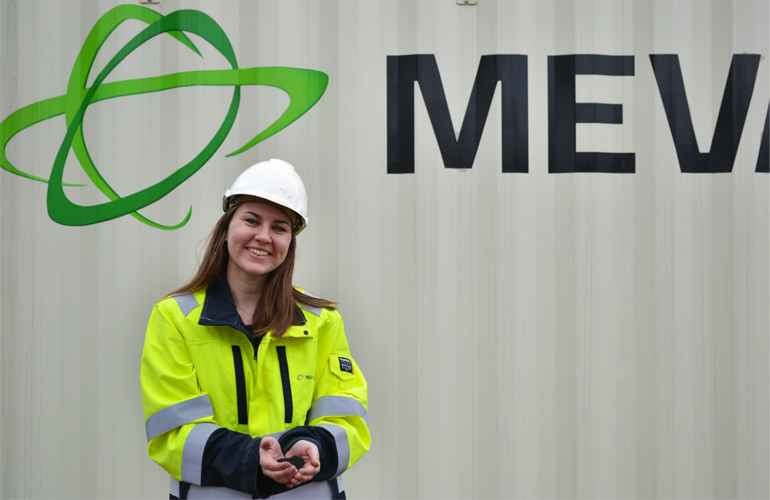
Meva Energy AB (Meva), a Swedish cleantech company pioneering modular gasification plants that convert biomass residues into climate-neutral, industrial-grade biosyngas, and biochar, has announced that the biochar produced at its plant in Kisa, Sweden, is now certified under the European Biochar Certificate (EBC) – Europe’s leading standard for sustainable and transparent biochar production. With this certification, the production is confirmed to meet strict European standards for quality, transparency, and environmental performance.
Biochar is a carbon-rich material made by heating biomass such as sawdust, wood residues, pellets, or other organic by-products at high temperatures in a low-oxygen environment.
Instead of combusting the material and releasing the biogenic carbon dioxide (bioCO2), the process transforms it into a solid, stable form of carbon.
The result is a black, lightweight material with a highly porous structure and very large internal surface area. That structure allows it to act like a sponge – holding water, nutrients, and microorganisms in place.
Biochar is very stable, and the carbon it contains does not easily break down. When added to soil, it can remain there for hundreds of years, effectively locking carbon away instead of letting it return to the atmosphere.
This makes biochar both a practical material and a long-term climate solution, where it can be used in several ways.
Low carbon footprint
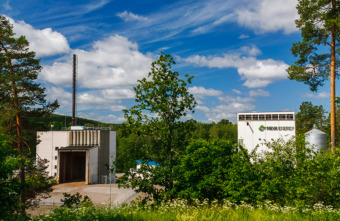
At Meva Energy’s Kisa plant, the thermochemical gasification of locally sourced wood pellets – produced from sawmilling residues – generates renewable biosyngas, which is used by the adjacent tissue mill instead of fossil propane.
At the same time, high-quality biochar is formed as a by-product of the thermochemical gasification process. Because production takes place close to the source of the raw material, transport is minimized.
EBC certification assures third-party verification
Developed by the Ithaka Institute and ensured by Carbon Standard International, the EBC certification confirms that biochar meets strict European criteria for: quality and purity, traceability throughout the value chain, controlled and low emissions during production, verified climate impact, and carbon storage.
With this certification, the production at Meva Energy’s Kisa facility is confirmed to meet strict European standards for quality, transparency, and environmental performance. The EBC certification ensures that this value is both measurable and transparent.
With EBC-certified biochar, Meva Energy joins a group of European producers delivering verified biochar for both environmental and industrial use.
Achieving EBC certification is an important milestone for Meva Energy. It’s a recognition of the rigorous approach we take to sourcing, producing, and handling biochar throughout the entire value chain, commented Emma Arvidsson, Product Manager Biochar & Carbon Removal at Meva Energy.
Currently, the European Biochar Certificate is a voluntary industry standard in Europe, except for Switzerland, where it is obligatory for all biochar sold for agricultural use. Several other countries have aligned biochar-related regulations with the EBC.