In Sweden, researchers in a project consortium have achieved promising results from large‑scale combustion of briquettes made from sewage sludge and cereal straw. Trials carried out in standard municipal combustion boilers show that energy is efficiently recovered during co‑combustion, while the plant nutrients in the bottom ash become a nutrient‑rich fertiliser.
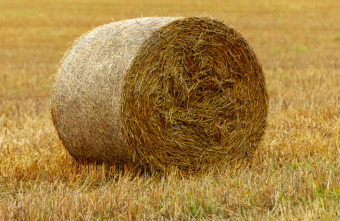
Sweden has an untapped potential in fuel derived from cereal straw, an agricultural residue.
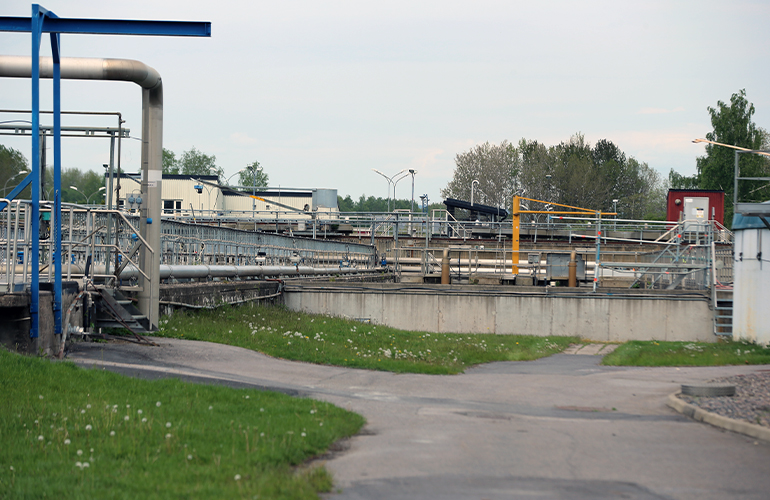
At the same time, there is a significant need for phosphorus in fertiliser production, while all municipalities face the challenge of managing sewage sludge from municipal wastewater treatment plants (WWTPs).
Recover phosphorus while removing contaminants
Currently, there is often no optimal solution for handling municipal sewage sludge.
It contains valuable phosphorus needed for fertiliser manufacturing, but also toxic trace elements such as heavy metals, pharmaceutical and narcotic residues, pathogens, microplastics, and per- and polyfluoroalkyl substances (PFAS) that farmers do not want on their fields when producing food.
For several years, researchers from various disciplines at Luleå University of Technology and Umeå University have examined in detail how sewage sludge can be recycled efficiently and sustainably, and how fertiliser can be produced without harmful chemicals.
The technology is both energy‑ and cost‑efficient and can be used worldwide. We see excellent potential for recycling municipal sewage sludge locally while at the same time producing both energy and high‑quality fertiliser, said Dr Marcus Öhman, Professor of Energy Engineering at Luleå University of Technology and coordinator of the research project.
The successful large‑scale results now emerging are possible thanks to these earlier studies.
We have developed a special briquette consisting of sewage sludge mixed with dry straw from agriculture. The dry straw in the mixture means the sludge does not need to be dried, which saves both energy and money, Dr Marcus Öhman added.
The ash makes good fertiliser
These briquettes made from straw and sludge have proven to be a well‑balanced combination that produces a high‑quality bottom ash.
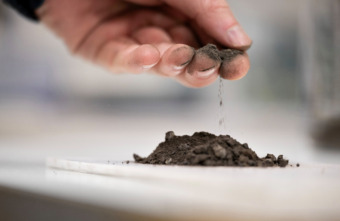
In greenhouse trials with beans, fertiliser derived from the bottom ash often produced better growth than traditional mineral fertiliser.
Thanks to the inclusion of ash from the dry straw, the phosphorus in the bottom ash becomes available to plants and works well in cultivation.
Over 90 percent of the phosphorus and potassium in the briquettes was recovered in the bottom ash.
The ash also contained the appropriate qualities and levels of calcium, magnesium, and sulphur required for classification as an approved inorganic multi‑component fertiliser.
Pharmaceutical residues and pathogens can be eliminated. Moreover, none of the analysed PFAS substances could be detected in the phosphorus‑rich bottom ash.
Many toxic trace elements, including cadmium, zinc, and lead, are separated from the bottom ash due to the high temperatures in the combustion boiler.
Use of existing boilers
The large‑scale trials also show that it is possible to use existing boilers commonly found in district heating plants. The briquettes were combusted in a standard Swedish 10 MW biomass boiler.
No modifications to the boiler or changes to operating settings were made during the trials, apart from adjusting the air supply to enable separation of the bottom ash.
Emissions of, for example, nitrogen oxides (NOx) and sulphur oxides (SOx) remained within current limit values, and no operational problems occurred.
Because cereal straw availability is greatest in southern Sweden, the technology using straw‑based briquettes is currently more cost‑effective there.
Further north, however, there is potential to cultivate reed canary grass, for example, on former peat extraction sites.
Oskar Johansson, researcher in law at Luleå University of Technology and participant in the study, shows that current regulations allow sewage sludge to be reused both as an energy resource and as a fertiliser.
However, the regulatory framework contains provisions that create uncertainty in specific applications.
For real‑world implementation of co‑combustion of straw and sewage sludge, an even larger demonstration project is needed, where all parts of the value chain can be evaluated locally and regionally. We also need to investigate which permits are required to enable co‑combustion in all types of existing combustion facilities, said Dr Nils Skoglund, Associate Professor in Energy Engineering at Umeå University.
The project “New energy‑ and resource‑efficient value chains through co‑combustion of straw fuels and sludge” has been running for four years and is funded by the Swedish Energy Agency’s Bio+ program.
It has been coordinated by the Energy Engineering group at Luleå University of Technology, in collaboration with Umeå University’s TEC‑lab, Research Institutes of Sweden – RISE, Glommers Miljöenergi AB, Skellefteå Kraft AB, NG Nordic AB, and VAKIN.