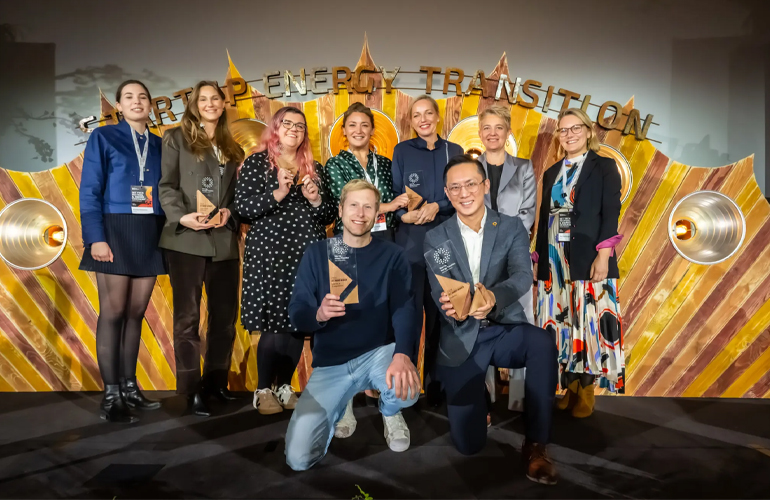
The German Energy Agency’s (Dena) Start-up Energy Transition (SET) initiative has announced the winners of the 2026 SET Awards. From over 470 applications, an international jury selected five start-ups with promising business models. BioMassters Ltd, a Rwanda-based company that combines advanced pellet stove technology, developed in collaboration with its partners at Mimi Moto, with a business model rooted in local biomass pellet production, local distribution networks, and existing retail infrastructure, scooped the ‘Quality Energy Access & SDG-7’ category award.
dena presented its SET Awards, its 10th edition, to pioneering start-ups in five categories: ‘Clean Energy & Storage’, ‘Mobility & Transportation’, ‘Industry’, ‘Buildings & Construction’, and ‘Quality Energy Access & SDG-7’, live from the Colosseum in Berlin on March 17, 2026.
The award comes with a EUR 10,000 cash prize each, and ceremony was attended by international start-ups, investors and prominent guests from the worlds of business and politics, including Patricia Espinosa Cantellano, CEO and founder of onepoint5, former Executive Secretary of the UNFCCC; Ann Mettler, Board Member of the European Innovation Council; and Dr Severin Fischer, State Secretary at the Berlin Senate Department for Economics and Energy.
The SET Award is a key driver for a sustainable energy future. This year alone, we received 470 applications from 79 countries. Many of these companies have long since moved beyond the pilot phase with their business models. By recognising and supporting them, we are sending a strong signal for the transition. This award not only encourages the winners, but also inspires many others to develop and drive forward innovative solutions, commented Corinna Enders, Chair of the dena Executive Board.
As part of the final selection process, BioMassters CEO, Claudia Muench, presented BioMassters to an international jury composed of energy experts, investors, policymakers, and industry leaders.
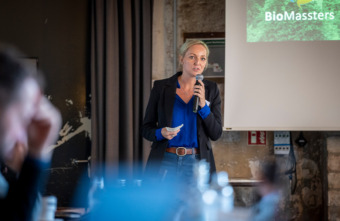
In her pitch, she emphasised a core principle behind the business model: that solving the clean cooking challenge requires pairing proven, high-performance pellet technology with deeply local integration.
In its motivation, the jury noted that BioMassters produces high-quality pellets from biomass waste and distributes highly efficient gasification stoves in Rwanda.
In doing so, the start-up is replacing traditional, unhealthy cooking methods with an affordable, clean energy source, thereby sustainably reducing the carbon footprint of private households.
This award is a strong validation of the work happening every day across our operations in Rwanda: from pellet production and stove assembly to retail expansion and customer engagement, Claudia Muench said in a statement.
The other categories and winners were:
Clean Energy & Storage: Flower (Sweden) uses artificial intelligence (AI) to intelligently control and manage renewable energy sources, wind farms, and battery storage systems.
Mobility & Transportation: Finmile (UK) offers an AI-based logistics platform that reduces fleet emissions and energy consumption by up to 40 percent through intelligent route and parcel optimisation.
Industry: Cyclic Materials (Canada) enables the industrial recovery of rare earth elements from end-of-life products.
Buildings & Construction: Mykor (UK) develops high-performance building insulation materials with a minimal carbon footprint by utilising innovative fungal biotechnology.