The recently published Inter-Governmental Panel on Climate Change (IPCC) Sixth Assessment report gives the starkest warning yet to the UK and world governments that time is running out to avert a climate catastrophe. Britain’s commitment to anaerobic digestion (AD) in mitigating climate change is needed more than ever ahead of COP26 says Charlotte Morton, Chief Executive of the UK Anaerobic Digestion and Bioresources Association (ADBA).
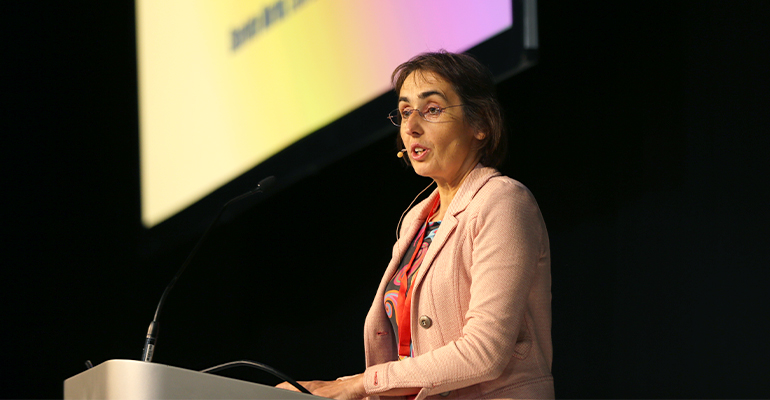
As the UK prepares to host a critical COP26 in Glasgow and Prime Minister Boris Johnson reflects on a “sobering” Sixth Assessment report by the IPPC, the UK Anaerobic Digestion and Bioresources Association (ADBA) has renewed its call to the British Government to urgently create a policy framework that will unlock the industry’s potential to reduce UK annual greenhouse gas (GHG) emissions by 6 percent by 2030 – and therefore play a vital role in mitigating the climate emergency within this decade.
Anaerobic digestion (AD) is a mature, readily available technology that offers a fully circular and immediate solution to help address climate change in the short- as well as long term, by capturing methane-emitting organic wastes and transforming them into biogas (also known as biomethane), digestate (a biofertiliser), bioCO2 and other valuable bioproducts,. Crucially, AD helps decarbonize carbon-intensive industries such as transport, heat and agriculture by producing alternatives to fossil-based fuels, gases, and fertilisers, said Charlotte Morton, Chief Executive of ADBA.
According to the ADBA, there are currently 685 AD plants operational in the UK. The entire industry digests approximately 46 million tonnes of organic material annually generating around 16 TWh of biogas and delivering around 1 percent of GHG savings.
Our research has shown that there are 170 million tonnes of organic wastes generated every year in the UK, most of which is mismanaged for example sent to landfill, incineration, or spread onto land, where they emit harmful greenhouse gases, especially methane, which is 84 times more toxic than CO2 over 20 years. If those organic wastes were treated through AD, the industry would be able to reduce those emissions by 3 percent upstream of the process and deliver another 3 percent cut in emissions downstream by displacing the fossil-based products currently used for transport, heating, and farming. Given the very stark message issued by the IPCC, it is crucial that the British government shows leadership in fully integrating AD and biogas into its Paris Agreement and Net Zero targets, said Charlotte Morton.
However, Morton notes that the UK AD sector has suffered from a lack of coordination between government departments to provide a coherent platform on which to fully deploy this industry, which not only generates green energy but also acts as a waste management solution.
In its recent Progress Report to Parliament 2021, the UK Committee on Climate Change (CCC) highlighted the huge gap between the Government’s ambition and policy reality.
We were dismayed, for example, that ministers having vowed to treble the production of biomethane by 2030 in December, we found that the Transport Decarbonisation Plan published last month by the Department of Transport didn’t even mention it. Trucks and buses currently generate 20 percent of the UK’s greenhouse gas emissions from transport, which is itself the highest GHG emitting sector in the UK with 27 percent. Biomethane could reduce these HGVs emissions by 38 percent. Municipalities and major retailers are already successfully using fleets of biomethane-powered vehicles to decarbonize their operations – so why would policy-makers not embrace this option and support its rapid deployment? We are running out of time to avert a climate catastrophe and it’s time that the Prime Minister and his Cabinet put words into real action. The UK AD industry has already committed to delivering on its potential to support the UK’s efforts to reduce its GHG emissions. All we now await is a similar commitment from our politicians to make things happen – let alone present Britain , ahead of a vitally important COP26, as a true climate change mitigation champion, capable of influencing other countries into adopting AD in their decarbonisation and Net Zero strategies. There is no Net Zero without biogas, ended Charlotte Morton.