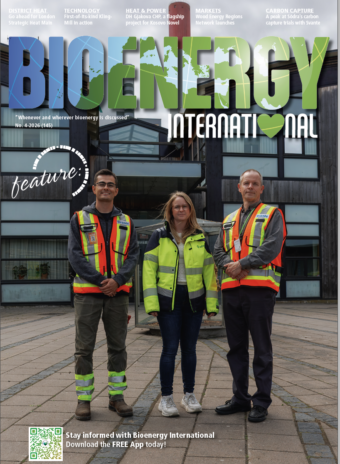
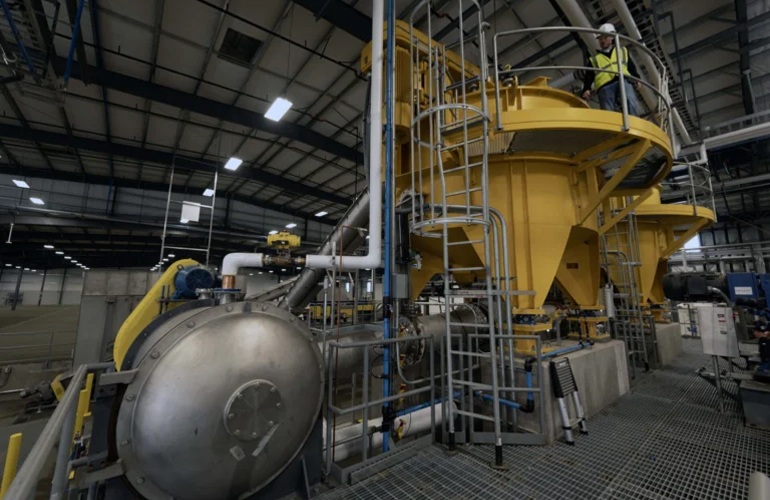
In the United States (US), Divert Inc., a circular infrastructure company and a portfolio company of Ara Partners LLC, a global private equity, infrastructure, and energy firm focused on decarbonizing the industrial economy, has announced the opening of its new Integrated Diversion & Energy Facility in Lexington, North Carolina. The new facility transforms unsold food that can no longer be donated into renewable natural gas (RNG) to help power communities and fertilizer to support regional agriculture.
Divert’s Lexington facility is expected to service over 2,500 retail grocery locations and 20 retail distribution centers across the region by the close of 2026.
The new facility also recovers food-bound water to run its own operations and captures data to help customers prevent future waste.
Additionally, the company will responsibly process unsold food, food byproducts, and residuals from food manufacturers and other businesses across the Southeast.
The success of Divert’s Circularity Platform is driven by our employees and rooted in our customer base. The strong customer relationships we have built over the past twenty years are what allow us to invest in regional infrastructure, including our new facility here in Lexington, said Ryan Begin, CEO and Co-Founder of Divert.
Harris Teeter is among the anchor customers served by Divert’s Lexington Integrated Diversion & Energy Facility, which will support all of the retailer’s locations.
At Harris Teeter, our purpose is to enrich lives, one meal, one family, one associate, and one community at a time. We believe food serves its highest purpose when it is feeding people. When food can no longer be donated, our partnership with Divert helps us find a productive use for it, reducing waste and protecting the value of food across the communities we serve, said Danna Robinson, Director of Corporate Affairs & Customer Relations for Harris Teeter.
In addition to Harris Teeter, the facility will also serve select locations for Publix, UNFI, and other customers across the region.
At full capacity, the Lexington facility will be capable of processing up to 120,000 tonnes of unsold, non-donatable food annually from food retailers, distribution centers, warehouses, and manufacturing locations.
This facility will reduce food waste and create renewable natural gas, helping our state power its future. North Carolina is a leader in innovation and the clean energy economy, and I am pleased to welcome Divert, Inc. to be part of our thriving business and energy ecosystem, said Governor Josh Stein.
Producing RNG for the grid
Biomethane, aka renewable natural gas (RNG), which is injected directly into local pipeline infrastructure, is already being produced at the Divert facility from unsold food in the area.
The facility will also be capable of producing “Divert Food-Derived Fertilizers”, including OMRI-listed organic options for use in organic food production.
Divert’s technology also provides customers with actionable data to help prevent wasted food and increase donations before unsold food reaches the facility.
North Carolina represents the fourth largest food and beverage industry in the United States and ranks eighth nationally in agricultural production. This makes Lexington an ideal location for advancing circularity in our food system, and this facility will allow us to serve more businesses, keep more food out of landfills, and recover valuable resources that can be put back to productive use, said Ryan Begin.
Divert’s Lexington facility is part of the company’s vertically integrated Circularity Platform, through which Divert develops, owns, and operates regional infrastructure to prevent wasted food and recover valuable resources from food that can no longer be donated.
The model combines data and technology to help customers prevent waste, facilitates edible food recovery to support local hunger relief, and transforms remaining unsold food into renewable energy, fertilizer, and reclaimed water.
The Lexington facility is the latest addition to Divert’s growing national infrastructure, following the opening of its Integrated Diversion & Energy Facility in Longview, Washington, earlier this year.