In Sweden, waste management major Ragn-Sells Group has converted its diesel-powered waste sorting line at the Häradsudden landfill site in Norrköping to an all-electric one thereby reducing carbon dioxide (CO2) emissions by approximately 150 tonnes. The electricity is produced on-site using landfill gas (LFG) as fuel.
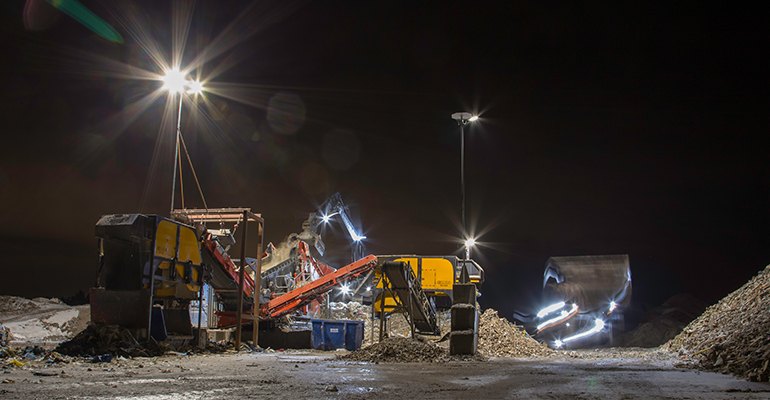
The Ragn-Sells Häradsudden recycling and landfill site in Norrköping receive approximately 55 000 tonnes of waste per annum. The site has developed an onsite line consisting of equipment such as shredders, crushers, screens, and electro-magnets to recover recyclable materials and produce refuse-derived fuels (RDF) to reduce the overall volume of material landfilled.
Emission- and cost reductions
As of March 2019, the Häradsudden waste processing line is 100 percent powered by electricity instead of diesel. With the change from fossil diesel to electric power, Ragn-Sells Häradsudden will reduce its diesel consumption by 50 000 litres per annum which correspond to around 150 tonnes of reduced fossil carbon dioxide (CO2) emissions.
This is a good example of a reduced climate impact and a good economy go hand in hand, said Erik Gustafsson, Site Manager, Ragn-Sells Häradsudden.
The replacement also brings an economic gain to the plant. Ragn-Sells expects that the switch will result in diesel fuel cost savings of up to SEK 600 000 (≈ EUR 56 300) annually.
Since the electricity that will be used for the most part is self-produced, one expects an additional saving compared to if the electricity were to be purchased. The electricity will be produced locally at the facility by operating methane gas turbines from the old landfill.
Collaborative effort
Ragn-Sells began in 2018 to look at the possibility of replacing the diesel-powered equipment units with electric-powered counterparts with the same production capacity and output. The equipment supplier was by Ragn-Sells contacted to open up a collaboration.
We work on a daily basis to develop our facility and routines. When we started looking at how we could develop the line of sight, it was natural for us to contact the supplier to open up a collaboration, said Robert Wikman, section manager at Ragn-Sells Häradsudden.
In the dialogue with the supplier, Ragn-Sells chose to include the machine operators in the field as well. Letting colleagues who work in production participate in decisions and development is a matter of course at Ragn-Sells Häradsudden.
With their practical experience, they can provide several tips and inputs for improvements to both machines and work routines.
For us, everyone’s tips and input are important, so bringing four of our machine operators on our visit to the supplier was therefore a matter of course. This is an added value for us as colleagues feel more involved, which increases commitment and increases the quality of the entire production, said Robert Wikman.