Kimberly-Clark Australia, part of US-headed global forest-derived consumer hygiene products major Kimberly-Clark Corporation, has announced a new disposable nappy recycling trial that could be Australia’s answer to the 1.5 billion nappies that end up in landfill each year. With approximately 300 000 babies born in Australia every year, and about 95 percent of them wearing disposable nappies, the trial represents a step forward for the nappy industry.
With its range of consumer tissues- sanitary, and personal hygiene products, Kimberly-Clark is a part of life for people in more than 175 countries.
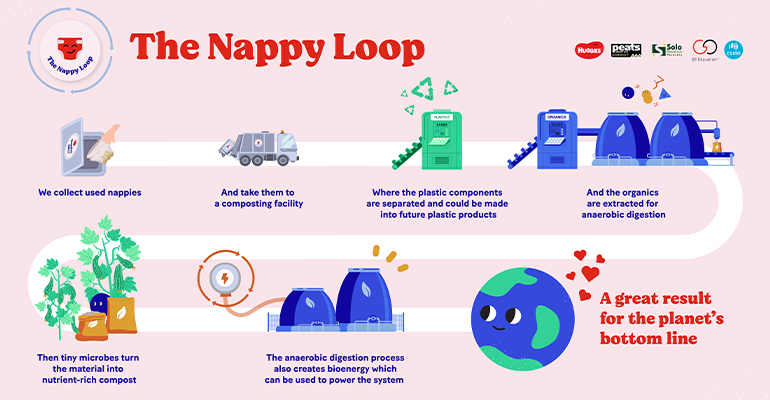
The first trial of its kind in Australia, The Nappy Loop has been underway in South Australia (SA) since July 2022 and uses anaerobic digestion (AD) to turn the organic materials in used “Huggies” brand nappies into nutrient-rich compost, as well as bioenergy that is captured and used to power the recycling process.
As Huggies is the most popular nappy brand in Australia, we not only set the standards in baby care, our goal is to set the standards for our industry in sustainability too. We believe we have a responsibility to lead by example and find better solutions for the community and our planet. Families and daycare centres across the country rely on the convenience and performance of disposable nappies and while we work to innovate and create more sustainable products, recycling is one solution for disposable nappy waste, said Belinda Driscoll, Managing Director of Kimberly-Clark ANZ.
Setting up a Nappy Loop value chain
The Nappy Loop team is being led by Kimberly-Clark Australia, along with the Commonwealth Scientific and Industrial Research Organisation (CSIRO), Australia’s national science agency, and together with one of South Australia’s largest composters, Peats Soils and Garden Supplies, waste management and services firm Solo Resource Recovery, and early learning and care provider G8 Education.
CSIRO is working with Kimberly-Clark Australia to provide scientific validation of The Nappy Loop pilot to help tackle waste. Our research for this Australian trial will help inform the team on the potential scaling of the program to help reduce the volume of nappies ending up in landfills, said Dr Anu Kumar, Principal Research Scientist at CSIRO.
Together, the team has collected and recycled almost two tonnes of used Huggies nappies, proving that AD is a viable option for the recycling process.
Identifying a recycling solution that works hasn’t been easy due to the availability of technology and collection systems. Today is a very proud day for us, announcing that we have trialled right here in Australia, and it represents a big step in Kimberly-Clark ANZ’s sustainability strategy, Belinda Driscoll added.
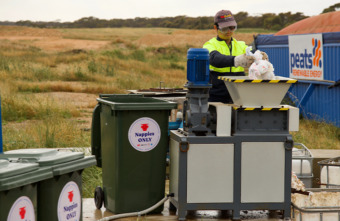
The Nappy Loop trial has adopted a B2B model, with Solo collecting used Huggies nappies from G8 Education’s Welly Road Early Learning Centre in Mount Barker and delivering them to the Peats composting facility for processing.
Utilizing AD technology, the organic material in the used nappies is transformed into nutrient-rich compost whilst the plastic components are separated and evaluated for future recycled products.
Through this partnership, the nappies changed every day at our Welly Road centre are recycled instead of going into landfill. As educators of our future generations, sustainability is a core focus in all our 440 centres across Australia and we’re excited to contribute to this partnership and the positive environmental impact it can make, said Ali Evans, Head of Early Learning and Education at G8 Education.
In addition, the AD process creates biogas which is captured and used to power the Peats composting facility.
Anaerobic digestion is a growing area of focus and possibility in Australia. The process has been used successfully in Toronto, Canada to recycle disposable nappies and we are excited to be introducing this innovative approach in the Southern Hemisphere as we work to solve the nappy waste issue, said Pete Managing Director Wadewitz, Managing Director of Peats Soils and Garden Supplies, South Australia’s largest composter.
Poised for national roll-out
After five months of recycling used nappies, The Nappy Loop team is now exploring the opportunity to scale the program in South Australia and nationally.
This includes partnering with APR Plastics to test the recycling of the recovered plastic from the nappies using pyrolysis, with the aim of having results available in early 2023.
In the process, the plastic and organic material in the nappies are separated from the start.
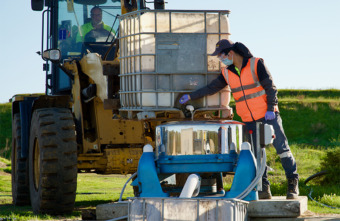
CSIRO has done some initial tests using a fast-screening method and microplastic fragments were not observed in the 28-day digestate.
CSIRO is now undertaking more robust testing as ensuring microplastics do not make their way to the compost is essential to meet certification standards.
CSIRO is validating the results of the trial and the full report will be available soon. However, initial results show:
- The anaerobic digestion process was beneficial in biodegrading the organic matter in nappies (post-separation of plastics) when mixed with expired food waste and beverages with high sugar content.
- Food waste and beverages not only help in separating the plastics from the shredded nappies but also provide additional liquid content and sugars for the anaerobic digestion process.
- The anaerobic digestion process was able to turn the fluff pulp and other organic components of the soiled nappies (after separating plastics) into nutrient-rich compost and biogas.
CSIRO is still assessing how much biogas is produced from the degradable organics in nappies.
However, early test results indicate a successful conversion of organic carbon during the digestion of nappies (post-separation of plastics) to biogas.