Mexico’s oil palm sector faces the challenge of transitioning towards more sustainable production models that improve soil health while strengthening farmers’ technical knowledge and autonomy. Against this backdrop, farmer-to-farmer knowledge transfer has emerged as a powerful approach to transforming rural communities and encouraging the adoption of regenerative agricultural practices across the value chain.
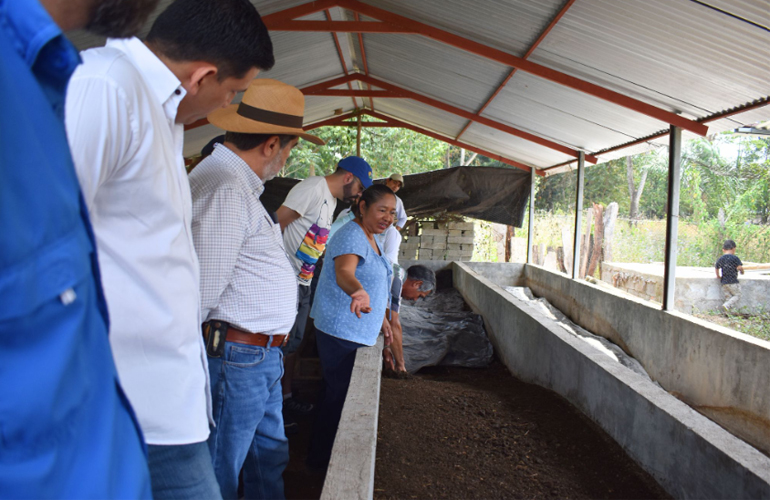
This approach was central to the recent inauguration of a Training Centre for Smallholder Farmers in the community of El Rosario, Catazajá, Chiapas, Mexico.
The initiative brings together the Asociación de Pequeños Productores Mundo Maya, the Holistic Programme, and the Federación Mexicana de Palma de Aceite (FEMEXPALMA), which serves as the implementing partner.
The Holistic Programme is a collaborative initiative involving PepsiCo, Oleopalma, Nestlé, Cargill, Industrializadora Oleofinos, the Federación Mexicana de Palma de Aceite (FEMEXPALMA), Proforest, and the Roundtable on Sustainable Palm Oil (RSPO).
It is a strategic collaboration in which the RSPO actively participates as a partner and member of the working group, alongside companies and other sector organisations, to help accelerate the transition toward more sustainable oil palm production in the region.
Community-based agro-innovation
The new centre is a community-based agro-innovation space designed to make technical knowledge more accessible and promote regenerative agriculture through the production of organic inputs and the application of circular economy principles.
By facilitating direct farmer-to-farmer knowledge exchange between experienced oil palm farmers and local producers, the initiative has already delivered tangible results across 56 hectares of oil palm plantations, including:
- 32,400 litres of bio-liquid, a liquid organic fertiliser produced through accessible fermentation techniques.
- 6,900 litres of leachate, used to enrich the soil.
- 12.8 tonnes of vermicompost, produced from plant-based waste.
The programme has also introduced the cultivation of edible mushrooms (Pleurotus ostreatus) using oil palm empty fruit bunches (EFBs) as a growing substrate.
Utilize EFBs
EFBs are a fibrous by-product of palm oil production and are widely available in oil palm-producing areas. This practice not only gives a productive use to biomass that might otherwise be discarded, but also creates an opportunity for income diversification and improved food security for local families.
The involvement of the Holistic Programme partners has helped establish a knowledge-sharing network in which farmers themselves become facilitators and trainers for their peers.
The model aims to support the replication of soil conservation and bio-input production practices in other oil palm-growing regions across Mexico, strengthening an approach to agricultural management based on technical knowledge, practical experience, and long-term sustainability.