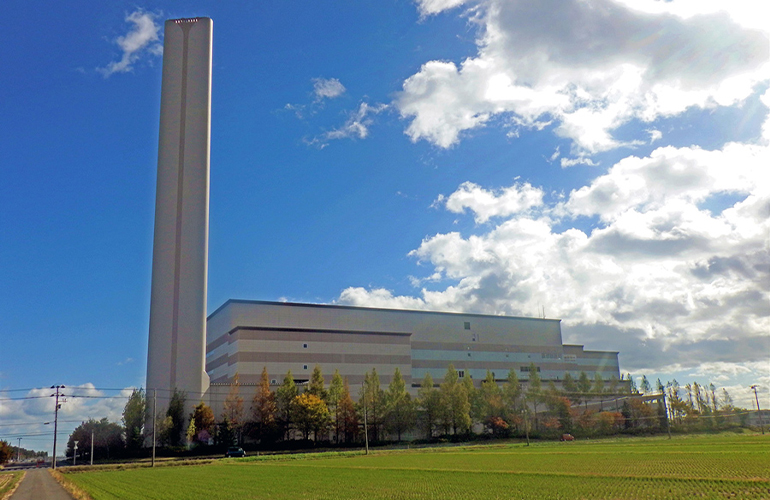
Japan's Mitsubishi Heavy Industries Environmental & Chemical Engineering Co., Ltd (MHIEC), a Group company of Mitsubishi Heavy Industries, Ltd (MHI), has received an order from Sendai City, Miyagi Prefecture, for the refurbishment of the Matsumori Waste-to-Energy plant, an incineration plant for municipal solid waste (MSW).
According to a statement, the order calls for renovation of the facility’s three stoker-type incinerators, capable of processing 600 tonnes per day (tpd), to extend the plant’s service life and enhance its energy efficiency in a quest to reduce its carbon emissions.
The five-year contract is valued at JPY 9.33 billion (≈ US$81.7 million) with completion scheduled for January 2026.
The Matsumori WtE plant was originally designed and constructed by MHI. On completion in August 2005, the facility incorporated three stoker-type incinerators each providing a processing capacity of 200 tpd, plus related equipment. This configuration delivers the capacity to generate 17.5 MW of electricity.
The refurbishment project targets stable combustion and operation over the long term through the replacement of the plant’s aging core components, including equipment involved in combustion, combustion gas cooling, flue gas treatment, waste heat recovery, ventilation, and ash removal, as well as electrical instrumentation.
In addition, the thermal efficiency of the boiler will be enhanced through the adoption of exhaust gas recirculation – EGR-PLUS – a new combustion control system using an exhaust gas recirculation fan. Power generation capacity will be increased by replacing the steam-type soot blower to remove dust from the boiler pipes, with a pressure wave-type unit.
The adoption of high-efficiency electrical equipment, combined with optimized combustion control logic enabled by upgrading of the distributed control system (DCS), is projected to reduce annual carbon emissions by more than 8 percent.
Increasing refurbishing interest
In recent years, waste incineration facilities in Japan have increasingly been undergoing refurbishment to extend their service life and reduce their impact on the global environment. This trend is accelerating further following the establishment of a subsidy program by the Ministry of the Environment to support the adoption of advanced equipment at the nation’s waste management facilities.
The program is available to municipal governments that seek to extend the service life of their waste management facilities and/or implement measures against global warming through projects focused on enhancing the efficiency of such facilities – which fall under the Ministry of the Environment’s administration – as a way of mitigating the impact of the waste management sector on global warming.
The subsidies cover between one-third and one-half of the costs of projects that will contribute to reducing carbon emissions through the adoption of advanced equipment, or projects that will promote the realization of a recycling-based society.
According to MHIEC, the company is well-positioned to propose and provide comprehensive solutions encompassing all aspects of such refurbishment- and new WtE projects, from plant construction to operation.