
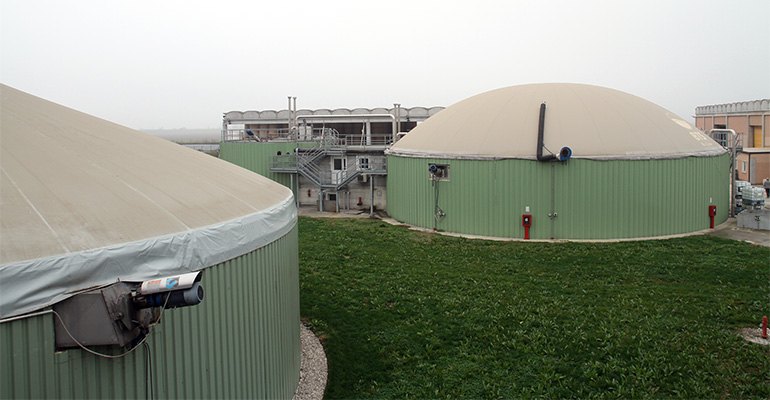
The European Biogas Association (EBA), in collaboration with international biogas experts, has launched a white paper on methane emissions originating from anaerobic digestion (AD) plants to support and advise the industry, European policymakers, and AD operators.
The EBA paper ‘Design, build, and monitor biogas and biomethane plants to slash methane emissions’ sheds light on the efforts of the European biogas industry to reduce methane emissions with sustainable biogas production
The biogas and biomethane industry is a large net reducer of methane emissions, but a minimal share of fugitive emissions can occur during the biogas production process. The sustainable scale-up of the sector to support the energy transition and reach the 35 bcm biomethane production target by 2030 represents an opportunity for the value chain to achieve efficient plant design and implement leak mitigation strategies, said Giulia Cancian, Secretary General of EBA.
Biogases have a pivotal role in reducing EU methane emissions in the agricultural, energy, and waste sectors, as recognized by the 2020 EU Methane Strategy.
Methane emissions are avoided when methane emitted from organic matter, such as manure and biowaste, are brought to the closed and controlled environment of an AD plant, instead of being released into the atmosphere.
Mitigate methane slip
However, methane emissions can also occur accidentally along the biogas production process. The EBA concludes that the biogas industry is well advanced in developing strategies to mitigate those emissions.
According to data from voluntary and mandatory measurements analyzed in the paper, these remain minimal when appropriate measures are taken. Current plants are planned, built, and operated specifically to prevent methane losses.
The state of the art of biogas plants and affected plant components has significantly advanced and AD plant developers and equipment manufacturers are continuously working on further improvements.
Fifteen years of on-site experience show that the most cost-effective manner to reduce methane emissions at AD plants is the combination of regular self-inspections, periodic reporting of methane emissions as part of monitoring programs, and training courses for plant operators.
Minimizing methane slip at AD facilities has several additional beneficial effects. Reducing methane emissions is cost-efficient, as small losses of the energy contained in methane gas can lead to considerable financial losses.
Moreover, avoiding methane leakages is important for safety, environmental aspects, and odour avoidance.
Methane emission mitigation can be further strengthened with sound research improving the understanding of methane emissions at a technical level. Additionally, policies should acknowledge and incentivize mitigation measures undertaken by individual plants. For example, an update of the default values for methane emissions included in the Renewable Energy Directive Annex VI should accommodate mitigation measures in place in existing plants and acknowledge the improvements in design and operations from the past decade, said Mieke Decorte, Technical and Project Manager at EBA.