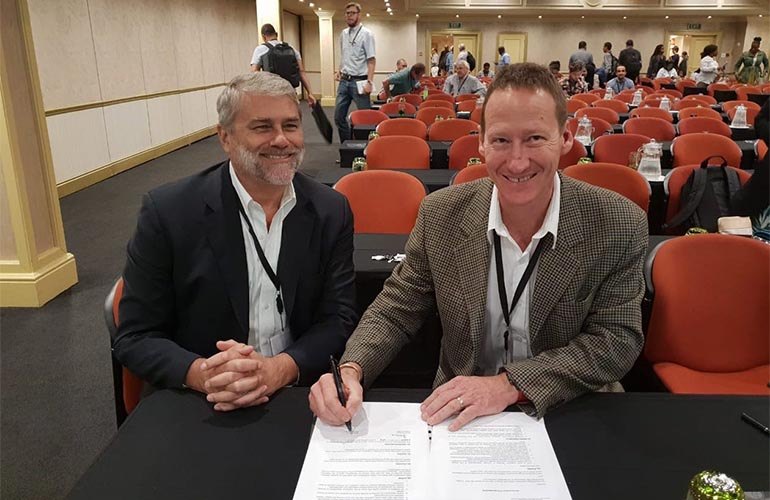
The Southern African Biogas Industry Association (SABIA) and the World Biogas Association (WBA) have announced a new partnership. The two associations have signed a Memorandum of Understanding (MoU) stating that they will work together to promote understanding globally and in South Africa of the energy, environmental, economic, and social benefits of biogas technologies, which convert organic wastes and crops into renewable heat, power, clean transport fuel, and nutrient-rich natural fertiliser.
Biogas is a key component of the Southern African energy mix, creating meaningful permanent employment opportunities for thousands of people, minimizing the volumes of potential hazardous organic waste though converting the waste into valuable energy-rich gas, biogas, and a valuable soil conditioner which significantly reduces chemical fertilizer application. Anaerobic digestion is an elegant solution which closes the nutrient cycle whilst creating jobs and reducing harmful greenhouse gas emissions and nutrient pollution. It also produces an energy-rich gas for domestic, commercial and industrial use, said Jason Gifford, Chairman of SABIA.
Announced at WasteCon 2018 in Johannesburg, South Africa, the MoU includes a commitment to help meet the 17 United Nations Sustainable Development Goals (SDGs) and the global greenhouse gas (GHG) emissions reduction targets set out by the Paris Agreement.
The two associations will achieve these goals by working with their respective members to share information and data, co-produce events and webinars, share policy platforms, and submit joint applications for project funding.
South Africa’s electricity generation potential from biogas stands at 3.5 GW, which will create 250 000 construction job opportunities and 25 000 direct permanent job opportunities. This electrical potential is greater than the allocation proposed in the current draft IRP (Integrated Resource Plan) of 2018 which makes provision for buying electricity from the planned Inga Hydro Electric Scheme. The agreement with WBA provides SABIA with access to the international biogas markets and expertise which WBA represents. This access will greatly assist SABIA in the creation and development of the local biogas market and industry, said Gifford.
According to the WBA, biogas technologies could reduce global GHG emissions by as much as 20 percent worldwide, as well as meeting policy goals around waste management, energy and food production, and urban air pollution.
By reducing emissions from waste, improving air quality, restoring soils, and improving energy and food security, biogas technologies can make a vital contribution to nine of the SDGs and to tackling climate change here and now. This new agreement between WBA and SABIA will help both associations promote the many benefits of this innovative technology both in South Africa and around the world, where there’s an urgent need for solutions to reverse environmental degradation and improve human health. We’re very much looking forward to working with SABIA to tackle these issues head-on, said David Newman, President WBA.