The UK Government confirms up to GBP 21.7 billion of funding to launch the UK's first carbon capture sites, set to bring thousands of new skilled jobs, billions in private investment, and support acceleration to net zero in the week that Britain became the first industrialized nation to end its 150-year usage of coal.
The UK enters a new era for clean energy investment and jobs, as the Government announces it has reached a commercial agreement with industry, and funding to launch carbon capture in the UK.
The announcement comes ten days before the Government’s set-piece International Investment Summit which is poised to put the UK back at the global table – kickstarting a decade of economic renewal and giving business confidence and opportunity to invest in the United Kingdom.
Carbon capture utilization and storage (CCUS) technology removes carbon dioxide (CO2) emissions before it reaches the atmosphere and stores it safely beneath the seabed – using tried and tested technology that has been deployed across the globe for over 20 years.
In a boost for economic growth and protecting the environment, the new carbon capture and CCUS-enabled hydrogen projects will create 4,000 new jobs, sustain important British industry, and help remove over 8.5 million tonnes of CO2.
Prime Minister Keir Starmer, Chancellor Rachel Reeves, and Energy Secretary Ed Miliband visited the North West to confirm the funding for two sites, in Teesside and Merseyside respectively, which are expected to bring in GBP 8 billion of private investment into these communities.
CCUS and hydrogen
These projects will set the UK on course to become a global leader in CCUS and hydrogen – delivering good jobs and turbocharged growth for decades to come.
We’re reigniting our industrial heartlands by investing in the industry of the future. For the past 14 years, business has been second-guessing a dysfunctional government – which has set us back and caused an economic slump. Today’s announcement will give industry the certainty it needs – committing to 25 years of funding in this groundbreaking technology – to help deliver jobs, kickstart growth, and repair this country once and for all, said Prime Minister Keir Starmer
The announcement confirms up to GBP 21.7 billion of funding available, over 25 years, to make the UK an early leader in two growing global sectors, CCUS and hydrogen, to be allocated between these two clusters.
The UK’s commitment was first made in 2009, and the confirmation of funding today represents a major success story for British industry.
In the week in which Britain became the first industrialized nation to end its 150-year usage of coal to produce power, the nation now begins a new era of clean energy technology.
The UK has enough capacity to store 200 years’ worth of emissions – making CCUS a revolutionary method in tackling the climate crisis and helping industry to decarbonize,
On Monday, 150 years of coal in this country came to an end. Today, a new era begins. By securing this funding, we pave the way for securing the clean energy revolution that will rebuild Britain’s industrial heartlands. I was proud to kickstart the industry in 2009, and I am even prouder today to turn it into reality. This funding is a testament to the power of an active government working in partnership with businesses to deliver good jobs for our communities, said Energy Secretary Ed Miliband.
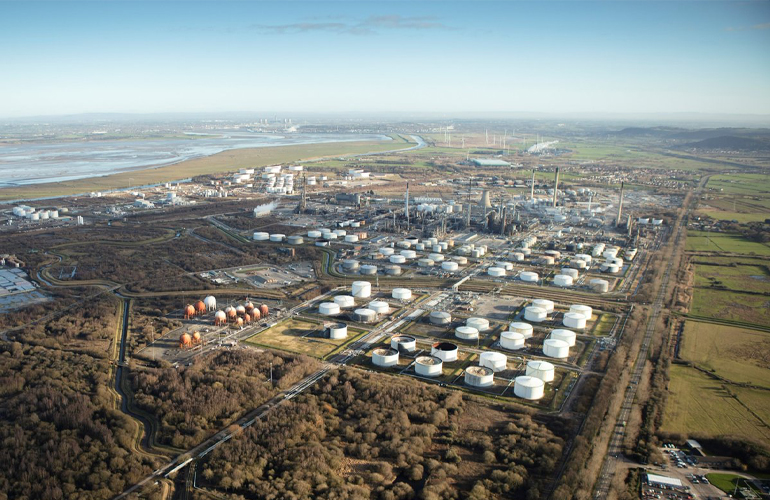
The HyNet project will transform one of the UK’s most energy-intensive industrial regions into one of the world’s first low-carbon industrial clusters by reusing the depleted reservoirs operated by Eni in Liverpool Bay.
The funding includes investment for Track 1 industrial emitters and is a key milestone towards the execution phase of HyNet, which will unlock significant investment in the area.
As the operator of the CO2 transport and storage system for this initiative, Eni has also been granted an Economic License for the Liverpool Bay CO2 transport and storage (T&S) project.
With an initial storage capacity of 4.5 million tonnes of CO2 per year in the first phase, and the potential to increase to 10 million tonnes of CO2 per year after 2030, the project will make a significant contribution towards reducing these industries’ impact and achieving the UK’s target ambition to store 20-30 million tonnes per year of CO2.
HyNet will become one of the first low-carbon clusters in the world and the project will decarbonise one of the key energy-intensive industrial districts as well as unlock significant economic growth in this region of the UK. This commitment is clear evidence of how governments and industry can work together to implement pragmatic and effective industrial policies, in order to accelerate decarbonization. On our side, it reaffirms Eni’s role as a key partner with the UK in enabling its journey towards Net Zero, said Claudio Descalzi, CEO of Eni.