The economic effect of the coronavirus COVID-19) pandemic has been felt globally and the European Union (EU) is no exception. With recent European Commission predictions estimating that Gross Domestic Product (GDP) will shrink by an unprecedented 8.3 percent this year, it is now more crucial than ever to consider the importance of financing and supporting a green transition. Bioenergy Europe will initiate the conversation at this year’s upcoming virtual European Bioenergy Future 2020 (EBF2020).
According to Bioenergy Europe, today’s crisis represents an opportunity to reconstruct a more resilient and sustainable economic model. In order to achieve a climate-neutral, competitive, and inclusive economy it is imperative that both public and private financing schemes work in synergy.
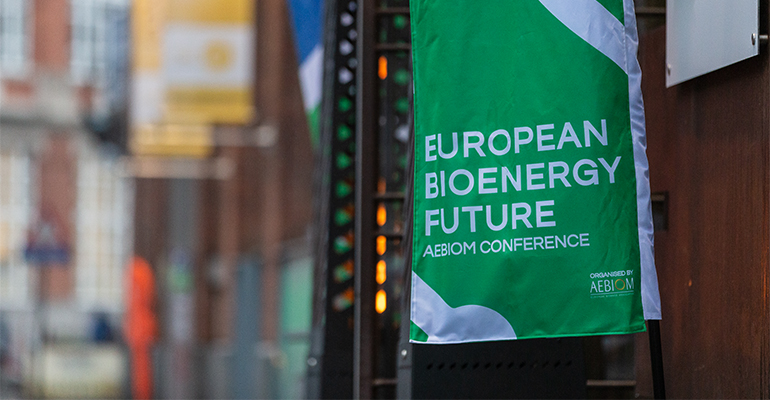
Bioenergy Europe will initiate the conversation at this year’s European Bioenergy Future 2020 (EBF2020) that will take place as a virtual event only during the mornings of November 18-20, 2020.
The virtual event will include discussions with John Sinner, Energy Economist for the European Investment Bank (EIB), along with Mikael Ohlstrom (Head of EU Affairs, Neste Corporation), Carita Ollikainen (Director, Corporate Relations, Valmet – TBC), Hannes Tuohinitty (Senior Manager of The Bioenergy Association of Finland and President of Bioenergy Europe) and Giulia Cancian (Policy Director, Bioenergy Europe).
The ‘Financing the transition: public and private resources mobilisation’ panel, will bring together leaders from both market and policy to explore the role of financial support and private investment in mobilizing a decarbonised European economy.
This session will offer a platform to delve deeper into the business opportunities and policy framework that are essential in stimulating Europe’s green transition including the Sustainable Finance Taxonomy.
The European Union’s EUR 750 billion Recovery Fund proposed by the European Commission entails a considerable share of the foreseen stimulus packages aimed at supporting the EU’s green transition. Coherent and comprehensive stimulus packages prioritizing sustainable investments are essential to revitalizing the EU’s economy built on a resilient, sustainable, and climate-friendly model.
In this context, the European Commission sustainable finance initiative represents a much-needed step to foster private investments in sustainable economic activities
With 74 percent of equipment manufacturers based in Europe, generating a positive trade balance of approximately EUR 5 billion, and providing more than 700 000 direct and indirect jobs, bioenergy represents a viable solution to current challenges.
Investment in local infrastructure and technologies has never been more essential and financial support to the bioenergy sector will not only enhance economic recovery but increase financial flows, boost employment, and expand regional growth.
Bioenergy Europe emphasizes that this year’s EBF will provide a premise for stakeholders to understand their role in effectively and efficiently mobilizing both private and public resources to finance the energy transition towards a 2050 carbon-neutral Europe.
This will require a complete restructuring of the EU energy mix as well as significant investments. If a climate-neutral, green, competitive, and inclusive economy is to be achieved, public and private financing schemes must work synergistically to stimulate such a transition.