In Brazil, the availability, location, and potential emissions reductions, as well as overall sustainability, of the feedstocks required to make Sustainable Aviation Fuels (SAF) are not well understood. A study published by the Roundtable on Sustainable Biomaterials (RSB) in collaboration with agricultural analysis firm Agroicone and the University of Campinas addresses this challenge and finds that the country could produce up to 125 percent of its current fossil kerosene Jet A demand.
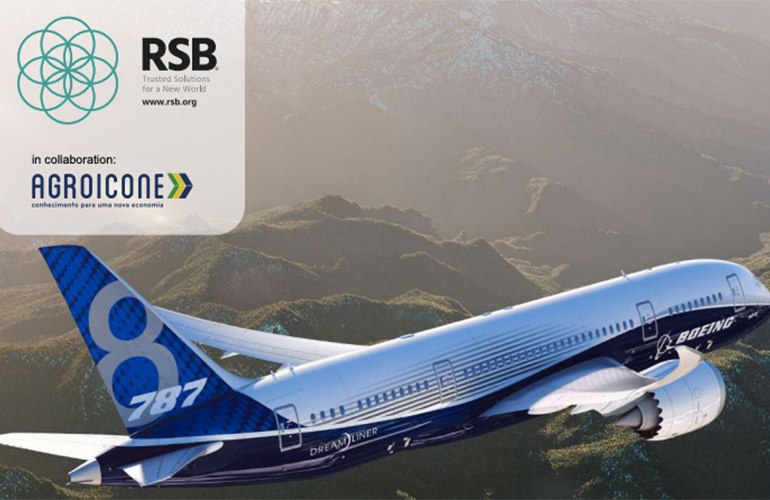
With approximately 7 billion litres of jet fuel is consumed every year in Brazil, contributing to annual carbon dioxide (CO2) emissions of approximately 18 million tonnes, a swift transition to alternative fuels is urgently required for Brazil to fulfill its global commitments to the International Civil Aviation Organization’s (ICAO’s) global carbon offset program known as Carbon Offsetting and Reduction Scheme for International Aviation (CORSIA) and to ensure overall progress in the fight against the global climate crisis.
Building a technical understanding of the local availability and feasibility of feedstocks to support the transition to SAF in Brazil is key to drive policy, investment, and support demand in the local aviation market. The SAF industry faces economic and environmental concerns, including its economic feasibility when compared to fossil fuels and the impacts of land-use change — which may result in significant greenhouse gas (GHG) emissions.
SAF obtained from residues may circumvent such challenges, since their cost and environmental impacts at the collection point could be close to zero.
Collaborative study
Addressing this challenge, Roundtable on Sustainable Biomaterials (RSB), in collaboration with agricultural analysis firm Agroicone and colleagues from the University of Campinas, has published the outcomes of research into non-crop feedstock availability and potential in Brazil for the production of SAF.
RSB worked with Agroicone to map the availability and potential of bio-based residues for the production of SAF in Brazil in order to support decision-making processes — whether in industry or in the political sphere — towards shaping the SAF market in the country.
The study “Feedstock availability for sustainable aviation fuels in Brazil” was developed as part of the Fuelling the Sustainable Bioeconomy (FTSB) project, powered by Boeing’s Global Engagement Portfolio and led by RSB.
By providing guidance on the sustainability of alternative fuels, bringing together relevant stakeholders, and integrating the bioeconomy as a critical part of the just energy transition.
Multiple feedstocks and pathways considered
RSB worked with Agroicone to examine the availability of residues and strategic locations for SAF production and consumption in Brazil. Five residual feedstocks were combined in seven different pathways (Fischer-Tropsch, Alcohol-to-Jet, HEFA) for SAF production.
All pathways were for ASTM-approved drop-in fuels to be used with fossil kerosene (Jet A) on a maximum 50 percent blend volume basis.
Feedstocks considered:
- Sugarcane residues (straw and bagasse)
- Eucalyptus plantation residues
- Flue gasses
- Beef tallow
- Used cooking oil (UCO)
The study – which looked in detail at regional demand, feedstock supply, and technical capacity – determined huge potential to be found in sugarcane bagasse and wood residues, particularly in the southeastern part of the country.
The main findings suggest the potential for SAF production from the mapped residues in Brazil is up to 9.0 billion litres, which is around 125 percent of the current fossil kerosene (Jet A) consumption in Brazil.