In Brazil, Braskem S.A. has revealed that it has entered into a purchase agreement for steam produced from biomass. The agreement will ensure the supply of renewable steam to a Braskem petrochemical facility for 20 years and is expected to begin in 2024.
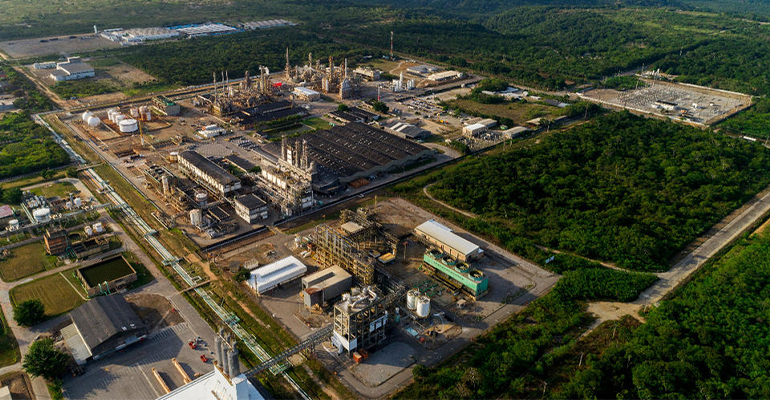
Braskem has entered into a purchase agreement for renewable steam produced from biomass with Veolia Serviços Ambientais Brasil Ltda (Veolia Brazil), a subsidiary of France-headed global energy, water, and waste management major Veolia SA.
Biomass plantation and heat plant
With a total investment of approximately R$400 million (≈ US$68.5 million), considering the disbursements made by Braskem and Veolia Brazil, the project includes the construction by Veolia of an industrial and agroforestry park and plant in Marechal Deodoro in the coastal State of Alagoas (AL).
Commitments by Braskem include making internal investments to adapt its Marechal Deodoro complex to the new thermoelectric arrangement.
As the world reference for ecological transformation, Veolia is committed to implementing sustainable solutions and enabling new alternatives to renew the world with our customers. The partnership with Braskem is proof of that: two companies that come together to lead with actions the transformations that the world and the country needs, said Pedro Prádanos, CEO, Veolia Brazil.
Reduce emissions
Using eucalyptus biomass, the project will generate 900 000 tonnes per annum of steam, which will mean a reduction in emissions of approximately 150 000 tonnes of carbon dioxide (CO2) annually.
This corresponds to 30 percent of Braskem’s emissions in Alagoas compared to 2020.
The eucalyptus biomass project introduces a new sustainable way of generating renewable energy within Braskem’s operations. In partnership with Veolia, we will make an important contribution to our sustainability plan. We will have a one-third reduction in greenhouse gas emissions from our operation in Alagoas, based on 2020 emissions, said Gustavo Checcucci, Energy Director at Braskem.
Scheduled to start operations by 2024, the new steam plant in Marechal Deodoro (AL) will generate a positive socio-environmental impact for the region and the country and is in line with the companies’ global sustainable development strategies.
In addition, it will create more than 400 direct jobs during the construction phase and approximately 100 jobs once operational.
The project will significantly contribute to the social and regional development of the State of Alagoas. It will boost business and create employment opportunities in our facilities and those of our partners, contributing to the economy of the State, remarked Hélcio Colodet, Operations Manager at Braskem Alagoas.
The project is part of Braskem’s initiative to reduce its carbon dioxide (CO2) emissions by 15 percent by 2030 and to become carbon neutral by 2050.
Efficient project
With a focus on sustainability, eco-efficiency, and productivity, the solution aims to meet the steam demand required for the petrochemicals plant’s continuous, high-performance operation.
To achieve this objective, Veolia Brazil will be responsible for managing most of the project, including the agroforestry management process of more than 5 500 hectares (ha) of eucalyptus, the design, engineering, and the construction of the biomass steam production plant,
In addition, Veolia Brazil has a 20-year operation and maintenance (O&M) contract of the entire installation once it is commissioned.
Also, to ensure the high standards of efficiency and quality of the two companies, the initiative covers processes aligned with digital transformation and industry 4.0.
With the implementation of Hubgrade, Veolia’s solution that integrates digital tools and human expertise to monitor and analyze the operation in real-time, the project guarantees performance optimization and continuous improvement in the performance of facilities and energy consumption.
By meeting the steam demand necessary for the uninterrupted operation of its production processes, this project will meet Braskem’s operational needs and, at the same time, the sustainability challenges in energy management, ended Pedro Prádanos.