
Located on the border between Argentina and Brazil, the Iguazú National Park is a protected nature reserve stretching across both sides of the spectacular Iguazú Falls. Adjacent to the Park, in the Free Trade Zone of the Argentine border city of Puerto Iguazú, is a 30 000 tonne per annum capacity pellet plant belonging to Maderas de la Mesopotamia.
Puerto Iguazú is the provincial capital of the Argentine province of Misiones in the Triple Frontier, a landlocked tri-border area on the convergence of the Paraná and Iguazú rivers and where Argentina, Brazil and Paraguay meet. According to Diego Scarpa, manager of Maderas de la Mesopotamia S.A., the first project idea arose in 2010 when the parent company, London Supply Group (LSG), sought a new project that could produce a tradable product.
Abundance of feedstock
Headquartered in Buenos Aires, LSG operates a diversified portfolio of businesses and services in Argentina structured around maritime and aviation logistics and trade. According to Horacio Iriarte, Manager of LSG, investment reached US$2 million and has been made with own funds. The pellet facility is located in the largest forest region in Argentina, and the forest industry has a long tradition in the province: according to official records some 806 companies were registered as operating in the sector in 2012. The afforested area is 365 000 hectares with mainly pine (83 percent), but also eucalyptus (7 percent), Araucaria (4.5 percent) and others (5.5 percent). The pellet plant has a current capacity of 4 tonnes per hour though Scarpa says that the abundance of suitable biomass for pellets will soon allow the company to increase its production capacity with “more presses or installing a new plant in a nearby region.”
Production process
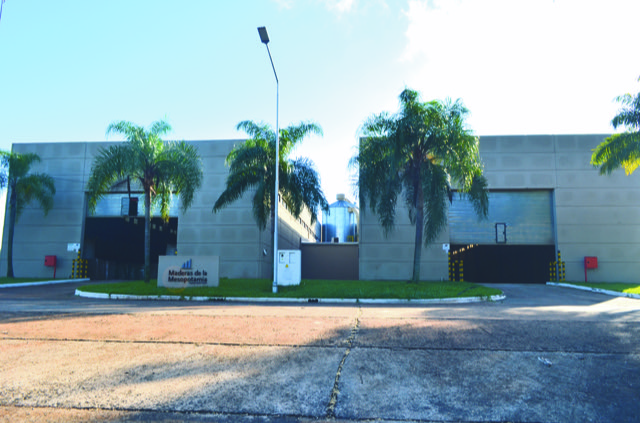
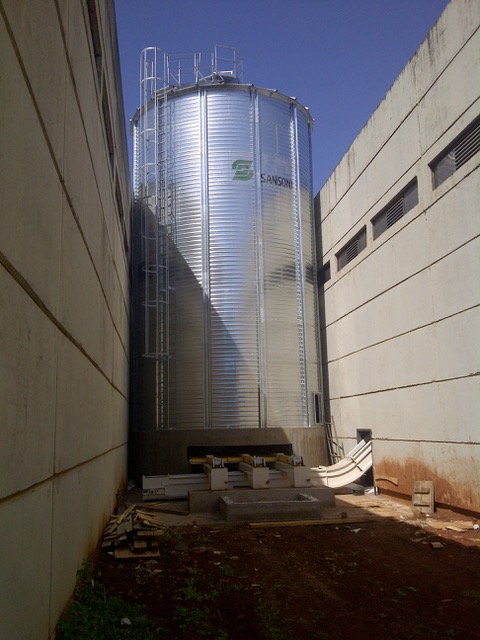
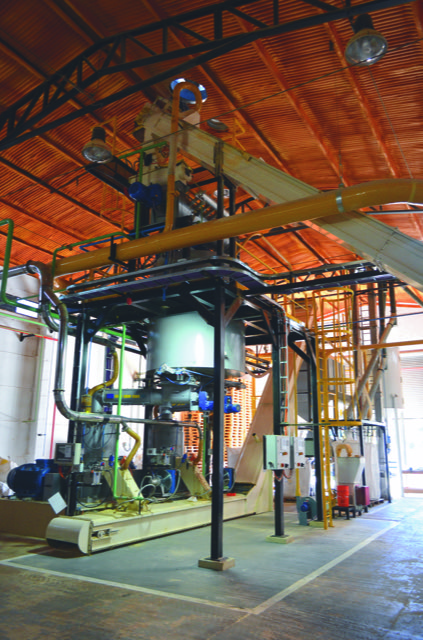
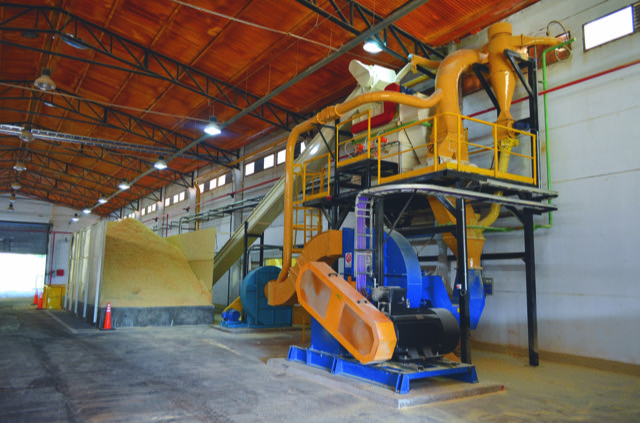
The plant has been installed inside two warehouses of a former Duty Free Shop inside the 46 ha Free Trade Zone of Puerto Iguazú, which is operated by LSG. The raw material reception and pre-processing area is in one warehouse and pellet production and packaging in the other. The control room, office and feedstock storage silo are located between the two buildings. The plant is fully automated, so in each production shift there are three people working.
The plant uses dry sawdust and shavings as raw material sourced from sawmills and wood processors within 130 km of the plant. According to Scarpa material is sourced only from suppliers that harvest wood in a sustainable way and meet the production, safety and environmental responsibility standards of LSG. To ensure stable supply a large share is provided by a single major wood processing operator in the region.
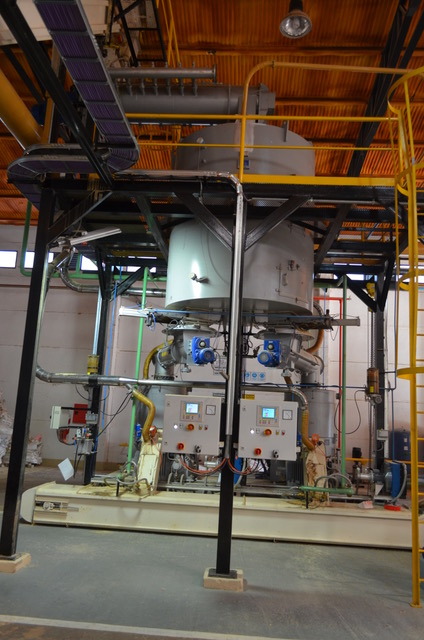
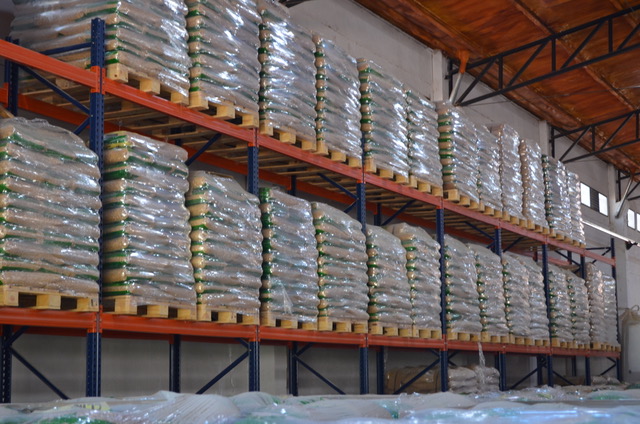
The feedstock is delivered to the plant in compacted bales and big-bags in order to meet customs controls and requirements. The storage capacity of raw material is 200 tonnes, enough for a week of production. A 250 kW 6 tonne per hour Franssons HK45 hammer mill reduces the feedstock down to a one millimeter particle size. The sized material is stored in a 70 tonne capacity metering bin, before being fed into one of the two Kahl pellet presses each with a two tonne-per-hour capacity. After cooling and screening the pellets are bagged and palletised for residential consumers or put in big-bags for industrial clients. Around 1 200 tonnes of pellets can be stored on site.
Environmental restrictions
As the production facility is located next door to the Iguazú National Park, a designated UNESCO World Heritage Site and an important tourist attraction for both Argentina and Brazil, strict environmental and fire hazard restrictions have been the fundamental regulatory premises of the project. For this reason it was decided to acquire the raw material as dry thus removing the need for an in situ roundwood or green woodchip pre-processing and drying process as well as reducing the impact of transport.
In addition, a Firefly detection and extinguishing system has been installed on every machine, storage unit, pneumatic conveyor and aspiration system. Occasionally, some pellets can leave the presses at high temperatures and, even without reaching incandescence, could create a fire or explosion in the cooler. This can also happen with the particles that leave the mill to the silo of sawdust or the bag filters. The system operates automatically, in milliseconds, extinguishing directly when a threat is detected -a hot or incandescent particle-, without stopping production. The lead sulfide sensors can detect, at temperatures below 650 °C, sparks and black particles, which do not emit light but have energy to cause a fire.
A lead sulfide sensor avoids false alarms as it is not sensitive to daylight, artificial, or even welding or flash, unlike the common spark detectors, which are formed by silicon cells. The Firefly True IR detectors can detect the presence of hazardous particles that are being transported at speeds up to 50 m/s. If sparks are detected more often than acceptable, the affected process is automatically halted preventing the spread until the event and its causes are analyzed.
The special design of the extinguishing nozzles reduces the required water flow and directs it either as a jet or spray (10 l / min for about 12 seconds), into the air displacing oxygen and extinguishing the fire in its initial stage. The machinery does not suffer any damage as there is no heat shock in these circumstances. The Firefly system has obtained the Factory Mutual (FM) certificate that recognizes the energy levels and temperature that is able to detect. Its operation follows the guidelines of NFPA National Fire Protecion Association standards.
Diverse markets
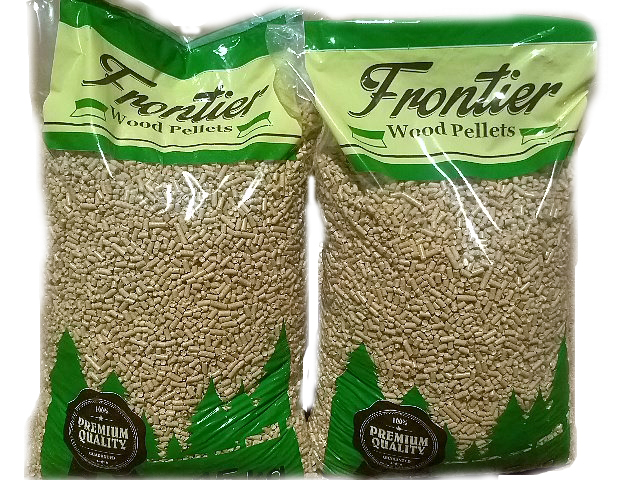
The pellets produced are suitable for different end uses, energy or animal bedding and are supplied bagged or in bulk. For residential use, 6 mm pellets are produced and packed in bags from 2 to 25 kg and marketed as Frontier Wood Pellet. According to Scarpa, the quality of these pellets match ENplus certification. He added that achieving ENplus A1 certification during 2016 is a key objective for the company.
For industrial use 8 mm pellets are produced and supplied in 1 tonne big-bag or in bulk. The company also manufactures 6 mm animal bedding pellets Ecopet-Frontier Natural Cat Litter and Frontier Horse Bedding. Because of its location on the “free zone”, the usual destination of the production is exportation, to Chile, Brazil and Uruguay. The company is also negotiating agreements with European buyers, for example in Italy.
Text & photos: Ana Sancho
5093/AS
Facts
Main suppliers
Pellet presses (2), conditioner, cooler and screening:
Hammer mill:
Auxiliary equipment, transport, intermediate storage and assembly:
Spark detection and fire control:
Electrical installation, panels and overall automation:
Plant engineering: Amandus Kahl (Germany)
Franssons (Sweden)
local companies
Firefly (Sweden)
Sicon (Argentina)
Valcan (Argentina)