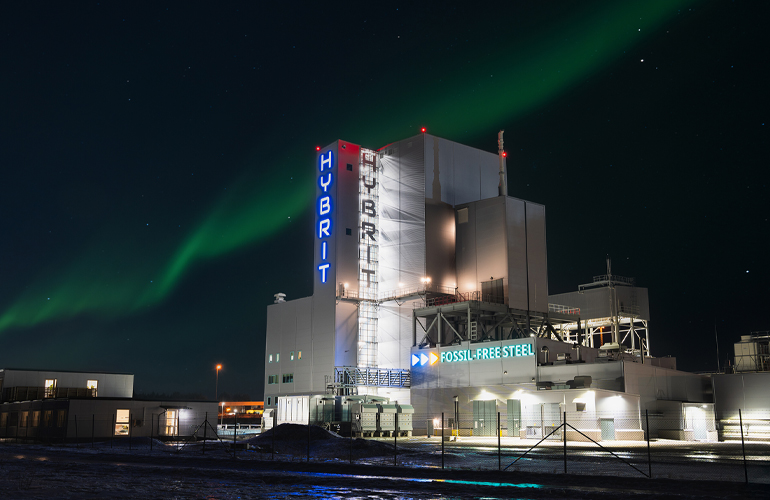
In Sweden, the Hydrogen Breakthrough Ironmaking Technology (HYBRIT) partnership has announced that its pilot project for hydrogen gas storage has now been completed and reported to the Swedish Energy Agency. The results show that it is technically possible to store fossil-free hydrogen gas for producing fossil-free iron and steel on an industrial scale. This can also reduce the variable operating costs of hydrogen production by up to 40 percent.
The HYBRIT initiative was launched in 2016 by SSAB, LKAB and Vattenfall to develop the world’s first fossil-free, ore-based iron- and steelmaking using fossil-free electricity and hydrogen gas.
The project for the production of fossil-free sponge iron for steel production is now being followed up with the results of the pilot for fossil-free hydrogen gas production and storage.
Steel-lined rock cavern
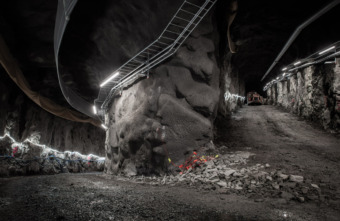
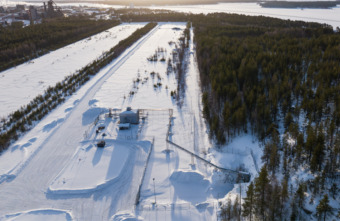
The project has successfully designed and constructed a 100 m3 hydrogen gas storage facility based on steel-lined rock cavern technology in Svartöberget adjacent to the Direct Reduced Iron (DRI) pilot for sponge iron production in Luleå, Sweden.
The completed tests show that the technology works to support a large-scale hydrogen user, and that savings of about 25-40 percent of the variable operating costs of hydrogen gas production could be reached.
The pilot storage facility has undergone accelerated mechanical testing equivalent to approximately 50 years of operation, and the safety, functionality and performance of the facility have been successfully demonstrated.
The pilot project has been highly successful and has given us the results we hoped for. We have shown that it is possible to use this technology to increase the flexibility of the electricity system and that it is a safe design that lasts over time. Hydrogen gas storage is an important piece of the puzzle to electrify industrial processes while increasing the amount of weather-dependent power. With the results and experiences gained from the pilot project, the technology is now ready to be scaled up, said Mikael Nordlander, Director, Industry Decarbonisation at Vattenfall’s Industrial Partnerships.
Hydrogen storage is a crucial component
Future fossil-free industrial processes using hydrogen gas from fossil-free electricity instead of fossil fuels will mean that industry will be more dependent on the electricity system.
In this case, it is crucial to secure the supply of hydrogen. The primary purpose of a hydrogen storage facility is to be able to adjust hydrogen production to electricity market fluctuations.
Hydrogen gas production costs are optimised by producing and storing surplus hydrogen gas when electricity prices are low and reducing production and using the stored hydrogen gas when prices are high.
Hydrogen is an important part of LKAB’s future strategy and journey towards carbon dioxide-free products and processes. We have yet to make any decisions on hydrogen gas storage, but the successful results from the pilot give us good conditions when we review the needs and opportunities for storage in conjunction with our planned sponge iron production facilities, said Jenny Greberg, VP of Technology at LKAB.
The steel industry currently accounts for around 7 percent of global carbon dioxide (CO2) emissions. The HYBRIT technology will enable SSAB to reduce Sweden’s and Finland’s CO2 emissions by 10 percent and 7 percent respectively.
The results from the HYBRIT pilot project show that large-scale storage of fossil-free hydrogen is technically possible and economically beneficial. With these innovative technologies, we can build strong fossil-free value chains with the potential of drastically reducing the climate footprint of the iron and steel industry, said Dr Martin Pei, CTO at SSAB.
The Swedish Energy Agency has co-financed 22 percent of the hydrogen storage project, with the remainder having been financed by the owner companies.
Key findings of the completed tests include:
- The pilot storage facility has been operating intermittently with hydrogen gas since 2022, in campaigns of 3 to 6 weeks. Around 3,800 hours of operation with combined hydrogen gas production and storage with 94 percent availability have been reached.
- The safety, function and performance of the facility have been successfully demonstrated.
- The choice of the material to seal the rock cavity has been one of the main issues in the project. The steel material chosen has shown resistance to hydrogen. No leakage of hydrogen gas from the sealing layer of the storage facility (steel-lined rock cavern) has been detected.
- The pilot storage facility has undergone accelerated mechanical tests equivalent to about 50 years of operation.
- The project proves that the technology is ready for industrialisation. The tests have shown that hydrogen gas storage works in the HYBRIT value chain to support a large-scale hydrogen user, in this case, a Direct Reduced Iron (DRI) plant in Luleå.
- Optimised operation of the storage facility has been done in real time both against the spot price and intraday market. Savings of 26-31 percent of variable operating costs have been demonstrated in practice. Simulations of future scenarios for the Swedish electricity market indicate that savings of about 25-40 percent of variable operating costs could probably be reached when the first commercial plants are commissioned.
HYBRIT has extended the pilot project for storage of fossil-free hydrogen gas until 2026 to be able to carry out additional tests to further improve the conditions for enabling the design of commercial hydrogen storage.
It feels great that HYBRIT now summarises another successful pilot programme, this time for underground hydrogen gas storage. HYBRIT has focused on building competence and creating important experiences for an industrial application of the technology. The pilot facility tests in Luleå have shown that hydrogen gas storage with LRC technology works. And with the knowledge and experience generated by the team, it is now possible to take the next step, said Gunilla Hyllander, General Manager at Hybrit Development AB.