The Swedish Energy Agency, through its Industrial Step (Industriklivet) program, part of the EU's Recovery and Resilience Facility (RRF), has announced that it is granting SEK 231 million (≈ EUR 21.1 million) in support to SkyKraft AB to investigate the conditions for the development of a production facility for electro-synthetic aviation fuel (eSAF).
SkyKraft AB is a collaboration between Swedish municipal energy utility Skellefteå Kraft AB and Dutch sustainable aviation fuel (SAF) capacity developer SkyNRG.
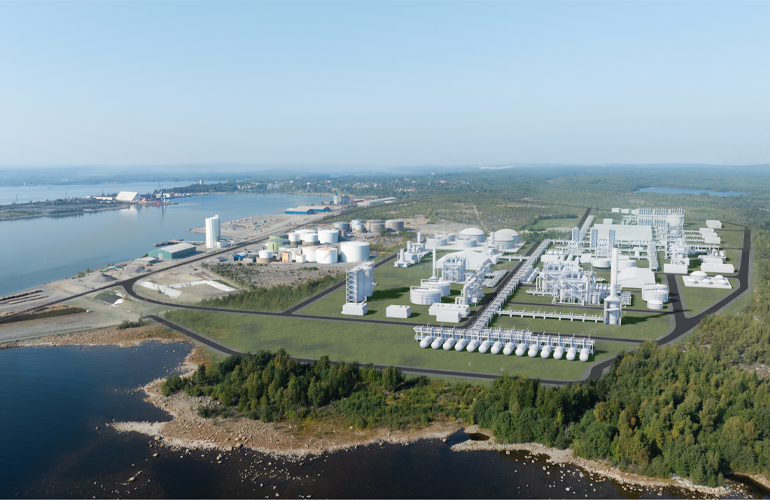
The project aims to establish a production facility for electro-synthetic aviation fuel (eSAF) at Näsudden outside Skellefteå.
The support from Industriklivet is proof that the Swedish Energy Agency also sees SkyKraft as important both for the transition of aviation and for Swedish resilience, said Joachim Nordin, CEO of Skellefteå Kraft.
FID expected in 2027
The grant enables SkyKraft to take the next step in the investigation phase and begin front-end engineering and design (FEED) to provide the detailed documentation needed for a final investment decision (FID) in 2027.
During the investigation phase, we have received further confirmation that Näsudden offers world-class conditions for the production of eSAF. It’s about access to renewable electricity and biogenic carbon dioxide needed in production, but also about infrastructure and the expertise available within our companies and in our region, said Joachim Nordin.
Using fossil-free electricity from Skellefteå Kraft, the planned facility in Näsudden will produce the eSAF from green hydrogen and captured biogenic carbon dioxide (bioCO2) from Skellefteå Kraft’s biomass-fired combined heat and power (CHP) plant.
The global situation and its impact on the global fuel markets show how important it is to move away from fossil import dependencies. This investment, therefore, provides synergies as we can both reduce emissions and at the same time build up domestic production of aviation fuel, said Caroline Asserup, Director General of the Swedish Energy Agency.
When fully operational, the facility is expected to have the capacity to produce up to 120,000 tonnes of eSAF per annum – almost twice the amount of aviation fuel Sweden’s domestic aviation sector consumes annually.
This project is an important preparatory step for an investment decision on a production plant for eSAF. We assess that the project has high potential for reduced greenhouse gas emissions in a future implementation, said Dr Klara Helstad, Deputy Head of Department for Research and Innovation.