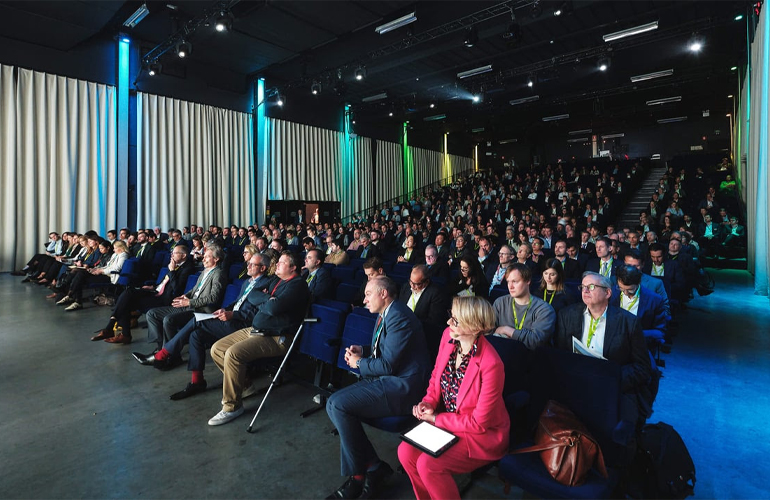
A record-breaking edition of the annual European Biomethane Week, organized by the European Biogas Association (EBA) during October 22-24, 2024, in Brussels, Belgium, highlighted the role of biogases in boosting the EU’s competitiveness and leadership on cleantech.
Whilst the EU competitiveness is at stake, the transition towards sustainable energy and the defossilization of the EU economy remains of utmost importance.
The biogases sector can provide already a competitive and sustainable alternative, but the many benefits of biogases need to be acknowledged and rewarded with new investments and a streamlined regulatory framework in order for the sector to be able to contribute to the energy transition.
The key role of biogases in the energy transition, with their ability to build bridges between some of the key pillars of the European Green Deal, was under the spotlight during the European Biomethane Week.
The sector stands at the crossroads of multiple priorities under the new EU agenda that reaches far beyond renewable energy production: reducing greenhouse gas (GHG) emissions for the EU residential sector, industry, and transport, advancing the circular economy, or enabling a more sustainable and competitive farming sector, just to name a few.
The biogas industry is a clear example of what circular economy is, connecting so many elements together, that’s why it can make the energy transition happen, said Professor François Gemenne, a researcher at the University of Liège in his opening address.
Nevertheless, this statement was preceded by a concern about the “increasing trend to oppose solutions between each other, despite the need to implement all possible solutions to decarbonize our economy.”
From a global standpoint, Dr Paolo Frankl, Head of the International Energy Agency (IEA) Renewable Energy Division, underlined the expected global expansion of biogases in the coming years, with Europe as a leader in the production of these green gases.
Biogases can play a crucial role in the net-zero transition, as not everything can be done with electricity. However, the biogas industry will need better coordination between waste and energy policies, support for new investments through national targets and quotas, and creating new demand for end-use sectors to continue growing, said Dr Paolo Frankl.
Meanwhile, the EU is preparing for a new legislative term in which one of the key priorities will be the rollout of a Green Industrial Deal, encompassing climate mitigation efforts and economic competitiveness.
Tatiana Márquez Uriarte, member of the cabinet of Commissioner for Energy Kadri Simson, and speaker in one of the conference sessions confirmed that the 35 bcm of biomethane production target is a realistic goal ahead of the 2030 decarbonization objectives, aimed at building a greener and more energy resilient EU.
The opportunity to replace fossil gas imports with domestic biomethane production has already led some EU Member States to include biogas and biomethane targets in the update of their respective National Energy and Climate Plans, noted Giulia Cancian, EBA’s Secretary General at one of the panels.
This is essential to provide market stability and facilitate further scale-up in the sector.
As the biogases industry grows, producers will need to rely on market-driven revenues such as certificates, to remain cost-competitive against fossil fuels.
Certificates enable both energy suppliers and large energy consumers to make credible claims regarding their commercial offers or their sustainability reporting, as they seek to reduce their GHG emissions and achieve decarbonization targets.
This is one of the key messages that came out from one of the most attended breakout sessions addressing biomethane trading.