Air Traffic Control the Netherlands is the latest organisation to join Dutch national air carrier KLM’s Corporate BioFuel Programme committing to purchasing sustainable aviation biofuel for all its business flights.
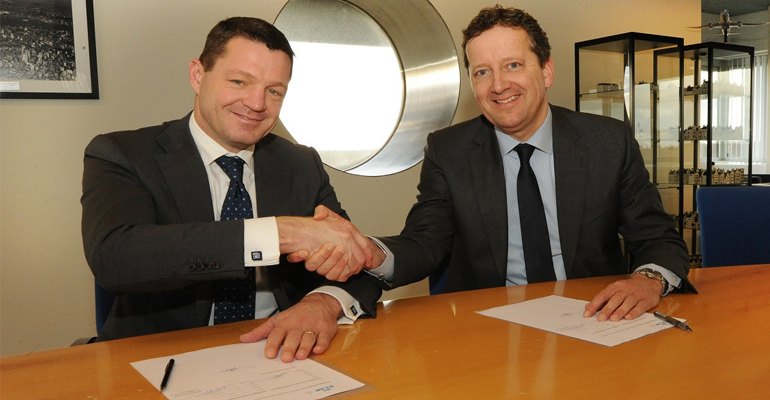
As air traffic control organization, we ensure the safety of air traffic in the Netherlands. Our employees also travel regularly outside the Netherlands to meet with our international partners. Air Traffic Control the Netherlands is delighted to be able to contribute to the sustainable development of the aviation sector by compensating for 100 percent of the carbon dioxide (CO2) emitted by our business flights with KLM. This is a great example of how we jointly facilitate aviation, in a sustainable way, said Michiel van Dorst, CEO Air Traffic Control the Netherlands.
Cutting CO2 emissions
KLM has set a target to cut its CO2 emissions 20 percent by 2020 compared to 2011. To achieve this, the company has been investing not only in sustainable biofuels and actively working to develop a market for sustainable aviation biofuels but also in new aircraft and more efficient flight operations.
The sustainable aviation fuel (SAF) is sourced from SkyNRG and is certified by the Roundtable on Sustainable Biomaterials (RSB). Using sustainable biofuels on a large scale can KLM says, lead to an 80 percent cut in CO2 emissions, compared with fossil fuels.
However, the price is still two or three times higher than that of regular kerosene. This is why there is a global need for technological developments and more research into sustainable raw materials because the production and market for biofuels are still limited.
Sustainable biofuel makes a structural contribution to increasing the sustainability of the airline industry. KLM is committed to this aim, but cannot do it alone. It is therefore fantastic that more and more Dutch companies, like Air Traffic Control the Netherlands, are signing up for our Corporate Biofuel Programme. Together we can make a difference, said Pieter Elbers, KLM President and CEO.
Other partners in the Corporate BioFuel Programme are Delft University of Technology, ABN AMRO, Accenture, FrieslandCampina, City of Amsterdam, Loyens & Loeff, Ministry of Infrastructure & Water Management, PGGM, and the Schiphol Group.